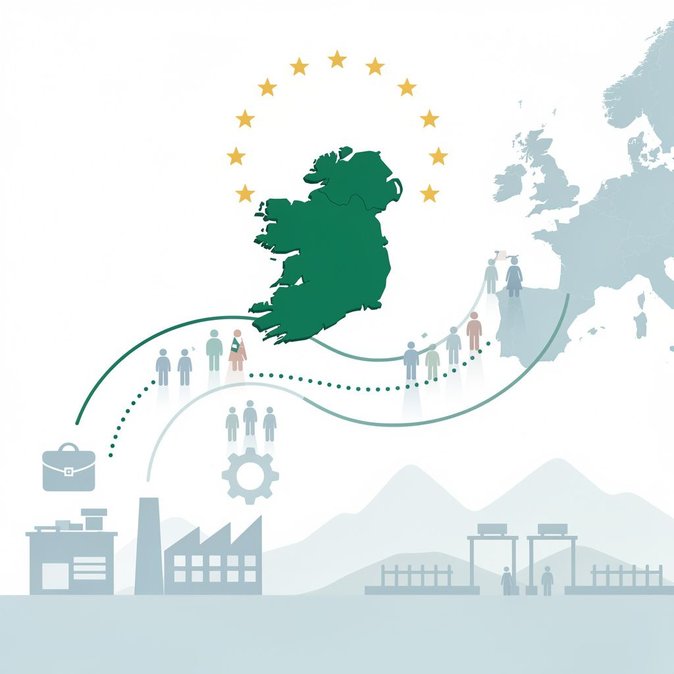
The European Commission confirmed on 30 June 2026 that Ireland will steer the Council of the European Union from 1 July to 31 December with a programme that places migration, internal security and cross-border crime at its core. Under the Presidency’s third pillar, ‘Security’, Dublin has pledged to drive full implementation of the EU Pact on Migration and Asylum and to advance digital return-management systems across the bloc. For Austria—one of the frontline Schengen countries that has reintroduced temporary internal border checks since 2015—the Irish agenda is highly relevant. Vienna hopes that streamlined return procedures and stronger action against migrant-smuggling networks will reduce pressure on its southern frontiers and allow it to wind down politically sensitive border posts with Slovenia and Italy by early 2027. The Presidency also promises to reinforce the resilience of Europe’s ports and critical infrastructure, an area where Austria is pushing for EU funding to harden Vienna Airport and Rail Cargo Austria logistics hubs against cyber-attacks. Business-immigration lawyers note that progress on the legal-migration files of the Pact—especially the revised Single Permit and Long-Term Residence directives—could give Austrian employers quicker pathways to recruit third-country talent if final compromises are achieved before year-end. Stakeholders in Austria’s automotive and semiconductor sectors have called on the government to engage actively in the Council working groups to ensure that any new security vetting requirements for posted workers remain proportionate. The Irish programme explicitly mentions closer law-enforcement collaboration on firearms trafficking, an area where Austrian authorities coordinate closely with German and Czech partners along the Danube corridor. While the six-month window is short, Brussels insiders expect Ireland to broker political agreement on the Pact’s common screening regulation and to launch the first cycle of the Migration Management Dashboard—two deliverables that will shape how Austria plans border staffing and reception-centre capacity in 2027 and beyond.