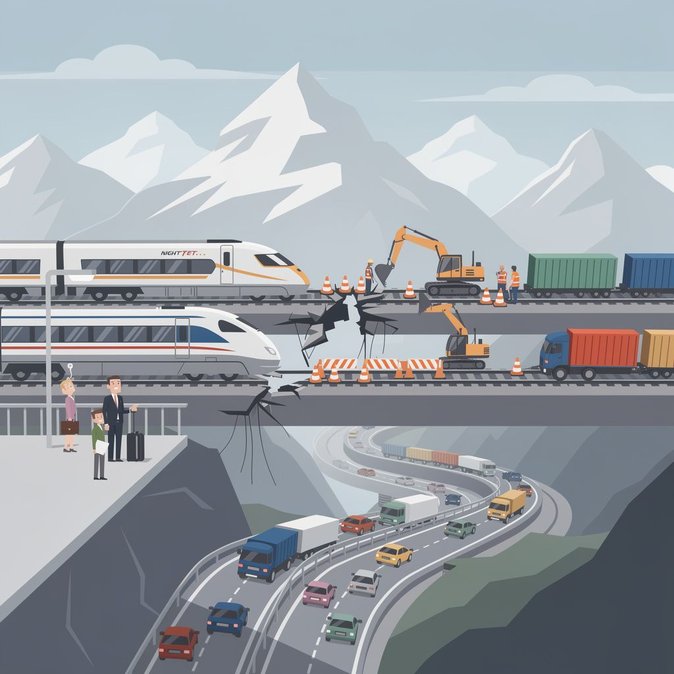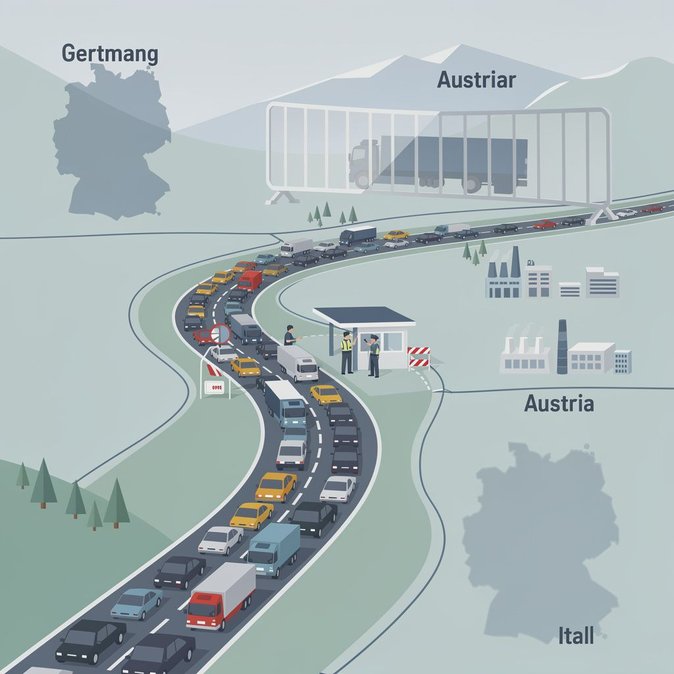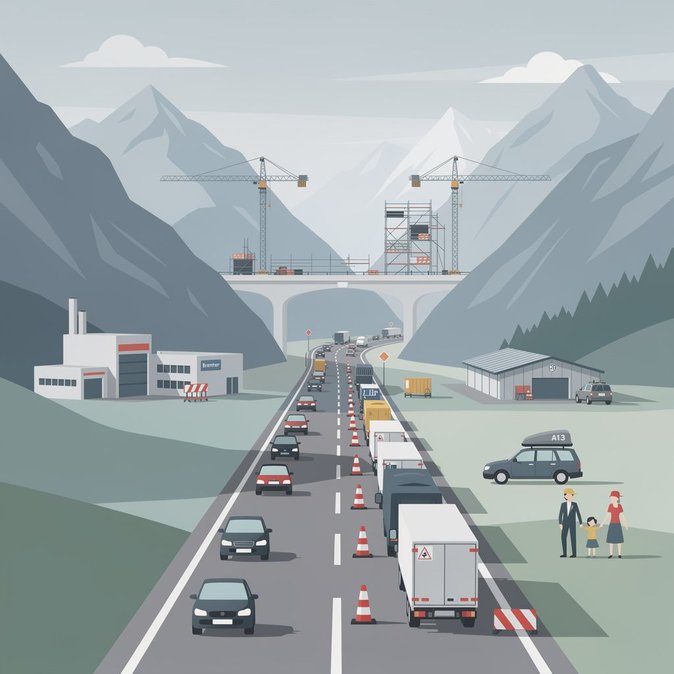
Holidaymakers and freight operators faced significant queues on the Brenner corridor this morning, 30 June 2026, as lane reductions on the ageing Luegbrücke section of Austria’s A13 motorway coincided with the start of the summer travel wave. Live data compiled by news portal Reisereporter at 06:30 CEST showed stop-and-go traffic stretching more than 12 kilometres southbound towards Italy and five kilometres northbound into the Inn Valley. The Luegbrücke, a vital but structurally compromised viaduct, is undergoing a multi-year refurbishment that periodically narrows traffic to one lane in each direction.
Before you set off into potential bottlenecks, remember that having the right travel documents can save you from additional delays. VisaHQ’s streamlined service (https://www.visahq.com/austria/) guides travellers through Austria’s visa requirements and can expedite any necessary paperwork for both Austria and onward destinations, giving you peace of mind as you navigate the Brenner.
While Austrian authorities promise two-lane operation on 180 high-season days, today’s restrictions returned as contractors prepared for overnight bridge-joint replacements. Heavy-goods vehicles over 3.5 tonnes were funnelled into the inside lane equipped with weigh-in-motion sensors, causing additional bottlenecks. The delays highlight the vulnerability of Europe’s busiest alpine freight artery. Roughly 7,000 trucks and 40,000 cars use the Brenner route daily, many carrying just-in-time consignments between German manufacturers and Italian suppliers. Logistics firms warned clients to expect delivery windows to slip by up to three hours and urged shippers to consider rail alternatives via the RoLa rolling-highway service or to route via the Reschen or Tauern corridors. For business travellers heading to Italian meetings, mobility advisers recommend allocating extra buffer time or using ÖBB’s Vienna-Bolzano rail connection, which remained punctual today. Drivers should also remember that Austria’s temporary internal Schengen border checks at Schönberg and Vipiteno remain in force, meaning identification documents may be requested, further slowing traffic. Long-term relief hinges on completing the 55-kilometre Brenner Base Tunnel, now forecast for late 2032, and on the EU’s smart-road pricing plans aimed at shifting freight from road to rail. Until then, the Brenner will continue to test the patience of tourists and supply-chain managers alike.
Before you set off into potential bottlenecks, remember that having the right travel documents can save you from additional delays. VisaHQ’s streamlined service (https://www.visahq.com/austria/) guides travellers through Austria’s visa requirements and can expedite any necessary paperwork for both Austria and onward destinations, giving you peace of mind as you navigate the Brenner.
While Austrian authorities promise two-lane operation on 180 high-season days, today’s restrictions returned as contractors prepared for overnight bridge-joint replacements. Heavy-goods vehicles over 3.5 tonnes were funnelled into the inside lane equipped with weigh-in-motion sensors, causing additional bottlenecks. The delays highlight the vulnerability of Europe’s busiest alpine freight artery. Roughly 7,000 trucks and 40,000 cars use the Brenner route daily, many carrying just-in-time consignments between German manufacturers and Italian suppliers. Logistics firms warned clients to expect delivery windows to slip by up to three hours and urged shippers to consider rail alternatives via the RoLa rolling-highway service or to route via the Reschen or Tauern corridors. For business travellers heading to Italian meetings, mobility advisers recommend allocating extra buffer time or using ÖBB’s Vienna-Bolzano rail connection, which remained punctual today. Drivers should also remember that Austria’s temporary internal Schengen border checks at Schönberg and Vipiteno remain in force, meaning identification documents may be requested, further slowing traffic. Long-term relief hinges on completing the 55-kilometre Brenner Base Tunnel, now forecast for late 2032, and on the EU’s smart-road pricing plans aimed at shifting freight from road to rail. Until then, the Brenner will continue to test the patience of tourists and supply-chain managers alike.