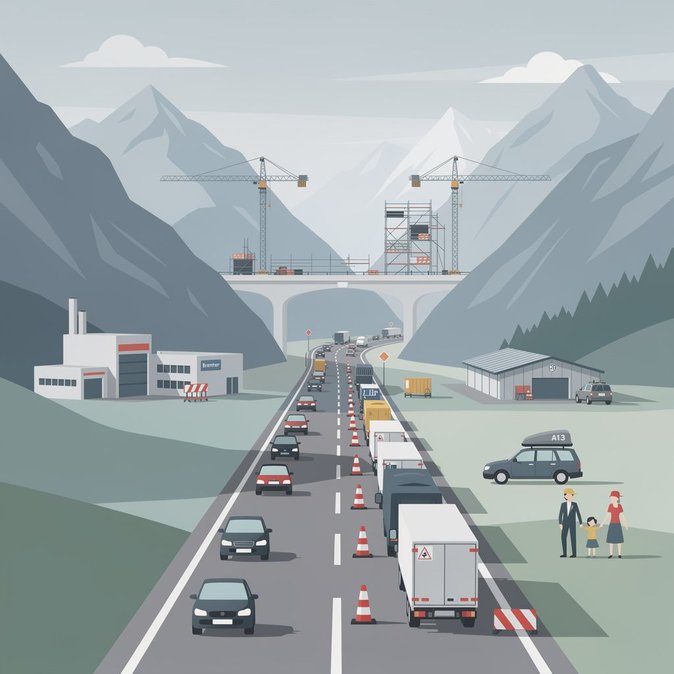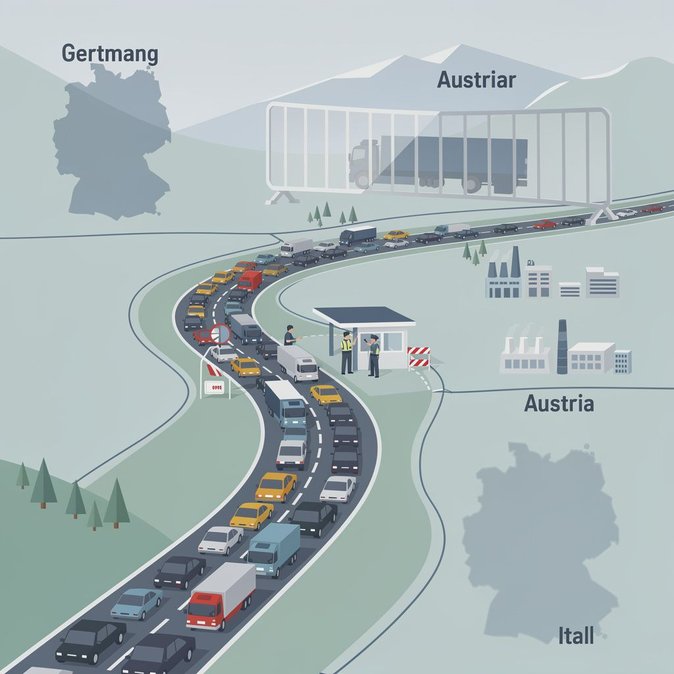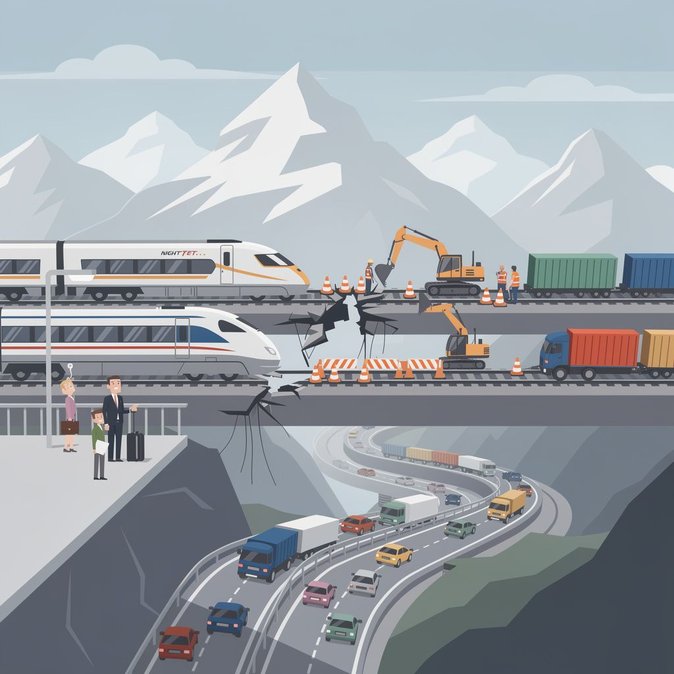
Austria’s state-owned railway operator ÖBB confirmed today (30 June 2026) that the pivotal Brenner rail line will be closed in two successive phases between 18 July and 1 August. The shutdown is required to repair frost damage in the Mühltaltunnel and to synchronise track work with Italy’s RFI on the southern slope of the pass. Phase 1 (18–22 July) affects the cross-border section between Steinach in Tirol and Brenner station. All regional (S-Bahn) services will turn back at Gries am Brenner; long-distance passenger trains will be diverted via the Tauern route or replaced by buses. Freight operators have been asked to reroute heavy goods trains via Tarvisio–Villach or the Tauern axis, and ÖBB’s capacity managers warn of “tight overnight paths” for time-sensitive automotive and intermodal traffic. Phase 2 (23 July–1 August) extends the closure to Innsbruck Hbf, taking the entire Austrian stretch of the corridor out of service. Nightjet sleeper services to Italy will be truncated in Salzburg, while private operator Westbahn will cancel its seasonal Vienna–Brenner weekend train. ÖBB says the timing deliberately avoids the early-July peak of school holiday change-over days but concedes that the second phase coincides with Italy’s Ferragosto getaway wave. The Brenner axis is the busiest north–south rail artery in the Alps, carrying up to 180 freight trains and 60 passenger trains per day. Logistics providers fear that the two-week outage could push an additional 2,000 lorry movements per day onto the already congested A13/A22 motorway, undermining Tyrol’s anti-transit policies. Rail freight lobby group Rail Freight Forward is urging German and Italian infrastructure managers to waive path-reservation fees on alternative routes to keep modal-shift targets on track. Corporate mobility managers should anticipate longer journey times for staff travelling by rail between Austria, Germany and northern Italy and consider booking air connections via Vienna or Munich during the works period. Importers moving time-critical goods should speak to their forwarders about contingency routings and additional buffer days.
Source: International Transport Journal