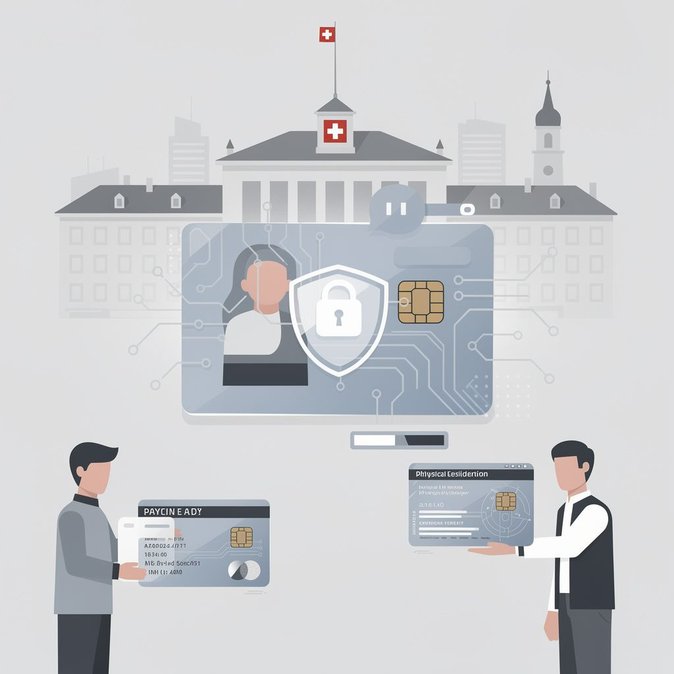
The Federal Office of Justice (FOJ) announced on 30 June 2026 that the launch of Switzerland’s long-awaited electronic identity (E-ID) will be pushed back by at least six months. The move follows a new risk assessment that flagged emerging threats from deep-fake technology and AI-driven identity fraud. Switzerland’s E-ID Act was approved in a razor-thin referendum earlier this year and is seen as a cornerstone for seamless cross-border travel in the Schengen zone, remote onboarding of international staff and fully digital residence-permit renewals. Under the original roadmap, the first government-issued e-credentials were to go live in early 2027, ahead of the EU Digital Identity Wallet mandate.
VisaHQ, a global visa and document facilitation platform, is already helping travelers and corporate mobility teams steer through Switzerland’s shifting ID landscape. Via its dedicated Switzerland page (https://www.visahq.com/switzerland/), clients can receive real-time updates, arrange courier pickups for physical permits, and set alerts for the forthcoming E-ID enrollment windows—minimizing disruption while the new system is finalized.
FOJ officials now say additional safeguards—such as liveness-detection protocols, secure enclaves on mobile devices and a reinforced public-key-infrastructure backbone—are needed before mass issuance can begin. An inter-departmental task-force chaired by the Justice Ministry will finalise the new technical specifications by December, after which the Federal Council will set a revised go-live date. For multinational employers, the delay means that paper and card-based permits will remain the default proof-of-ID for short-term assignees and frontier workers through most of 2027. HR and mobility teams should factor continued physical document management—and the courier costs that come with it—into their budgets. On the upside, the FOJ confirmed that the underlying “trust infrastructure” (which will also power future digital driving licences and professional certificates) will switch on as planned in the first half of 2027, allowing early-adopter cantons and businesses to test secure document exchange in pilot mode. Privacy groups welcomed the cautious approach, arguing that credibility would be lost if the very first wave of Swiss E-IDs were compromised. Travel technology vendors, meanwhile, urged the government to publish an interim API so that airline and hotel check-in systems can start integrating the new credential even before full consumer rollout.

VisaHQ, a global visa and document facilitation platform, is already helping travelers and corporate mobility teams steer through Switzerland’s shifting ID landscape. Via its dedicated Switzerland page (https://www.visahq.com/switzerland/), clients can receive real-time updates, arrange courier pickups for physical permits, and set alerts for the forthcoming E-ID enrollment windows—minimizing disruption while the new system is finalized.
FOJ officials now say additional safeguards—such as liveness-detection protocols, secure enclaves on mobile devices and a reinforced public-key-infrastructure backbone—are needed before mass issuance can begin. An inter-departmental task-force chaired by the Justice Ministry will finalise the new technical specifications by December, after which the Federal Council will set a revised go-live date. For multinational employers, the delay means that paper and card-based permits will remain the default proof-of-ID for short-term assignees and frontier workers through most of 2027. HR and mobility teams should factor continued physical document management—and the courier costs that come with it—into their budgets. On the upside, the FOJ confirmed that the underlying “trust infrastructure” (which will also power future digital driving licences and professional certificates) will switch on as planned in the first half of 2027, allowing early-adopter cantons and businesses to test secure document exchange in pilot mode. Privacy groups welcomed the cautious approach, arguing that credibility would be lost if the very first wave of Swiss E-IDs were compromised. Travel technology vendors, meanwhile, urged the government to publish an interim API so that airline and hotel check-in systems can start integrating the new credential even before full consumer rollout.