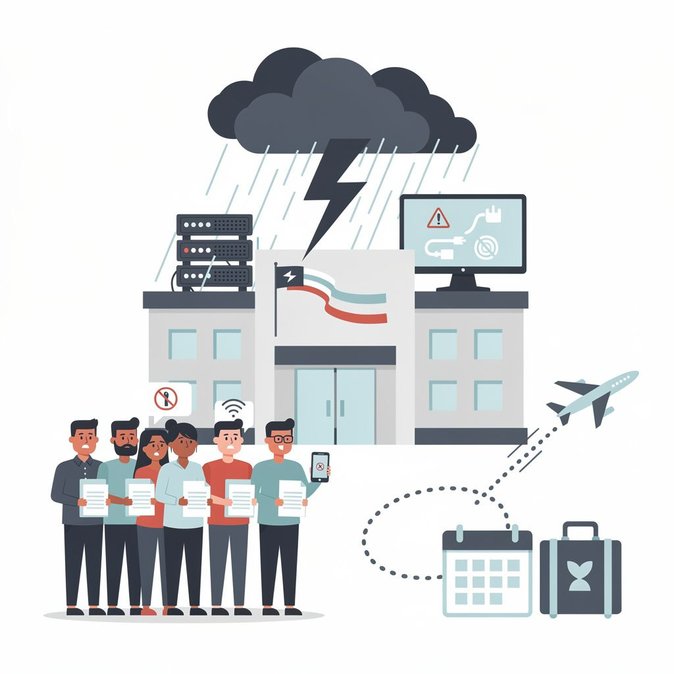
Monsoon thunderstorms caused a two-day systems outage at the U.S. Consulate General in Kolkata, leaving hundreds of visa applicants stranded on June 28-29. According to The Economic Times’ June 29 report, consular staff repeatedly asked applicants—many who had traveled from other Indian states—to return the next day, only to cancel interviews again when computer systems failed to reboot. The disruption affects all non-immigrant categories, including F-1 students racing to secure visas before autumn orientation and B-1 business travelers headed to U.S. World Cup matches.
For applicants scrambling to salvage their travel plans, VisaHQ can step in with real-time slot monitoring, document review, and rescheduling support. Its U.S. visa portal (https://www.visahq.com/united-states/) aggregates appointment availability across Indian consulates and offers concierge assistance, helping students, professionals, and tourists secure alternative dates when unexpected outages strike.
The consulate promised to email new dates starting June 29, but by publication time many applicants had received no communication, fueling social-media complaints and calls for fee refunds. For U.S. employers expecting Indian talent or client-site visitors, the outage is a fresh reminder that localized events—weather, strikes, power cuts—can ripple through global mobility timelines. HR teams should prepare contingency plans: booking alternative interview slots in Chennai or Hyderabad, switching to visa-waiver-eligible nationalities where possible, or deferring start dates. The episode also exposes the fragility of legacy consular IT at a moment when paid-expedite programs are expanding. Stakeholders may press the State Department to harden systems ahead of the summer student-visa rush and the July 1 premium-interview pilot.
For applicants scrambling to salvage their travel plans, VisaHQ can step in with real-time slot monitoring, document review, and rescheduling support. Its U.S. visa portal (https://www.visahq.com/united-states/) aggregates appointment availability across Indian consulates and offers concierge assistance, helping students, professionals, and tourists secure alternative dates when unexpected outages strike.
The consulate promised to email new dates starting June 29, but by publication time many applicants had received no communication, fueling social-media complaints and calls for fee refunds. For U.S. employers expecting Indian talent or client-site visitors, the outage is a fresh reminder that localized events—weather, strikes, power cuts—can ripple through global mobility timelines. HR teams should prepare contingency plans: booking alternative interview slots in Chennai or Hyderabad, switching to visa-waiver-eligible nationalities where possible, or deferring start dates. The episode also exposes the fragility of legacy consular IT at a moment when paid-expedite programs are expanding. Stakeholders may press the State Department to harden systems ahead of the summer student-visa rush and the July 1 premium-interview pilot.