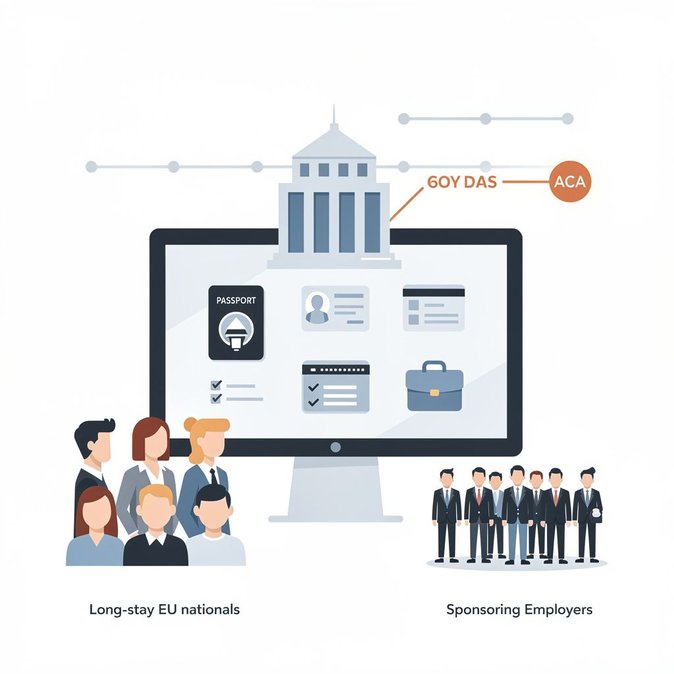
On 30 June the Czech Interior Ministry quietly submitted a draft ‘Act on the Entry and Residence of Migrants’ for inter-ministerial comment, setting the stage for the biggest rewrite of immigration rules in two decades. According to a briefing published the same day by the European Commission’s Directorate-General for Migration and Home Affairs, the bill would replace today’s patchwork Foreigners Act with a streamlined, fully electronic process centred on a new Integrated Case Administration System (ICAS). Under the proposal, all long-term visa, residence-permit and status-change applications would be filed online; applicants would receive a personal portal allowing them to upload documents, track deadlines and book biometric appointments. The Interior Ministry claims this will cut average processing times by 30 %. For employers of non-EU staff, the bill introduces the concept of “guarantors” who must vouch for workplace compliance and could face fines or a temporary ban on hiring foreigners if irregularities are found. That is a significant shift of liability from the state to business. Another headline change is mandatory registration for EU citizens and their family members after 90 days’ stay. Registration was previously voluntary, leading to data gaps that complicated local-tax enforcement and social-security coordination. The draft also strengthens the Interior Minister’s power to revoke residence where national-security risks are identified, bringing Czech practice closer to Germany’s. If adopted, the Act would enter into force on 1 January 2029, but companies are being encouraged to prepare early. HR departments will need to integrate their onboarding workflows with the ICAS API, and payroll providers will have to capture new data fields (such as guarantor ID numbers). Multinationals that post staff intra-company should review secondment agreements to ensure they satisfy the envisaged electronic evidence standards. Political observers expect robust debate when Parliament reconvenes after the summer recess: trade unions fear the guarantor model may encourage outsourcing, while SME associations welcome the prospect of predictable timelines. With unemployment at a historic low of 2.6 %, business groups argue the digital overhaul is essential to keep Czechia competitive in the fight for global talent. Passage of the bill in its current form would place Czechia among the EU’s most tech-driven immigration regimes.
Source: European Commission – DG HOME