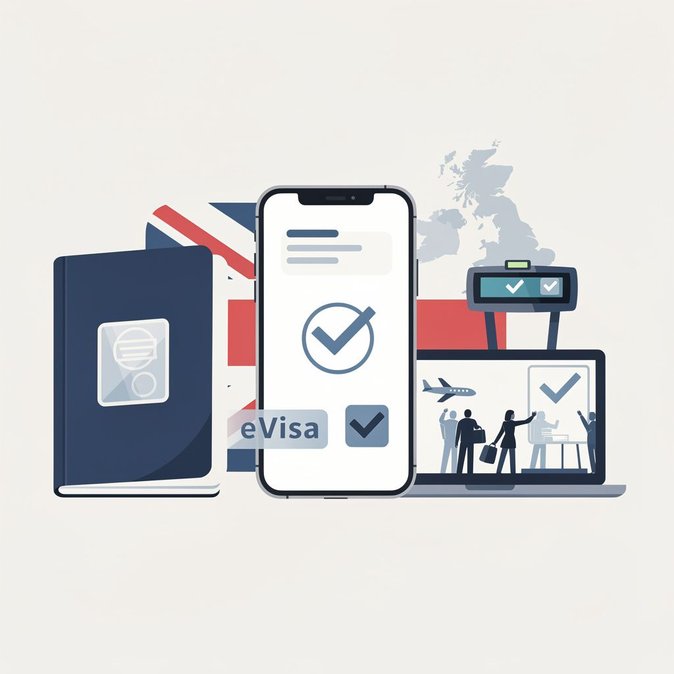
The Home Office has reached a milestone in its multi-year digital immigration strategy: from 1 July 2026 every successful UK visa applicant now receives only a digital visa (eVisa) linked to their UKVI online account. The latest guidance update confirms that visa vignette stickers—long the physical proof of entry clearance stamped into passports—were withdrawn for all routes at 00:01 BST on Monday. Travellers must instead sign in to their UKVI account before departure to check that their permission has been granted and carriers are expected to verify status electronically at check-in.
If you’re uncertain about activating a UKVI account or coordinating digital permissions for larger assignee groups, VisaHQ’s UK desk can streamline the process. Their online platform guides users through account creation, links passports to eVisas, arranges ETA filings and even generates timed share codes for right-to-work checks—all in one dashboard. More information is available at https://www.visahq.com/united-kingdom/
The abolition of vignettes eliminates production back-logs at overseas visa application centres (VACs) and removes the need for applicants to surrender passports while waiting for a sticker to be printed. UKVI says millions of migrants already use eVisas; extending the model to visitor, work and study routes is expected to save up to £120 million in document-handling costs over four years. For employers and landlords the change means right-to-work and right-to-rent checks will increasingly rely on share codes generated from the applicant’s digital status, reducing exposure to forged paperwork. Airlines, ferry operators and Eurostar services have spent the past year integrating with the Home Office’s new Carrier Check API so that an eVisa can be validated in real time. Industry sources told Global Mobility News they expect a short bedding-in period as front-line staff adapt, but welcome the move as a step towards frictionless borders. Guidance emphasises that passengers should travel with the same passport number recorded in their UKVI account; carriers may refuse boarding if the details do not match. The digital transition also has data-protection implications. UKVI will share an individual’s status automatically with HMRC, the NHS and other public bodies—reducing the need for migrants to carry multiple documents but raising questions about oversight. Privacy campaigners are calling for an independent audit of access logs, but business groups argue that faster status verification supports compliance and protects legitimate travellers. For global mobility managers the key action is to review pre-travel checklists: assignees must activate their UKVI account and download status confirmations before departure. Employers using travel-tracking software should update workflows to prompt eVisa log-ins rather than vignette collection. With the Electronic Travel Authorisation (ETA) scheme becoming mandatory for visa-exempt nationals in February, the UK border is now almost entirely paper-free—a transformation likely to influence other jurisdictions pursuing similar digitisation strategies.

If you’re uncertain about activating a UKVI account or coordinating digital permissions for larger assignee groups, VisaHQ’s UK desk can streamline the process. Their online platform guides users through account creation, links passports to eVisas, arranges ETA filings and even generates timed share codes for right-to-work checks—all in one dashboard. More information is available at https://www.visahq.com/united-kingdom/
The abolition of vignettes eliminates production back-logs at overseas visa application centres (VACs) and removes the need for applicants to surrender passports while waiting for a sticker to be printed. UKVI says millions of migrants already use eVisas; extending the model to visitor, work and study routes is expected to save up to £120 million in document-handling costs over four years. For employers and landlords the change means right-to-work and right-to-rent checks will increasingly rely on share codes generated from the applicant’s digital status, reducing exposure to forged paperwork. Airlines, ferry operators and Eurostar services have spent the past year integrating with the Home Office’s new Carrier Check API so that an eVisa can be validated in real time. Industry sources told Global Mobility News they expect a short bedding-in period as front-line staff adapt, but welcome the move as a step towards frictionless borders. Guidance emphasises that passengers should travel with the same passport number recorded in their UKVI account; carriers may refuse boarding if the details do not match. The digital transition also has data-protection implications. UKVI will share an individual’s status automatically with HMRC, the NHS and other public bodies—reducing the need for migrants to carry multiple documents but raising questions about oversight. Privacy campaigners are calling for an independent audit of access logs, but business groups argue that faster status verification supports compliance and protects legitimate travellers. For global mobility managers the key action is to review pre-travel checklists: assignees must activate their UKVI account and download status confirmations before departure. Employers using travel-tracking software should update workflows to prompt eVisa log-ins rather than vignette collection. With the Electronic Travel Authorisation (ETA) scheme becoming mandatory for visa-exempt nationals in February, the UK border is now almost entirely paper-free—a transformation likely to influence other jurisdictions pursuing similar digitisation strategies.