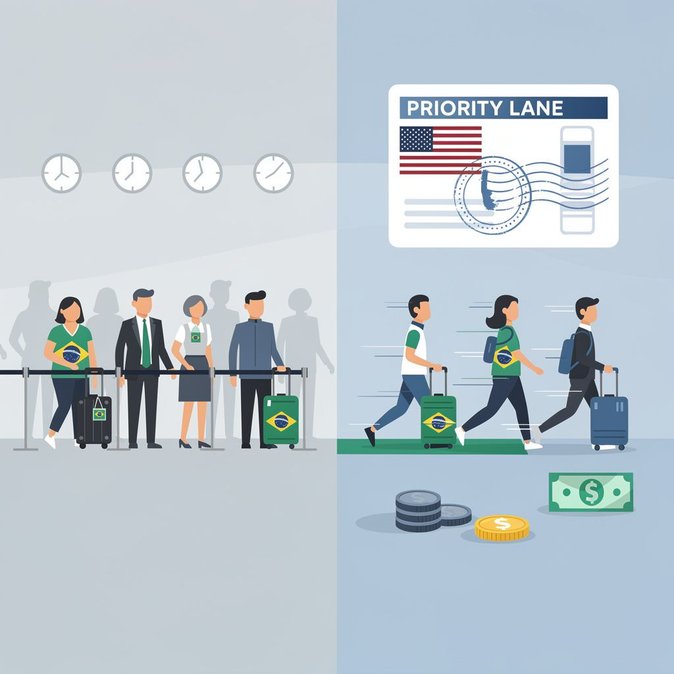
From 2 July 2026 Brazilian nationals seeking a visitor (B1/B2) visa for the United States can obtain an interview slot in a matter of days—if they are willing to pay a new US$750 surcharge. The U.S. State Department published the rule in the Federal Register on 1 July and launched it immediately at the consulates in São Paulo, Rio de Janeiro, Brasília and Recife.
For travelers navigating these new appointment options, VisaHQ offers an end-to-end visa facilitation service, assisting Brazilian applicants with DS-160 preparation, fee payments and strategic appointment scheduling through its dedicated Brazil portal (https://www.visahq.com/brazil/). Leveraging real-time slot monitoring and expert document review, the platform can help individuals and corporate mobility teams secure either standard or priority B1/B2 interviews while minimizing administrative hassle and costly errors.
The pilot programme is strictly limited to non-immigrant tourist and business visas and does not cover work categories such as H-1B, L-1 or O-1, nor immigrant classifications. Applicants who opt in pay the additional fee after completing the DS-160 form; the system unlocks a separate pool of “priority” appointments, typically available within five to seven working days, compared with the 120-plus-day waits that have plagued São Paulo since the post-pandemic travel rebound. Immigration lawyers emphasise that faster scheduling does not influence adjudication. Consular officers will apply the same section 214(b) criteria, and refusal rates remain around 27 % for Brazilian B-visas. The surcharge is also non-refundable in the event of denial. For corporates the option offers a new tool for employees who must travel to U.S. trade shows or last-minute negotiations but lack valid visas. Mobility teams should update budget guidelines, as the total government cost per first-time applicant now rises to US$1,005 (US$255 MRV fee plus US$750 priority fee). HR should also flag that dependants require individual priority payments. The State Department will review the pilot after six months; if demand exceeds capacity, it may introduce quotas. Companies with high U.S. travel volumes may wish to bulk-book standard appointments now to avoid paying the premium later.
For travelers navigating these new appointment options, VisaHQ offers an end-to-end visa facilitation service, assisting Brazilian applicants with DS-160 preparation, fee payments and strategic appointment scheduling through its dedicated Brazil portal (https://www.visahq.com/brazil/). Leveraging real-time slot monitoring and expert document review, the platform can help individuals and corporate mobility teams secure either standard or priority B1/B2 interviews while minimizing administrative hassle and costly errors.
The pilot programme is strictly limited to non-immigrant tourist and business visas and does not cover work categories such as H-1B, L-1 or O-1, nor immigrant classifications. Applicants who opt in pay the additional fee after completing the DS-160 form; the system unlocks a separate pool of “priority” appointments, typically available within five to seven working days, compared with the 120-plus-day waits that have plagued São Paulo since the post-pandemic travel rebound. Immigration lawyers emphasise that faster scheduling does not influence adjudication. Consular officers will apply the same section 214(b) criteria, and refusal rates remain around 27 % for Brazilian B-visas. The surcharge is also non-refundable in the event of denial. For corporates the option offers a new tool for employees who must travel to U.S. trade shows or last-minute negotiations but lack valid visas. Mobility teams should update budget guidelines, as the total government cost per first-time applicant now rises to US$1,005 (US$255 MRV fee plus US$750 priority fee). HR should also flag that dependants require individual priority payments. The State Department will review the pilot after six months; if demand exceeds capacity, it may introduce quotas. Companies with high U.S. travel volumes may wish to bulk-book standard appointments now to avoid paying the premium later.