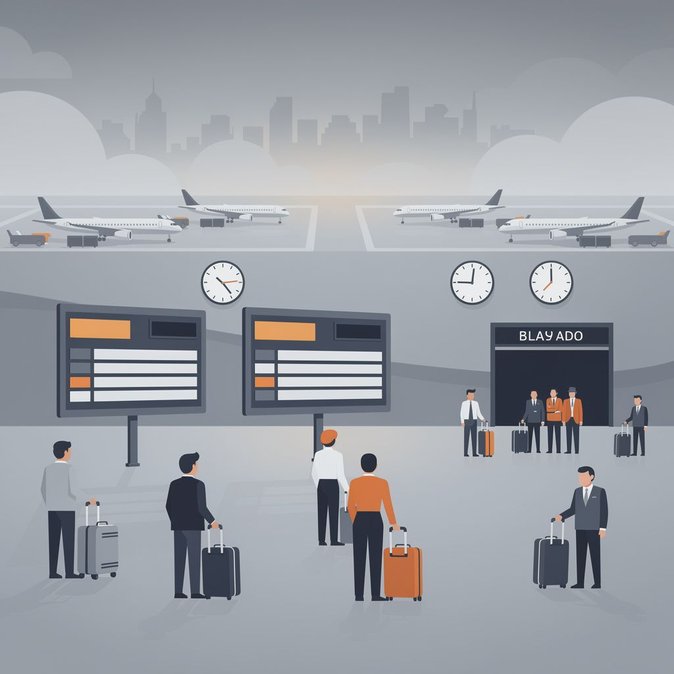
Travellers across Brazil faced a difficult start to the long holiday weekend on Thursday, 2 July, as 53 flights were cancelled and 239 delayed between 00:00 and 14:00, according to real-time data compiled by aviation analytics firm FlightStats and reported by Travel & Tour World. São Paulo/Guarulhos led the disruption tally with 39 delays and a cancellation, followed closely by Brasília, Rio de Janeiro/Galeão, and Salvador. LATAM Brasil accounted for six of the cancellations, while GOL and Azul together registered more than 140 delays.
Amid such operational hiccups, it helps to know that at least the paperwork can be stress-free: VisaHQ streamlines the process of obtaining Brazilian visas and other travel documents through its fully online platform, offering fast turnaround times, live status updates, and expert support—details are available at https://www.visahq.com/brazil/
Airlines blamed a cocktail of intense winter fog in the Southeast, crew rotations following World Cup charter operations, and ongoing slot-reallocation tests ordered by the civil aviation authority (ANAC). Ground handlers at Guarulhos also staged a two-hour work-to-rule protest over pay, compounding congestion at check-in halls just as early-morning banks of domestic departures were due to push back. For corporate mobility managers the knock-on effects were immediate: roadshows in Belo Horizonte were postponed, offshore crew changes in Macaé missed tide windows, and exporters of fresh flowers from Brasília scrambled for belly-cargo alternatives. Several multinationals activated emergency travel policies, allowing staff to re-book on competing carriers without prior authorisation and to expense overnight stays where necessary. ANAC says it will meet operators on 3 July to review the winter weather contingency plan and assess whether additional slot relief is warranted. While the agency stopped short of mandating customer-care compensation, consumer watchdog Procon-SP reminded airlines that Brazil’s Air Passenger Bill of Rights requires carriers to provide meals after a one-hour delay and accommodation after four hours when the cause is “within the company’s control”. Looking forward, analysts caution that Brazil’s ageing airport infrastructure—particularly limited CAT III runway capability outside São Paulo—means similar disruption is likely throughout the July–August peak. Mobility planners are advised to build longer connection buffers, monitor weather alerts from the National Institute of Meteorology, and pre-negotiate flexible corporate fares where possible.
Amid such operational hiccups, it helps to know that at least the paperwork can be stress-free: VisaHQ streamlines the process of obtaining Brazilian visas and other travel documents through its fully online platform, offering fast turnaround times, live status updates, and expert support—details are available at https://www.visahq.com/brazil/
Airlines blamed a cocktail of intense winter fog in the Southeast, crew rotations following World Cup charter operations, and ongoing slot-reallocation tests ordered by the civil aviation authority (ANAC). Ground handlers at Guarulhos also staged a two-hour work-to-rule protest over pay, compounding congestion at check-in halls just as early-morning banks of domestic departures were due to push back. For corporate mobility managers the knock-on effects were immediate: roadshows in Belo Horizonte were postponed, offshore crew changes in Macaé missed tide windows, and exporters of fresh flowers from Brasília scrambled for belly-cargo alternatives. Several multinationals activated emergency travel policies, allowing staff to re-book on competing carriers without prior authorisation and to expense overnight stays where necessary. ANAC says it will meet operators on 3 July to review the winter weather contingency plan and assess whether additional slot relief is warranted. While the agency stopped short of mandating customer-care compensation, consumer watchdog Procon-SP reminded airlines that Brazil’s Air Passenger Bill of Rights requires carriers to provide meals after a one-hour delay and accommodation after four hours when the cause is “within the company’s control”. Looking forward, analysts caution that Brazil’s ageing airport infrastructure—particularly limited CAT III runway capability outside São Paulo—means similar disruption is likely throughout the July–August peak. Mobility planners are advised to build longer connection buffers, monitor weather alerts from the National Institute of Meteorology, and pre-negotiate flexible corporate fares where possible.