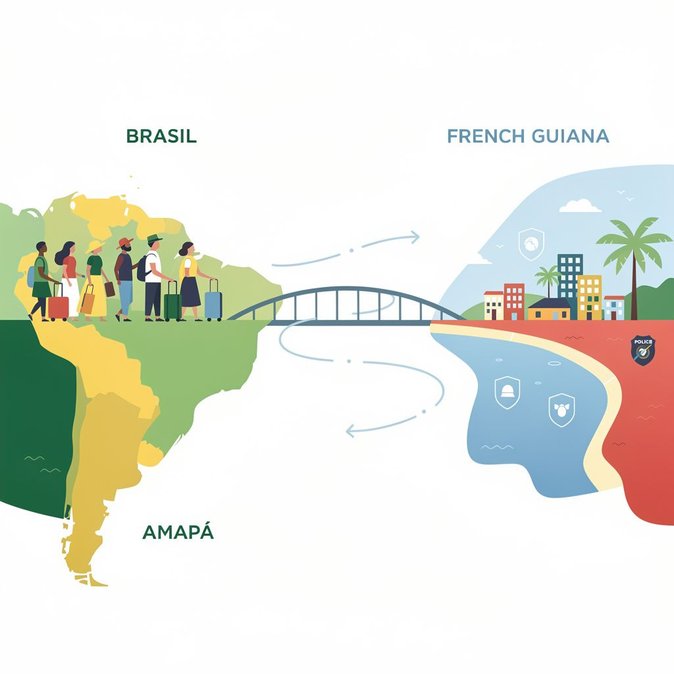
In a landmark step for cross-border integration, the governments of Brazil and France have agreed to drop the short-stay visa requirement for Brazilian citizens travelling to French Guiana. The accord was signed in Brasília on 1 July by Foreign Minister Mauro Vieira and his French counterpart Jean-Noël Barrot, as part of a broader roadmap to tighten security cooperation along the 730-kilometre Amazonian frontier. Although the two countries have enjoyed a relatively fluid land border since the Oyapock River bridge opened in 2017, formal entry still required Brazilians to apply for a Schengen-type visa at the French consulate in Brasília or Belém. Processing times of up to three weeks and a €80 fee were frequently cited by residents and businesses in Amapá as a brake on trade, health care and family visits. Under the new regime, Brazilians will be able to stay in French Guiana visa-free for up to 90 days in any 180-day period, matching the treatment already extended to French nationals entering Brazil. Security considerations were a decisive factor. Both governments expect that removing paperwork will encourage travellers to use official checkpoints rather than clandestine river crossings long exploited by drug traffickers, illegal gold miners and wildlife smugglers. “Facilitating legal mobility is the best way to make the border traceable,” said Minister Vieira, noting that police databases on both sides will now capture a higher share of arrivals and departures. For companies operating in forestry, space services and mining supply chains that straddle the border, the measure promises lower compliance costs and faster deployment of crews. Logistics providers in Cayenne anticipate a 12 % rise in Brazilian truck traffic once the rule takes effect on 31 July. Tourism boards on both sides are already packaging weekend shopping and eco-tourism itineraries that combine Macapá, Oiapoque and Saint-Georges. Practically, travellers must still carry a passport valid for at least six months, proof of onward travel and health insurance covering the French overseas department. The French consulate has confirmed that existing visas remain valid until they expire but will stop accepting new short-stay applications from Brazilians after 15 July. Authorities advise border commuters to allow extra time during the first weeks as officers adjust IT systems and signage.
Source: Agência Brasil