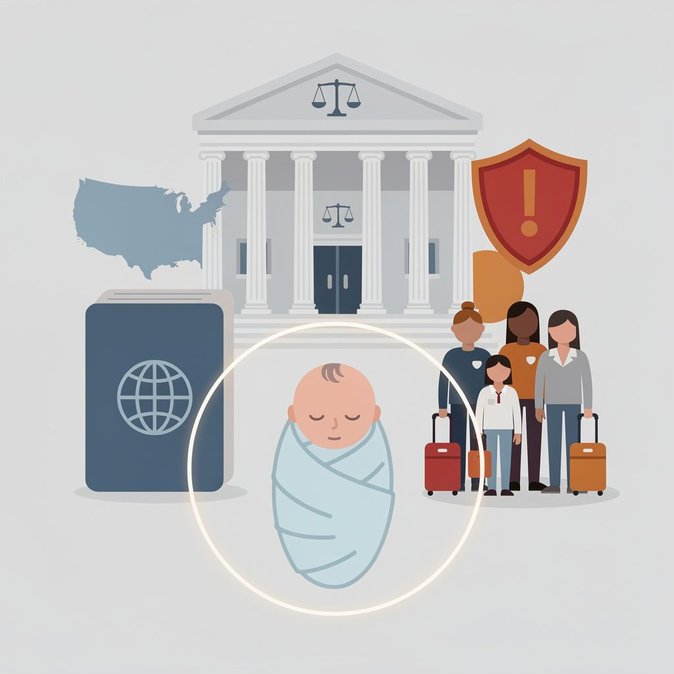
The U.S. Department of Justice (DOJ) announced 2 July 2026 that it will begin prosecuting commercial operators and parents involved in so-called “birth-tourism” schemes—arrangements that charge foreign women tens of thousands of dollars to give birth on U.S. soil so their children obtain citizenship. The move follows last week’s Supreme Court decision upholding the Fourteenth Amendment’s guarantee of birthright citizenship, dashing efforts to restrict jus soli. Attorney-General Emily Hernandez said DOJ would instead target the fraud and visa-misrepresentation aspects of the industry, invoking the newly enacted BACK OFF Act, which adds up to five years’ imprisonment for facilitating visa fraud tied to birth tourism. Homeland Security Investigations (HSI) will coordinate multi-agency raids focusing on so-called “maternity hotels” in California, Texas and Florida, while the State Department plans to increase B-visa screening questions for late-term pregnant applicants. Airlines are being asked to update training on visual pregnancy indicators and to remind passengers of medical-clearance rules for travel after 36 weeks. For corporate mobility managers, the crackdown raises two red flags: first, accompanying spouses on long-term assignments may face additional scrutiny if visibly pregnant; second, companies offering supplemental maternity benefits must ensure they do not inadvertently fund activities that could be construed as visa fraud. Legal experts note that legitimate medical tourism is still permissible, but applicants must demonstrate ability to pay for care, intent to depart, and truthful answers at both the consular interview and port of entry.
Source: The Financial Express