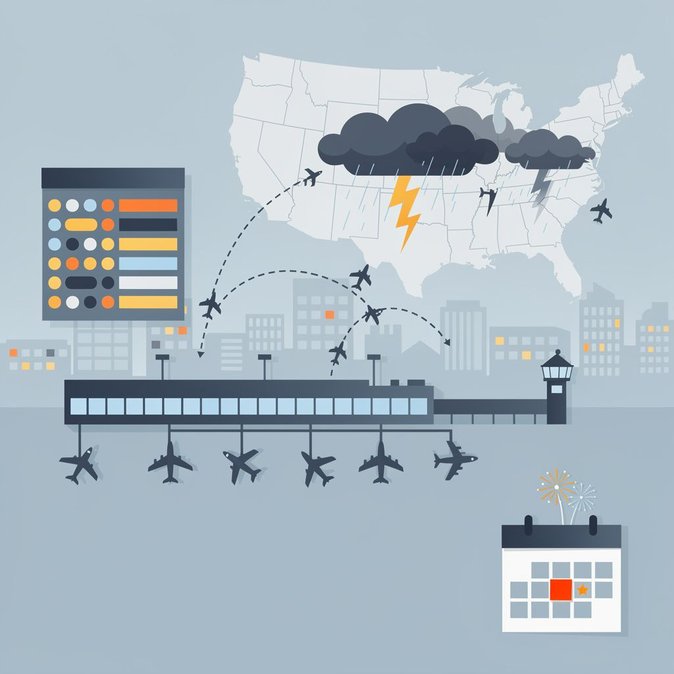
Severe summer thunderstorms sweeping across Texas, Illinois, New York and Virginia caused major disruption to U.S. air traffic on 2 July 2026, according to aviation data compiled by Travel & Tour World. By mid-afternoon, airlines had delayed more than 2,100 flights and cancelled another 73, complicating getaway plans for the Independence Day long weekend. American, United and Delta were the hardest-hit mainline carriers, while regional operators SkyWest, Endeavor and PSA shouldered scores of feeder-flight delays.
For travelers who suddenly find that a weather-related reroute pushes them across borders or forces an unexpected international connection, VisaHQ can smooth the paperwork. The company’s online portal (https://www.visahq.com/united-states/) lets passengers verify visa rules, file rush applications and obtain expert guidance in minutes—helping keep itineraries viable when storms scramble the skies.
Dallas/Fort Worth, Chicago O’Hare and the New York metro airports bore the brunt of ground stops as lightning and low-visibility conditions forced staggered departure slots. Travel managers are urging employees to monitor flight-status apps and, where possible, reroute through western hubs less affected by the weather band. Companies with time-sensitive project kick-offs on 3–4 July may need to trigger contingency policies, such as same-day virtual attendance until staff arrive on-site. The FAA warned that rolling delays could persist into the evening as displaced crews and aircraft struggle to reposition. With TSA projecting a record 3.0 million passengers on 3 July alone, today’s ripple effects could extend well into the holiday.
For travelers who suddenly find that a weather-related reroute pushes them across borders or forces an unexpected international connection, VisaHQ can smooth the paperwork. The company’s online portal (https://www.visahq.com/united-states/) lets passengers verify visa rules, file rush applications and obtain expert guidance in minutes—helping keep itineraries viable when storms scramble the skies.
Dallas/Fort Worth, Chicago O’Hare and the New York metro airports bore the brunt of ground stops as lightning and low-visibility conditions forced staggered departure slots. Travel managers are urging employees to monitor flight-status apps and, where possible, reroute through western hubs less affected by the weather band. Companies with time-sensitive project kick-offs on 3–4 July may need to trigger contingency policies, such as same-day virtual attendance until staff arrive on-site. The FAA warned that rolling delays could persist into the evening as displaced crews and aircraft struggle to reposition. With TSA projecting a record 3.0 million passengers on 3 July alone, today’s ripple effects could extend well into the holiday.