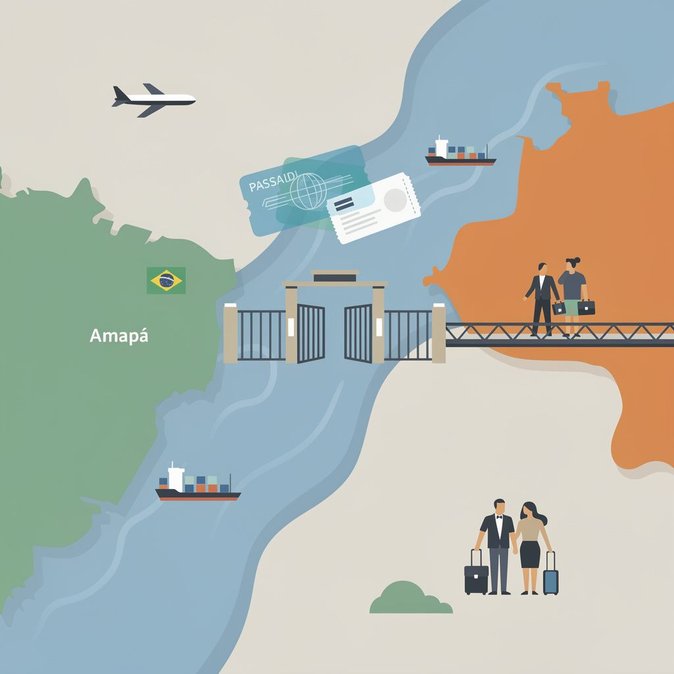
Beginning 31 July 2026, Brazilian citizens will be able to cross the Oyapock River Bridge into French Guiana without first applying for a Schengen-area visa. The agreement, signed in Brasília on 1 July by Foreign Minister Mauro Vieira and his French counterpart Jean-Noël Barrot, was publicly detailed on 3 July. It creates a 30-day, multiple-entry visa-free regime designed to normalise the intense day-to-day movement that already exists between Oiapoque (Amapá) and neighbouring Saint-Georges-de-l’Oyapock.
For travellers who might still need documentation for onward journeys to mainland Europe or elsewhere, VisaHQ can simplify the process. Its Brazil portal provides real-time visa requirement updates, step-by-step application support and courier services, ensuring that border-hoppers and business delegations stay compliant when their plans extend beyond the new 30-day corridor.
The waiver responds to long-standing pressure from border communities and business groups that complained the €80 fee and Paris-based processing made legal travel onerous. Brazil hopes the measure will channel travellers away from informal river crossings that fuel smuggling and illegal gold mining, while France believes easier entry will improve data collection and allow joint patrols to focus on organised crime rather than casual visitors. For companies running workforce shuttles to the Centre Spatial de Kourou or timber operations in Camopi, the change removes weeks of lead-time and simplifies insurance and HR compliance. Tour operators on both sides of the frontier are already packaging weekend shopping trips to Cayenne and ecotourism circuits in the Tumucumaque mountains. Practicalities remain: visitors must still carry a valid passport, Yellow-Fever vaccination certificate and proof of funds. Officials in Cayenne confirmed that overstays will incur standard Schengen penalties. Brazilian authorities are upgrading the border-control system at Oiapoque to recognise exit/entry data in real time and share watch-lists with French counterparts. If the pilot succeeds, diplomats hinted that a reciprocal 90-day waiver for French tourists entering Brazil’s North region could follow, further integrating a border that is geographically South American but administratively European.
For travellers who might still need documentation for onward journeys to mainland Europe or elsewhere, VisaHQ can simplify the process. Its Brazil portal provides real-time visa requirement updates, step-by-step application support and courier services, ensuring that border-hoppers and business delegations stay compliant when their plans extend beyond the new 30-day corridor.
The waiver responds to long-standing pressure from border communities and business groups that complained the €80 fee and Paris-based processing made legal travel onerous. Brazil hopes the measure will channel travellers away from informal river crossings that fuel smuggling and illegal gold mining, while France believes easier entry will improve data collection and allow joint patrols to focus on organised crime rather than casual visitors. For companies running workforce shuttles to the Centre Spatial de Kourou or timber operations in Camopi, the change removes weeks of lead-time and simplifies insurance and HR compliance. Tour operators on both sides of the frontier are already packaging weekend shopping trips to Cayenne and ecotourism circuits in the Tumucumaque mountains. Practicalities remain: visitors must still carry a valid passport, Yellow-Fever vaccination certificate and proof of funds. Officials in Cayenne confirmed that overstays will incur standard Schengen penalties. Brazilian authorities are upgrading the border-control system at Oiapoque to recognise exit/entry data in real time and share watch-lists with French counterparts. If the pilot succeeds, diplomats hinted that a reciprocal 90-day waiver for French tourists entering Brazil’s North region could follow, further integrating a border that is geographically South American but administratively European.