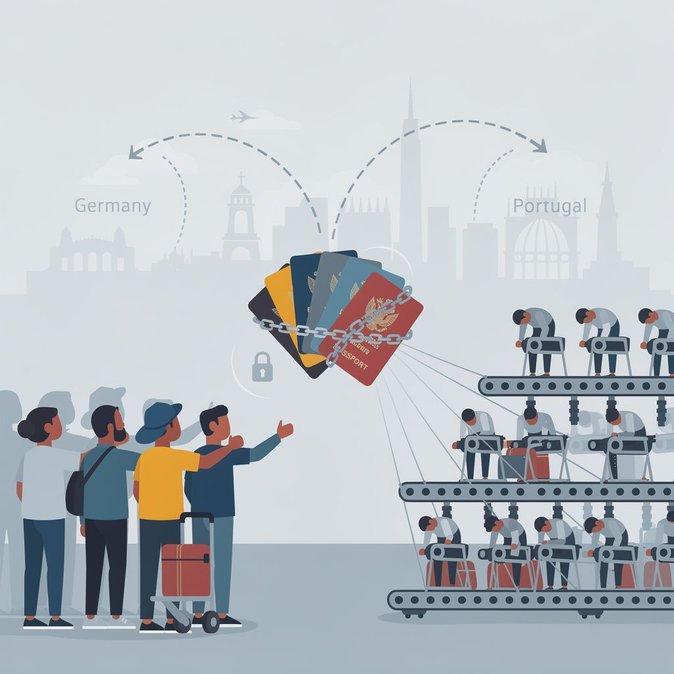
Brazil’s Federal Police (PF) launched Operation ‘Rota Amazônica’ on 3 July 2026, serving 18 search warrants and 12 arrest warrants across Pará, Maranhão and Rio Grande do Sul against a gang that recruited vulnerable Brazilians for bogus hospitality jobs in Germany and Portugal. According to investigators, victims paid up to R$25,000 for ‘placement packages’ that included forged work permits and Schengen visas. On arrival, passports were confiscated and migrants were forced to work 15-hour shifts in food-processing plants to repay inflated debts. The investigation began after Brazilian consular staff in Frankfurt noticed a spike in emergency travel-document requests from nationals who claimed to have escaped exploitative conditions.
For Brazilians who do plan to work or travel abroad, partnering with a reputable visa facilitator is the safest route. VisaHQ, for example, provides clear, step-by-step assistance for obtaining legitimate Schengen work, business and tourist visas, along with document review and courier services—everything accessible through its Brazil portal at Using such services can help applicants steer clear of the fraudulent shortcuts targeted by traffickers.
With support from Europol and German police, Brazilian agents identified money-transfer patterns and seized encrypted messaging records that showed recruiters coaching victims on how to deceive immigration officers at Guarulhos airport. Friday’s raids led to the arrest of the alleged ringleader in Belém and the seizure of 234 passports, 17,000 euros in cash, and a machine used to fabricate German residence permits. The PF also froze R$4.8 million in bank accounts held by front companies that laundered recruitment fees through cryptocurrency exchanges. Under Brazil’s 2017 Migration Law, convicted traffickers face up to eight years in prison, rising to 12 years when the crime involves transnational elements or results in forced labour. The PF has notified 67 identified victims, who will be eligible to apply for special protection visas and inclusion in the federal labour-reintegration programme. The case is a reminder for corporate mobility teams to verify the accreditation of overseas staffing agencies and to educate employees on the legal pathways for work in Europe. Brazil’s Ministry of Labour says it will publish new compliance guidelines for international recruiters later this month.
For Brazilians who do plan to work or travel abroad, partnering with a reputable visa facilitator is the safest route. VisaHQ, for example, provides clear, step-by-step assistance for obtaining legitimate Schengen work, business and tourist visas, along with document review and courier services—everything accessible through its Brazil portal at Using such services can help applicants steer clear of the fraudulent shortcuts targeted by traffickers.
With support from Europol and German police, Brazilian agents identified money-transfer patterns and seized encrypted messaging records that showed recruiters coaching victims on how to deceive immigration officers at Guarulhos airport. Friday’s raids led to the arrest of the alleged ringleader in Belém and the seizure of 234 passports, 17,000 euros in cash, and a machine used to fabricate German residence permits. The PF also froze R$4.8 million in bank accounts held by front companies that laundered recruitment fees through cryptocurrency exchanges. Under Brazil’s 2017 Migration Law, convicted traffickers face up to eight years in prison, rising to 12 years when the crime involves transnational elements or results in forced labour. The PF has notified 67 identified victims, who will be eligible to apply for special protection visas and inclusion in the federal labour-reintegration programme. The case is a reminder for corporate mobility teams to verify the accreditation of overseas staffing agencies and to educate employees on the legal pathways for work in Europe. Brazil’s Ministry of Labour says it will publish new compliance guidelines for international recruiters later this month.