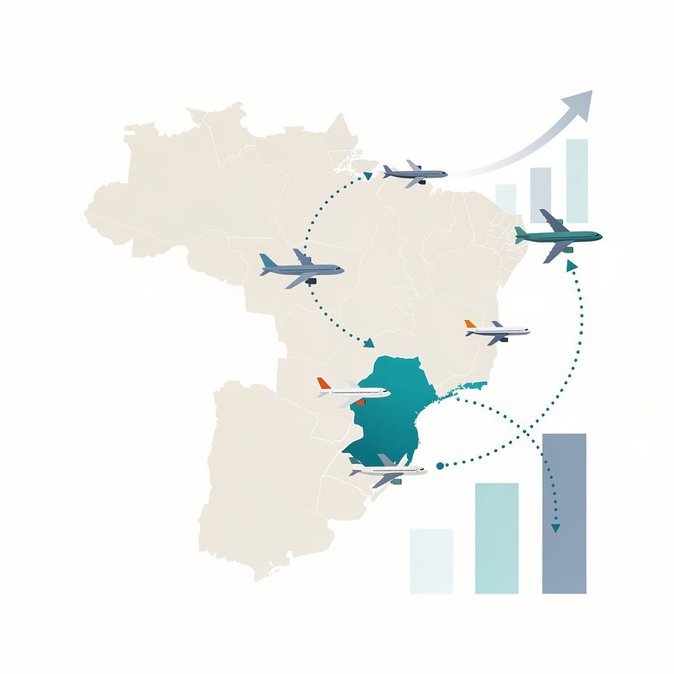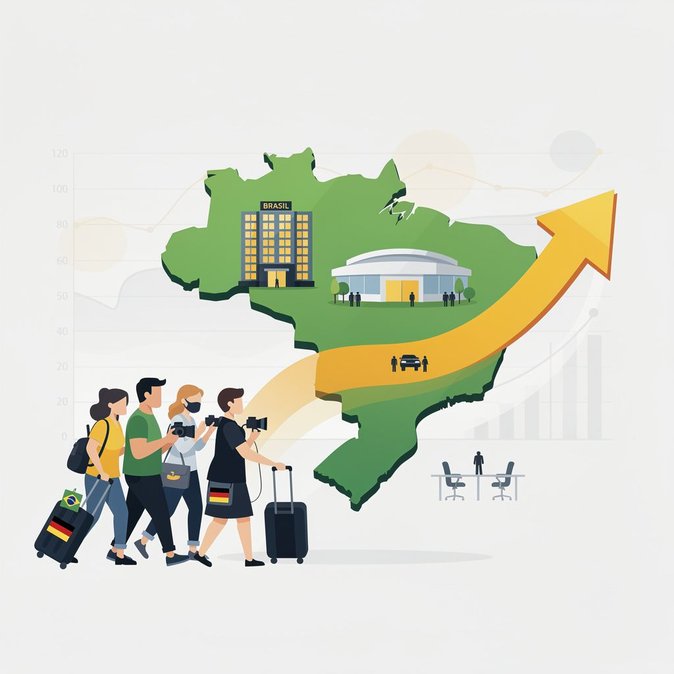
International arrivals data released on 3 July show Brazil riding a wave of European travel demand. German arrivals in May jumped 19.8 % year-on-year to 11,289, the best May result since 2017; cumulative January–May traffic from Germany is up 17.9 % to 112,181—levels unseen since 2008.
For travellers who do require documentation—such as visitors from countries not covered by Brazil’s visa-waiver programme or U.S. nationals facing the reinstated e-Visa—VisaHQ can simplify the paperwork. Its dedicated Brazil portal lays out requirements by nationality, offers online applications, real-time tracking and courier submission services, sparing both leisure and business travellers from last-minute complications.
Overall European arrivals hit 863,504 for the five-month period, a 17.2 % increase. Embratur credits aggressive co-marketing with Lufthansa, Condor and tour operators, plus a narrative shift toward “immersive nature and culture” that dovetails with post-pandemic traveller preferences. Campaigns spotlighting the Amazon, Lençóis Maranhenses and Afro-Brazilian heritage in Salvador have generated double-digit booking spikes, according to booking-engine TravelgateX. For businesses, the rebound signals opportunities: hotel operators in secondary cities report average daily rate growth of 14 %, and convention centres in Curitiba and Recife are extending calendars to capture MICE traffic. Airports anticipate higher load factors; Viracopos expects direct Frankfurt frequencies to rise from three to five weekly in Q4. However, infrastructure gaps persist. The aviation lobby ABR Aeroportáos warns that passenger flows are nearing pre-Covid peaks while security lanes and immigration booths remain under-staffed. Industry groups urge the government to accelerate biometric e-gates, a project frozen since 2024 funding cuts. Analysts view the numbers as validation of Brazil’s visa-free entry scheme for most Europeans and a strategic hedge against softer markets in North America, where the re-introduced e-Visa for US nationals takes effect in October.
For travellers who do require documentation—such as visitors from countries not covered by Brazil’s visa-waiver programme or U.S. nationals facing the reinstated e-Visa—VisaHQ can simplify the paperwork. Its dedicated Brazil portal lays out requirements by nationality, offers online applications, real-time tracking and courier submission services, sparing both leisure and business travellers from last-minute complications.
Overall European arrivals hit 863,504 for the five-month period, a 17.2 % increase. Embratur credits aggressive co-marketing with Lufthansa, Condor and tour operators, plus a narrative shift toward “immersive nature and culture” that dovetails with post-pandemic traveller preferences. Campaigns spotlighting the Amazon, Lençóis Maranhenses and Afro-Brazilian heritage in Salvador have generated double-digit booking spikes, according to booking-engine TravelgateX. For businesses, the rebound signals opportunities: hotel operators in secondary cities report average daily rate growth of 14 %, and convention centres in Curitiba and Recife are extending calendars to capture MICE traffic. Airports anticipate higher load factors; Viracopos expects direct Frankfurt frequencies to rise from three to five weekly in Q4. However, infrastructure gaps persist. The aviation lobby ABR Aeroportáos warns that passenger flows are nearing pre-Covid peaks while security lanes and immigration booths remain under-staffed. Industry groups urge the government to accelerate biometric e-gates, a project frozen since 2024 funding cuts. Analysts view the numbers as validation of Brazil’s visa-free entry scheme for most Europeans and a strategic hedge against softer markets in North America, where the re-introduced e-Visa for US nationals takes effect in October.