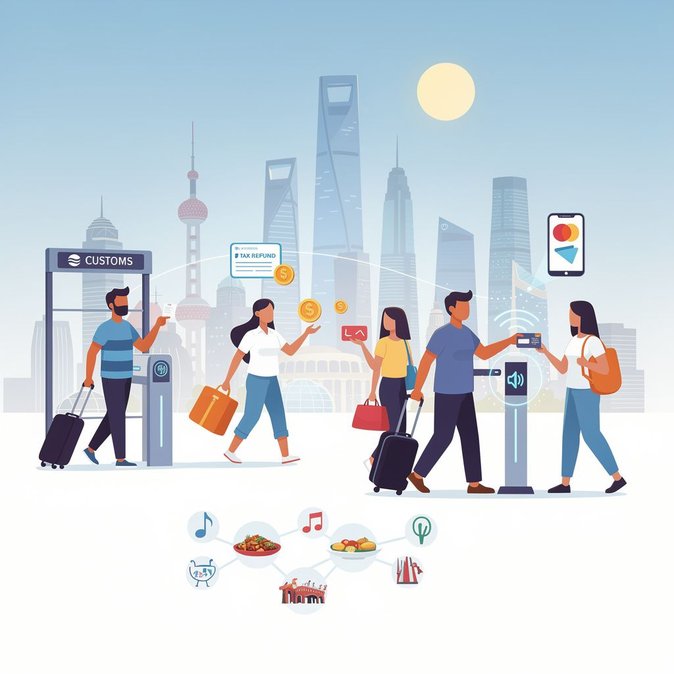
Shanghai kicked off its four-month “Summer in Shanghai” International Consumption Season on the evening of July 3 with a very clear target: international visitors. Speaking to domestic and foreign media during a site tour on July 4, Liu Min, deputy director of the Shanghai Municipal Commerce Commission, said the city wants to turn summer holidays into “the peak season for inbound spending.” To make that happen, authorities and major service providers have rolled out a 2.0 version of the city’s inbound-tourist service package. Six areas have been upgraded—transportation, accommodation, tailored concierge services, digital conveniences, payment and tax-free shopping.
For travelers figuring out whether they qualify for visa-free entry or need additional documentation, VisaHQ can streamline the process in minutes. The platform offers up-to-date guidance on Chinese visa requirements, assists with electronic forms, and even arranges courier services for passport handling, making it easier to lock in those summer plans. Explore the options at https://www.visahq.com/china/
Practical measures include an NFC overseas edition of the “Shanghai Pass” transport card, AI multilingual assistance in the UnionPay-backed “Inbound Pass” wallet, and theme-flight discounts from China Eastern Airlines. A new “random inspection” model under the national Departure Tax-Refund 2.0 rules means most travelers spending under RMB 10,000 will no longer need to open their suitcases at Customs, cutting queuing time by half. The commercial sector is also pitching in. Visa has designated new “tap-to-pay” friendly blocks, while Ant Group is subsidizing 30,000 merchants to install one-touch QR terminals that accept 200+ foreign wallets. Eleven flagship events—from the Shanghai ATP 1000 tennis masters to the third Shanghai International Light & Shadow Festival—have been bundled with hotel and ticket passes to encourage longer stays. Jones Lang LaSalle China CEO Zhang Jing said the overlap of expanded visa-free entry, faster tax refunds and a festival-rich calendar makes the campaign “a test-bed for how Chinese megacities can convert relaxed border policy into real consumption.” Five-star hotel occupancy already hit 58.8 percent in the first five months of 2026, and the city expects double-digit growth in average daily rates during the summer break. For corporates moving staff in and out of Shanghai, the message is equally positive. Faster e-arrival registration, city-wide English-language signage upgrades and digital transit cards that can be issued before landing reduce the friction cost of short-term assignments. Mobility managers are therefore advising executives to time visa-free trips with the festival calendar to maximize both client engagement and employee satisfaction.
For travelers figuring out whether they qualify for visa-free entry or need additional documentation, VisaHQ can streamline the process in minutes. The platform offers up-to-date guidance on Chinese visa requirements, assists with electronic forms, and even arranges courier services for passport handling, making it easier to lock in those summer plans. Explore the options at https://www.visahq.com/china/
Practical measures include an NFC overseas edition of the “Shanghai Pass” transport card, AI multilingual assistance in the UnionPay-backed “Inbound Pass” wallet, and theme-flight discounts from China Eastern Airlines. A new “random inspection” model under the national Departure Tax-Refund 2.0 rules means most travelers spending under RMB 10,000 will no longer need to open their suitcases at Customs, cutting queuing time by half. The commercial sector is also pitching in. Visa has designated new “tap-to-pay” friendly blocks, while Ant Group is subsidizing 30,000 merchants to install one-touch QR terminals that accept 200+ foreign wallets. Eleven flagship events—from the Shanghai ATP 1000 tennis masters to the third Shanghai International Light & Shadow Festival—have been bundled with hotel and ticket passes to encourage longer stays. Jones Lang LaSalle China CEO Zhang Jing said the overlap of expanded visa-free entry, faster tax refunds and a festival-rich calendar makes the campaign “a test-bed for how Chinese megacities can convert relaxed border policy into real consumption.” Five-star hotel occupancy already hit 58.8 percent in the first five months of 2026, and the city expects double-digit growth in average daily rates during the summer break. For corporates moving staff in and out of Shanghai, the message is equally positive. Faster e-arrival registration, city-wide English-language signage upgrades and digital transit cards that can be issued before landing reduce the friction cost of short-term assignments. Mobility managers are therefore advising executives to time visa-free trips with the festival calendar to maximize both client engagement and employee satisfaction.