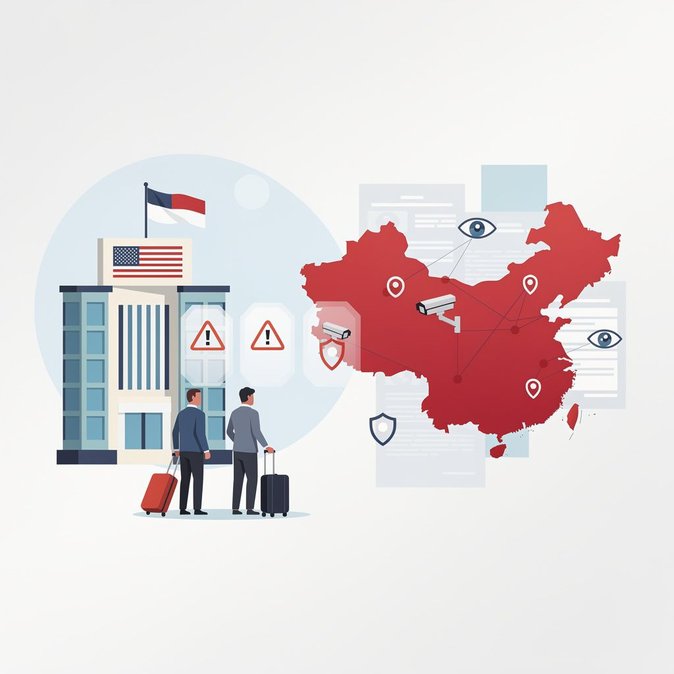
The U.S. Embassy in Beijing and its consulates have released ten separate security advisories between mid-June and 4 July, an unprecedented frequency that analysts describe as a “downgrade of China’s overall risk rating” for foreign nationals. The latest notices warn journalists, academics and faith-based travellers about surveillance, arbitrary detention and restrictions on religious gatherings.
The wave of alerts coincides with the 1 July entry-into-force of China’s new Ethnic Unity and Progress Promotion Law, which extends liability to “overseas organisations and individuals” deemed to instigate ethnic division.
Travelers who still need to visit China despite these heightened warnings can mitigate some of the uncertainty by working with professional visa facilitators. VisaHQ, for instance, continuously tracks regulatory changes and can guide applicants through the evolving Chinese visa process, flagging new security-related requirements and helping ensure documentation is complete before departure. More information is available at https://www.visahq.com/china/
Washington-based China watchers told VOA that embassy staff are flagging real-time enforcement uncertainties as local authorities interpret the broad legislation. For mobility managers the practical impact is two-fold. First, companies are reviewing the profiles of staff slated for short-term projects, particularly dual nationals or employees engaged in media-related activity. Second, global mobility policies are being updated to include emergency extraction clauses and mandatory risk-briefings before departure. Insurance brokers say demand for kidnap and detention coverage for China assignments has risen 15 percent since June. Chinese officials have not commented on the U.S. notices, but Beijing has repeatedly dismissed foreign travel warnings as “politically motivated.” Nevertheless, other Western missions—including Canada and the EU delegation—are said to be preparing their own guidance, suggesting that risk perception is likely to harden in the coming weeks.
The wave of alerts coincides with the 1 July entry-into-force of China’s new Ethnic Unity and Progress Promotion Law, which extends liability to “overseas organisations and individuals” deemed to instigate ethnic division.
Travelers who still need to visit China despite these heightened warnings can mitigate some of the uncertainty by working with professional visa facilitators. VisaHQ, for instance, continuously tracks regulatory changes and can guide applicants through the evolving Chinese visa process, flagging new security-related requirements and helping ensure documentation is complete before departure. More information is available at https://www.visahq.com/china/
Washington-based China watchers told VOA that embassy staff are flagging real-time enforcement uncertainties as local authorities interpret the broad legislation. For mobility managers the practical impact is two-fold. First, companies are reviewing the profiles of staff slated for short-term projects, particularly dual nationals or employees engaged in media-related activity. Second, global mobility policies are being updated to include emergency extraction clauses and mandatory risk-briefings before departure. Insurance brokers say demand for kidnap and detention coverage for China assignments has risen 15 percent since June. Chinese officials have not commented on the U.S. notices, but Beijing has repeatedly dismissed foreign travel warnings as “politically motivated.” Nevertheless, other Western missions—including Canada and the EU delegation—are said to be preparing their own guidance, suggesting that risk perception is likely to harden in the coming weeks.