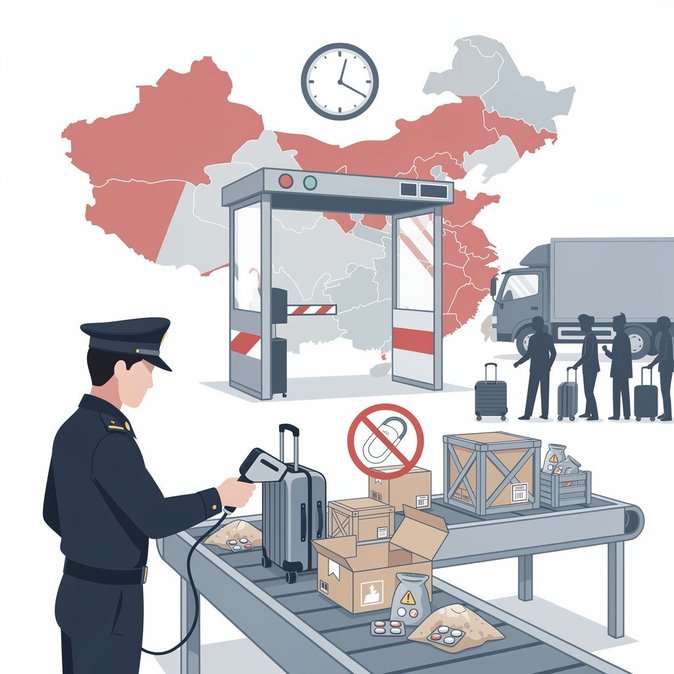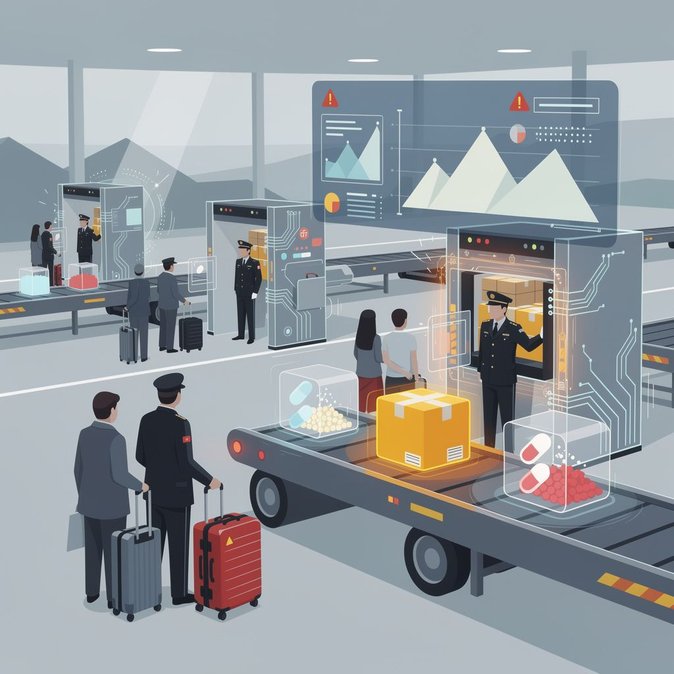
In a briefing released on 26 June—the International Day Against Drug Abuse—the National Immigration Administration (NIA) said its units at seaports, airports and land borders had uncovered 186 narcotics cases and confiscated 4.07 tonnes of drugs in the first six months of 2026. The haul includes 45 cases involving more than 10 kilograms each, underscoring what officials called “persistent trafficking pressure” on key channels such as Yunnan–Myanmar, Guangdong coastal routes and international parcel hubs. A total of 243 suspects, both Chinese and foreign, were arrested. According to the NIA, many smugglers attempted to conceal methamphetamine and fentanyl precursors in engine components, powdered tea and courier shipments. The agency said it has expanded data-sharing with customs, postal services and public-security bureaus, and is trialling AI-based baggage-scanning analytics at seven major airports including Guangzhou Baiyun and Shanghai Pudong. While the figures mainly concern law-enforcement, they have practical implications for global-mobility managers. Heightened controls mean travellers should expect more frequent random inspections of luggage and parcels, particularly on routes touching Southeast Asia. Corporations shipping product samples or lithium batteries out of southwestern China may face additional documentation checks. The NIA added that it will keep the current “Clean Source, Cut Flow” campaign in place through year-end, focusing on synthetic-drug supply chains and improving real-time intelligence exchanges with neighbouring countries. Enterprises employing foreign nationals near sensitive border zones have been advised to refresh staff briefings on China’s zero-tolerance drug laws and to ensure work-permit holders carry proper identification during spot checks. Industry analysts note that robust interdiction statistics help underscore Beijing’s message that the borders are open for legitimate trade and travel but closed to illicit flows—a narrative that supports recent moves to extend visa-free entry to additional nations while maintaining stringent security screening.
Source: People’s Daily Online