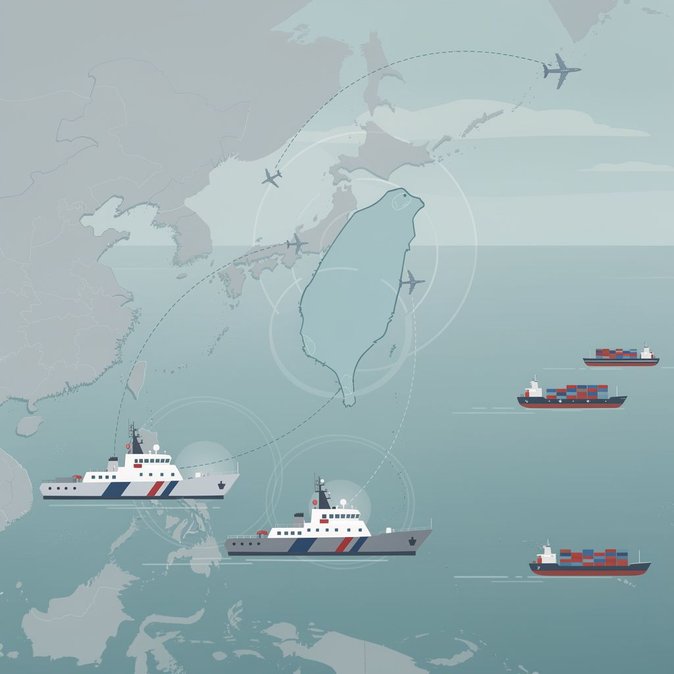
China’s Coast Guard (CCG) has deployed the Xiushan vessel group to replace the Daishan formation for routine law-enforcement patrols east of Taiwan island starting 4 July, the agency’s spokesperson Jiang Lue announced on WeChat. The mission includes verification of fishing licences, search-and-rescue readiness drills and safety escorts for PRC-flagged commercial shipping. Although the patrol is maritime, it has knock-on effects for air and sea carriers operating between mainland ports and Japan, South Korea and the Philippines.
Should changes in routing require crew or executives to swap vessels or fly via alternative gateways, VisaHQ’s online platform (https://www.visahq.com/china/) can fast-track the necessary China business, crew and transit visas. Offering real-time requirement checks, digital document uploads and nationwide courier pick-up, the service helps mobility teams keep itineraries on track even as maritime patrols force last-minute schedule adjustments.
Industry sources report that China COSCO has issued a navigational advisory, and two regional airlines have filed minor route deviations with CAAC to avoid potential exclusion zones. For multinational companies moving crew or high-value cargo through the East China Sea, the key takeaway is that the CCG intends to maintain an unbroken presence in the area through quarterly ship rotations. Mobility planners should therefore build a 2-to-4-hour buffer into schedules for vessels transiting the Miyako or Bashi channels and monitor NOTAMs for ad-hoc air-space restrictions. Analysts view the patrols as part of Beijing’s stepped-up jurisdictional assertion following the April 2026 promulgation of the revised Guard Law, which expanded CCG powers to board foreign vessels suspected of endangering "China’s maritime rights." While not a visa issue, the development underscores the broader security context that can disrupt personnel movements and supply chains.
Should changes in routing require crew or executives to swap vessels or fly via alternative gateways, VisaHQ’s online platform (https://www.visahq.com/china/) can fast-track the necessary China business, crew and transit visas. Offering real-time requirement checks, digital document uploads and nationwide courier pick-up, the service helps mobility teams keep itineraries on track even as maritime patrols force last-minute schedule adjustments.
Industry sources report that China COSCO has issued a navigational advisory, and two regional airlines have filed minor route deviations with CAAC to avoid potential exclusion zones. For multinational companies moving crew or high-value cargo through the East China Sea, the key takeaway is that the CCG intends to maintain an unbroken presence in the area through quarterly ship rotations. Mobility planners should therefore build a 2-to-4-hour buffer into schedules for vessels transiting the Miyako or Bashi channels and monitor NOTAMs for ad-hoc air-space restrictions. Analysts view the patrols as part of Beijing’s stepped-up jurisdictional assertion following the April 2026 promulgation of the revised Guard Law, which expanded CCG powers to board foreign vessels suspected of endangering "China’s maritime rights." While not a visa issue, the development underscores the broader security context that can disrupt personnel movements and supply chains.