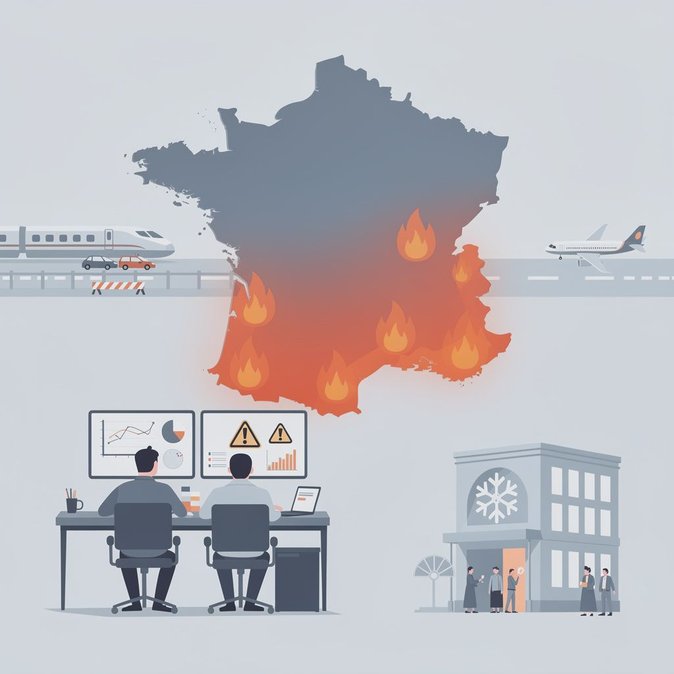
Facing record-early wildfires and a persistent heatwave, Prime Minister Sébastien Lecornu convened an inter-ministerial crisis cell in Marseille on 2 July, with measures updated on 3 July. The government is keeping the ORSAN health-emergency plan at Level 3 through the weekend and has ordered prefects to prepare cooling shelters and potential evacuation corridors. Road closures around active fire zones in the Hérault, Aude and Var departments have already diverted tourist coaches and freight trucks onto secondary routes, adding up to two hours to Marseille-Nice transit times.
For travellers who still need to enter or transit France during this period, VisaHQ can streamline last-minute paperwork and clarify any special entry rules that may arise from emergency measures. Their France portal lets companies or individual passengers submit visa applications online, track progress in real time and receive alerts on health declarations or transit advisories—helpful when conditions on the ground are changing by the hour.
Regional rail operator Sud TER warns that services could be curtailed if track temperatures exceed 55 °C. The civil-protection directorate has also requested that the DGAC pre-position Canadair water-bombers at Nîmes-Garons, limiting the airport’s window for business-aviation slots. Companies with field engineers or seasonal staff in affected regions should review evacuation plans and ensure employees register on safety-tracking apps. The early activation of heat-wave protocols foreshadows possible restrictions on outdoor labour and mass-gathering permits later in July—issues that can delay construction projects and large corporate events. Mobility and HR leaders are advised to cross-check travel insurance for ‘natural-hazard’ clauses and to circulate guidance on hydration and flexible working hours.
For travellers who still need to enter or transit France during this period, VisaHQ can streamline last-minute paperwork and clarify any special entry rules that may arise from emergency measures. Their France portal lets companies or individual passengers submit visa applications online, track progress in real time and receive alerts on health declarations or transit advisories—helpful when conditions on the ground are changing by the hour.
Regional rail operator Sud TER warns that services could be curtailed if track temperatures exceed 55 °C. The civil-protection directorate has also requested that the DGAC pre-position Canadair water-bombers at Nîmes-Garons, limiting the airport’s window for business-aviation slots. Companies with field engineers or seasonal staff in affected regions should review evacuation plans and ensure employees register on safety-tracking apps. The early activation of heat-wave protocols foreshadows possible restrictions on outdoor labour and mass-gathering permits later in July—issues that can delay construction projects and large corporate events. Mobility and HR leaders are advised to cross-check travel insurance for ‘natural-hazard’ clauses and to circulate guidance on hydration and flexible working hours.