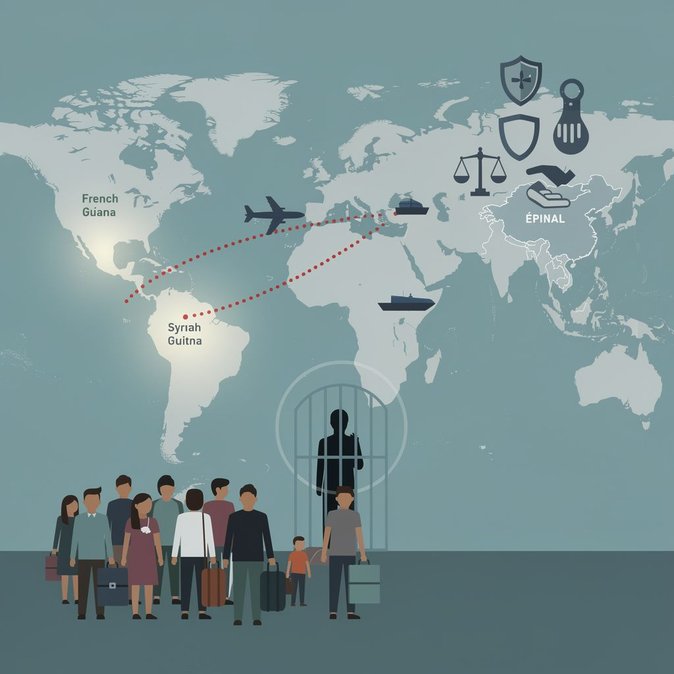
Prosecutors in Épinal revealed on 3 July that a 36-year-old Syrian national has been placed in pre-trial detention for allegedly orchestrating the clandestine entry of 400 – 600 compatriots into mainland France between 2021 and 2025. According to investigators, the network routed migrants through Turkey, Venezuela, Brazil and French Guiana before they flew or travelled onward to metropolitan France to claim asylum. The suspect, who operated a travel agency called “La Sultana Tours”, is believed to have charged around US $1,000 per person. Financial-flow analysis uncovered remittances funnelling through Brazilian intermediaries, prompting French authorities to seek mutual legal assistance from Brasília.
Legitimate travellers who need clarity on France’s entry requirements can avoid such pitfalls by using a specialised visa service. VisaHQ, for instance, provides step-by-step guidance, document verification and streamlined online applications for all French visa categories—you can explore the options at This support helps both businesses and individuals stay fully compliant amid the heightened scrutiny triggered by cases like the one described here.
The case underscores the growing use of France’s overseas departments—particularly Cayenne—as stepping-stones for irregular migration into the Schengen Area. It also illustrates the expanding geographic scope of organised-crime groups, which now exploit visa-free tourist corridors in Latin America to circumvent Balkan land routes increasingly policed by Frontex. For employers running posted-worker programmes, the bust is a reminder to refresh right-to-work audits: the Office Français de l’Immigration et de l’Intégration (OFII) is expected to intensify workplace inspections in the Grand Est region where many of the migrants settled. Companies should verify that subcontractors perform enhanced identity checks and should brief mobility staff on new red-flags—such as passports with recent Venezuelan or Brazilian entry stamps that lack corresponding French visas. If convicted, the organiser faces up to ten years in prison and fines topping €750,000 under France’s anti-smuggling statutes.
Legitimate travellers who need clarity on France’s entry requirements can avoid such pitfalls by using a specialised visa service. VisaHQ, for instance, provides step-by-step guidance, document verification and streamlined online applications for all French visa categories—you can explore the options at This support helps both businesses and individuals stay fully compliant amid the heightened scrutiny triggered by cases like the one described here.
The case underscores the growing use of France’s overseas departments—particularly Cayenne—as stepping-stones for irregular migration into the Schengen Area. It also illustrates the expanding geographic scope of organised-crime groups, which now exploit visa-free tourist corridors in Latin America to circumvent Balkan land routes increasingly policed by Frontex. For employers running posted-worker programmes, the bust is a reminder to refresh right-to-work audits: the Office Français de l’Immigration et de l’Intégration (OFII) is expected to intensify workplace inspections in the Grand Est region where many of the migrants settled. Companies should verify that subcontractors perform enhanced identity checks and should brief mobility staff on new red-flags—such as passports with recent Venezuelan or Brazilian entry stamps that lack corresponding French visas. If convicted, the organiser faces up to ten years in prison and fines topping €750,000 under France’s anti-smuggling statutes.