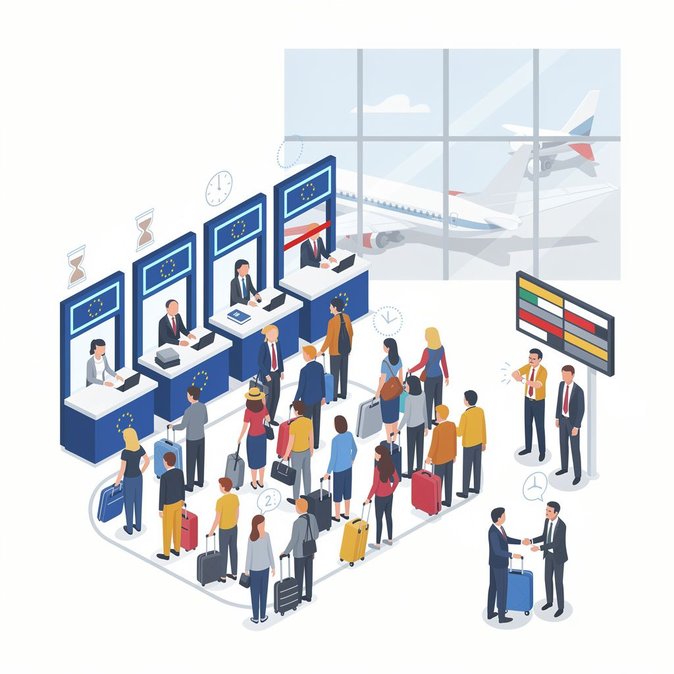
Brussels publicly acknowledged on Friday afternoon (3 July) that the European Union’s brand-new Entry/Exit System (EES) is still generating “unacceptable” passport-control lines, sometimes stretching well over two hours, at the external Schengen borders. European Commission spokesperson Anitta Hipper told reporters that the executive “recognises travellers’ frustration” and is working with member states to add more fingerprint kiosks, redeploy Frontex staff and soften mandatory biometric-enrolment quotas. The admission comes less than three months after EES became compulsory at airports, ports and land crossings on 10 April. Under the system, every non-EU short-stay visitor must give four fingerprints and a facial image the first time they enter the zone; subsequent crossings are verified against that database instead of a passport stamp. Although designed to speed traffic, the six-minute average enrolment time has overwhelmed peak-season traffic flows. French hubs have been among the hardest hit. Paris-Charles-de-Gaulle has already reopened several manual booths, while regional gateways such as Toulouse-Blagnac and Nice report early-morning queues snaking into the departure concourses. Airlines complain that missed connections are cascading across long-haul networks and that carriers are footing the hotel bill when travellers cannot clear immigration fast enough to re-check luggage. For mobility managers the message is clear: build longer buffers between inbound and onward flights, pre-register frequent travellers’ biometric data where local pilot schemes exist, and warn staff that Fast-Track/Parafe gates are temporarily closed to most third-country nationals. The Commission said a fresh progress review is due on 15 July and hinted it could let states cut enrolment targets during the summer rush—a decision that would directly affect French border-police staffing plans.
Source: AFP via Boursedirect