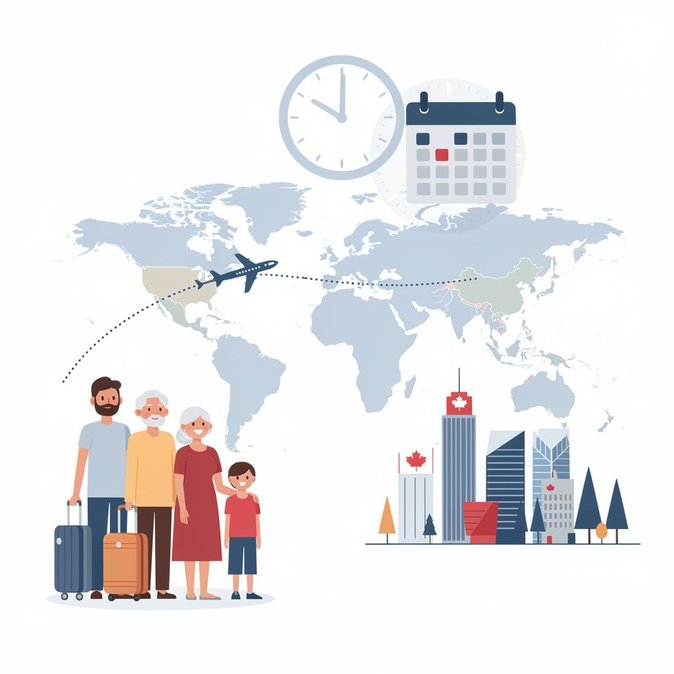
Canada’s Immigration, Refugees and Citizenship Canada (IRCC) has quietly given Indian families a major reprieve. In the weekly processing-time update released on 3 July 2026, IRCC cut the estimated wait for Super Visa applications lodged from India to just 50 calendar days—down from 66 days a week earlier and well below the department’s 112-day service benchmark.
If you’re looking to take advantage of these faster timelines, VisaHQ can simplify every step of the Super Visa journey: from helping you assemble the correct financial affidavits to scheduling biometrics and tracking your file in real time. Their India portal (https://www.visahq.com/india/) offers intuitive checklists, document upload tools and courier pickup options, all designed to minimize errors that could trigger costly delays.
The Super Visa lets parents and grandparents of Canadian citizens or permanent residents visit for up to five years per entry and stay up to 10 years in total. Because Indians file more Super Visa applications than any other nationality, the 16-day drop removes a significant bottleneck for family-reunification travel at a time when summer ticket prices are peaking and many applicants are racing to attend milestone events such as weddings and university graduations. IRCC left other key categories largely unchanged for Indian nationals: work-permit processing from outside Canada remains nine weeks, visitor visas dipped marginally to 21 days and study-permit processing edged up to five weeks. Corporations that routinely sponsor accompanying parents now have a clearer window to align travel with assignment start dates, while global-mobility managers can recalibrate cost projections for emergency travel insurance, accommodation and airfares. Employers should still counsel assignees that published timelines are estimates. High-volume periods—particularly August and December—can stretch actual waits beyond the forecast. IRCC also warns that incomplete documentation, medical exams and background checks can add weeks. Nevertheless, the new 50-day target signals that Ottawa’s post-pandemic backlog-reduction strategy is bearing fruit for the Indian market.
If you’re looking to take advantage of these faster timelines, VisaHQ can simplify every step of the Super Visa journey: from helping you assemble the correct financial affidavits to scheduling biometrics and tracking your file in real time. Their India portal (https://www.visahq.com/india/) offers intuitive checklists, document upload tools and courier pickup options, all designed to minimize errors that could trigger costly delays.
The Super Visa lets parents and grandparents of Canadian citizens or permanent residents visit for up to five years per entry and stay up to 10 years in total. Because Indians file more Super Visa applications than any other nationality, the 16-day drop removes a significant bottleneck for family-reunification travel at a time when summer ticket prices are peaking and many applicants are racing to attend milestone events such as weddings and university graduations. IRCC left other key categories largely unchanged for Indian nationals: work-permit processing from outside Canada remains nine weeks, visitor visas dipped marginally to 21 days and study-permit processing edged up to five weeks. Corporations that routinely sponsor accompanying parents now have a clearer window to align travel with assignment start dates, while global-mobility managers can recalibrate cost projections for emergency travel insurance, accommodation and airfares. Employers should still counsel assignees that published timelines are estimates. High-volume periods—particularly August and December—can stretch actual waits beyond the forecast. IRCC also warns that incomplete documentation, medical exams and background checks can add weeks. Nevertheless, the new 50-day target signals that Ottawa’s post-pandemic backlog-reduction strategy is bearing fruit for the Indian market.