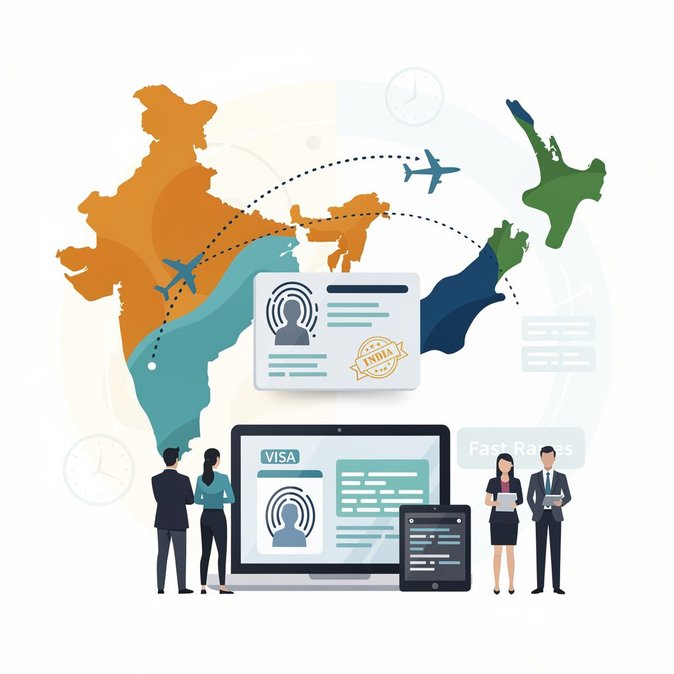
India’s Ministry of External Affairs (MEA) used its pre-departure briefing for Prime Minister Narendra Modi’s three-nation tour (Indonesia 8-9 July, Australia 10 July and New Zealand 11 July) to underline that the government’s top priority in every free-trade negotiation is the mobility of Indian experts, not broad-brush migration quotas. Secretary (East) Rudrendra Tandon told reporters that recurring visa bottlenecks for Indian CEOs, project managers and IT specialists function as a “de-facto non-tariff barrier”, shrinking the commercial value of tariff concessions won elsewhere in a trade pact. The issue has already been baked into the new India–New Zealand Free Trade Agreement, signed on 27 April 2026, which contains an indicative 30-day service standard for issuing work visas to intra-company transferees and independent professionals, plus a mutual recognition clause for engineering and IT degrees. Tandon’s remarks come as Wellington floats tougher English-language and salary thresholds for permanent migration—rules that business groups fear could spill over into temporary work streams. By differentiating “mobility” from “migration”, New Delhi hopes to shield its flagship start-up and semiconductor sectors from future labour-market protectionism in partner countries while keeping the domestic political debate on emigration at bay. Analysts note that India’s newer FTAs (UAE 2022, Australia 2022, EFTA 2024) already carry bespoke mobility chapters; the MEA statement signals continuity and raises expectations that similar provisions will re-appear in the long-awaited EU and UK deals. Companies sending teams abroad should therefore track implementation of the India-NZ FTA once it is ratified: early successes—such as pilot “green channel” visa desks and automatic degree recognition—could become the template for future accords. For Indian employers the policy emphasis is clear: assemble robust evidence that a task cannot be delivered remotely, prioritise senior technologists who meet partner-country salary bands, and document reciprocal benefits (technology transfer, R&D jobs created locally) when invoking mobility clauses. That preparation will remain critical as immigration politics tighten worldwide.
Source: Business Standard