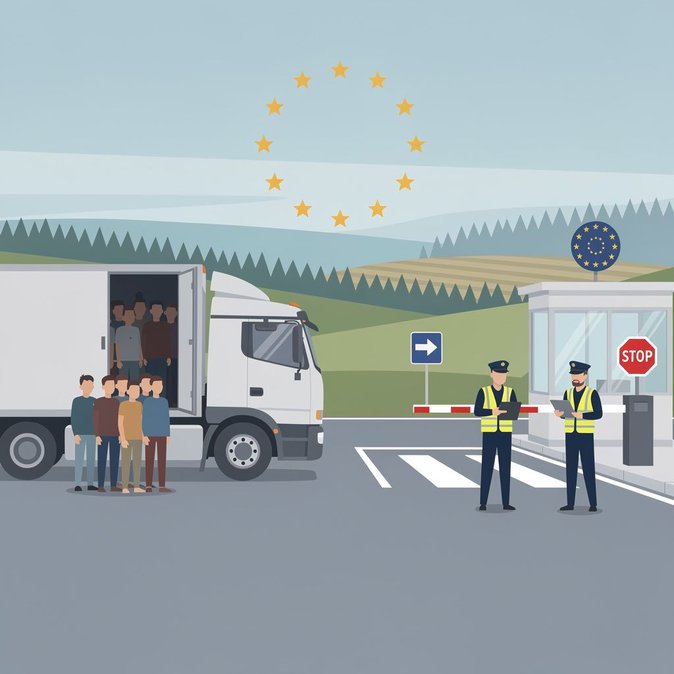
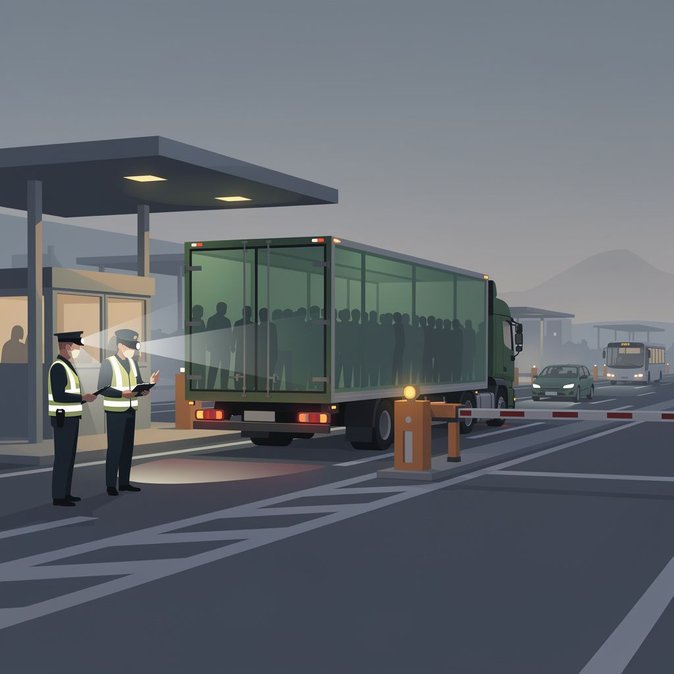
Poland’s Border Guard has confirmed that 54 foreign nationals—including 15 Afghans, 12 Syrians, 9 Iraqis and smaller groups from Iran, Eritrea, Somalia and Cuba—were intercepted in the early hours of Saturday, 4 July while concealed in a curtain-sided truck entering Poland from Lithuania at the Budzisko/Szewczyny freight terminal. According to the statement, officers became suspicious when the Polish-registered driver presented incomplete CMR waybills. A mobile X-ray unit deployed on site revealed dozens of heat signatures in the trailer, prompting a full search. None of the migrants possessed travel documents or visas that would allow them to enter the Schengen Area legally.
For legitimate travellers looking to avoid such pitfalls, VisaHQ provides a streamlined online service that helps individuals and corporate mobility teams verify requirements, obtain visas and manage passport renewals before departure. Their Poland portal (https://www.visahq.com/poland/) keeps real-time data on Schengen and third-country entry rules, offers courier submission and can expedite applications—reducing the risk of delays or refusals at the border.
They were taken to a border-guard post in Rutka-Tartak for identification, medical screening and issuance of return decisions under the EU’s Re-admission Agreement with Lithuania. Preliminary interviews indicate that the group had travelled along the so-called “Baltic Route”, having first flown to Moscow or Minsk on Russian tourist visas before paying up to €3,000 each to facilitators who promised road transport into Poland and onward passage to Germany or the Netherlands. For companies moving staff or high-value cargo across the Polish-Lithuanian border, the incident is a reminder that temporary internal Schengen checks—re-introduced by Warsaw in 2025 and recently extended to 1 October 2026—remain active. Freight forwarders should plan for additional screening times and possible spot checks, especially for curtain-sider and container traffic. Employers posting drivers on this corridor are advised to brief them on document-inspection protocols and the severe penalties for knowingly transporting irregular migrants (up to PLN 60,000 and loss of licence). While the number of illegal crossings on Poland’s eastern flank has fallen sharply since 2025, today’s interception shows that smugglers continue to probe the internal Schengen frontier. Mobility managers should keep contingency buffers in delivery schedules and monitor Border Guard communiqués, which are now published in English as well as Polish for corporate users.
For legitimate travellers looking to avoid such pitfalls, VisaHQ provides a streamlined online service that helps individuals and corporate mobility teams verify requirements, obtain visas and manage passport renewals before departure. Their Poland portal (https://www.visahq.com/poland/) keeps real-time data on Schengen and third-country entry rules, offers courier submission and can expedite applications—reducing the risk of delays or refusals at the border.
They were taken to a border-guard post in Rutka-Tartak for identification, medical screening and issuance of return decisions under the EU’s Re-admission Agreement with Lithuania. Preliminary interviews indicate that the group had travelled along the so-called “Baltic Route”, having first flown to Moscow or Minsk on Russian tourist visas before paying up to €3,000 each to facilitators who promised road transport into Poland and onward passage to Germany or the Netherlands. For companies moving staff or high-value cargo across the Polish-Lithuanian border, the incident is a reminder that temporary internal Schengen checks—re-introduced by Warsaw in 2025 and recently extended to 1 October 2026—remain active. Freight forwarders should plan for additional screening times and possible spot checks, especially for curtain-sider and container traffic. Employers posting drivers on this corridor are advised to brief them on document-inspection protocols and the severe penalties for knowingly transporting irregular migrants (up to PLN 60,000 and loss of licence). While the number of illegal crossings on Poland’s eastern flank has fallen sharply since 2025, today’s interception shows that smugglers continue to probe the internal Schengen frontier. Mobility managers should keep contingency buffers in delivery schedules and monitor Border Guard communiqués, which are now published in English as well as Polish for corporate users.