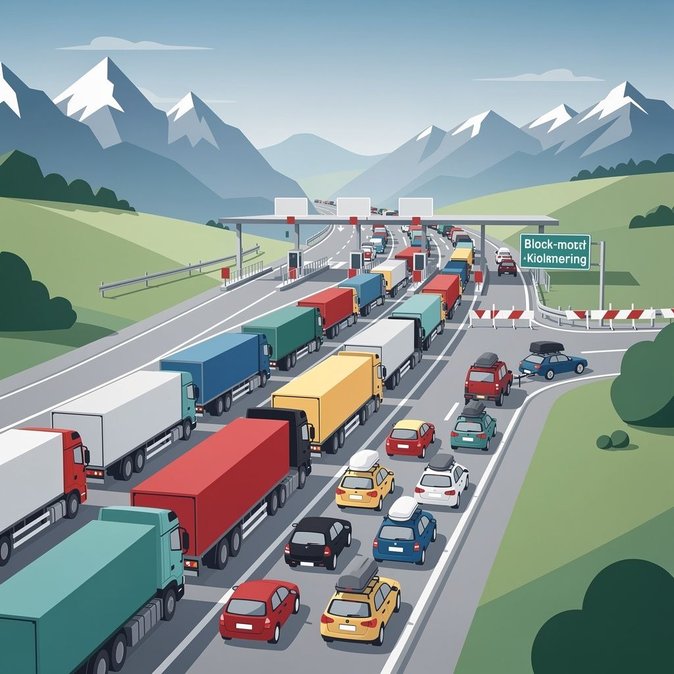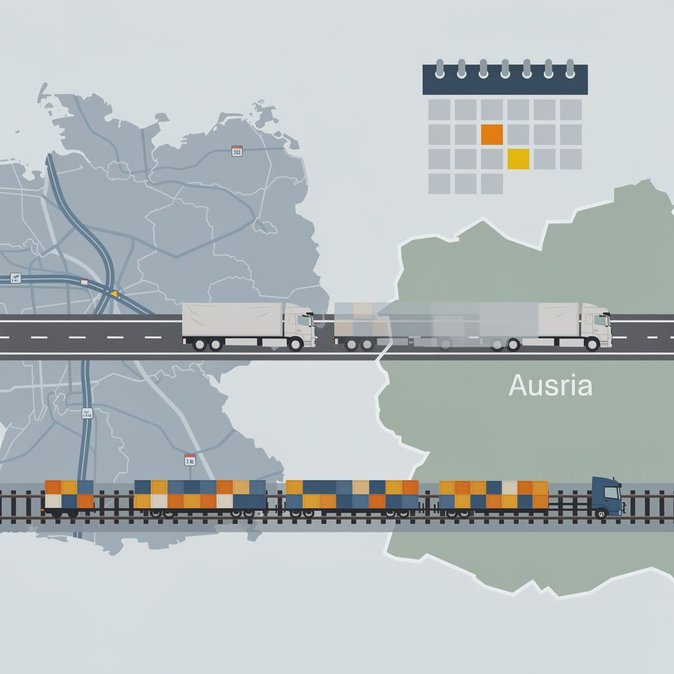
Germany activated its annual Ferienreiseverordnung on 4 July 2026, banning lorries over 7.5 tonnes from 22 Autobahns between 07:00 and 20:00 every Saturday until 31 August. Ruhr24 highlights that several of the affected stretches—A8 Salzburg–Munich, A93 Inntal triangle, and A7 Füssen border link—feed directly into Austria’s north-south trade lanes. The regulation aims to ease holiday car traffic but creates a headache for Austrian exporters relying on weekend just-in-time runs to German distribution centres. Freight forwarders now face a patchwork of weekend restrictions: Tyrol’s own village road bans, Italy’s Brenner dosage, and Germany’s Autobahn closures. Some carriers will advance departures to Friday night, but that squeezes HGV rest-time rules and pushes drivers into expensive overnight parking around Salzburg and Kufstein.
Logistics planners juggling cross-border staffing requirements may also need to think about driver travel documentation. VisaHQ’s Austria portal offers a quick way to check and secure the transit visas, work permits, or A.T.A. carnets drivers might suddenly require when detouring through the Czech Republic or other Schengen entry points. Having paperwork sorted in advance reduces the risk that a last-minute reroute runs aground at the border.
Rail Cargo Group says it has seen a 12 % week-on-week spike in bookings on its Wels–Duisburg rolling highway. Meanwhile, DHL Freight has re-routed lightweight e-commerce consignments via the Linz–Prague–Dresden corridor, skirting the A8 entirely. The Inntal Combined Transport Alliance warns shippers to secure slots early; capacity on intermodal trains is finite and Austria’s summer construction schedule will trim frequencies in late July. For corporate mobility managers the message is clear: avoid scheduling cross-border installations or project cargo deliveries on Saturday mornings, or budget for penalties if time-critical goods miss agreed windows. SMEs moving perishable goods should check whether they qualify for the exemption list (fresh food, live animals) but must carry documentation proving eligibility. Longer term, Austria’s Transport Ministry plans to lobby Berlin for a pan-Alpine freight corridor exemption tied to Euro 7 truck standards—a carrot that could shift older polluting vehicles off the road while keeping Austria’s export machine moving.
Logistics planners juggling cross-border staffing requirements may also need to think about driver travel documentation. VisaHQ’s Austria portal offers a quick way to check and secure the transit visas, work permits, or A.T.A. carnets drivers might suddenly require when detouring through the Czech Republic or other Schengen entry points. Having paperwork sorted in advance reduces the risk that a last-minute reroute runs aground at the border.
Rail Cargo Group says it has seen a 12 % week-on-week spike in bookings on its Wels–Duisburg rolling highway. Meanwhile, DHL Freight has re-routed lightweight e-commerce consignments via the Linz–Prague–Dresden corridor, skirting the A8 entirely. The Inntal Combined Transport Alliance warns shippers to secure slots early; capacity on intermodal trains is finite and Austria’s summer construction schedule will trim frequencies in late July. For corporate mobility managers the message is clear: avoid scheduling cross-border installations or project cargo deliveries on Saturday mornings, or budget for penalties if time-critical goods miss agreed windows. SMEs moving perishable goods should check whether they qualify for the exemption list (fresh food, live animals) but must carry documentation proving eligibility. Longer term, Austria’s Transport Ministry plans to lobby Berlin for a pan-Alpine freight corridor exemption tied to Euro 7 truck standards—a carrot that could shift older polluting vehicles off the road while keeping Austria’s export machine moving.