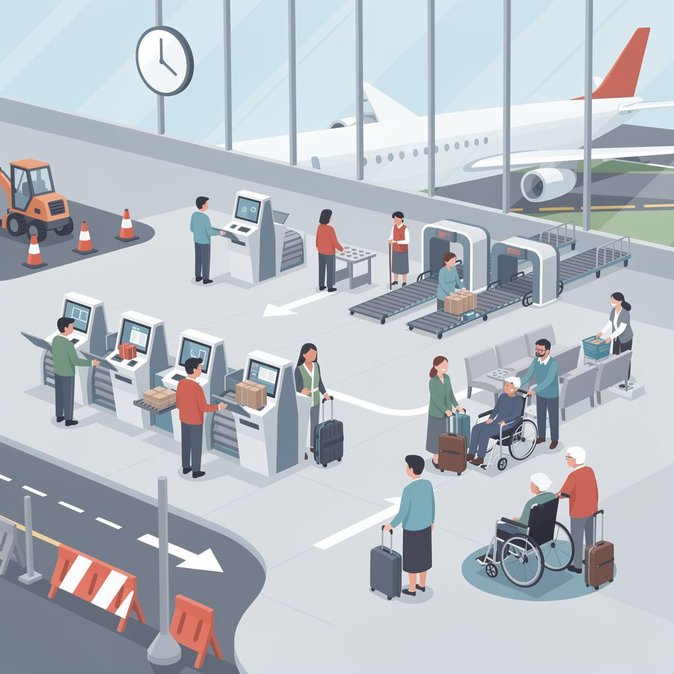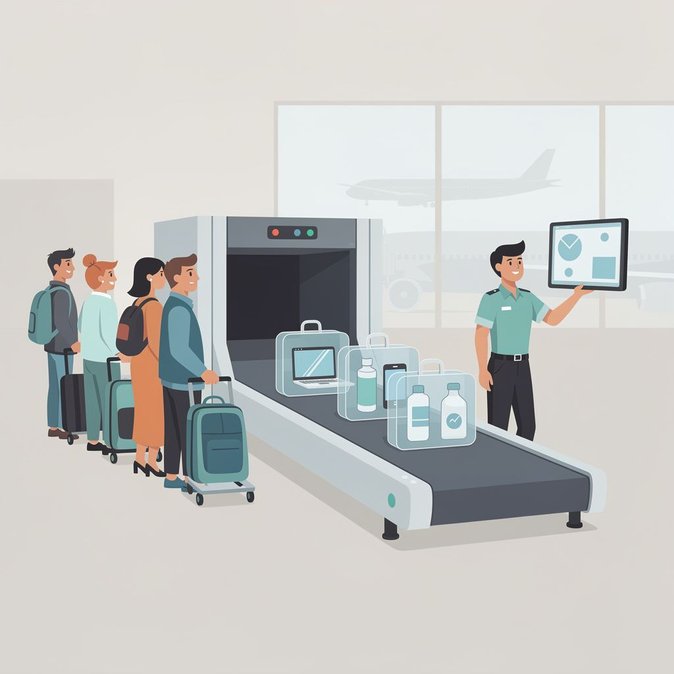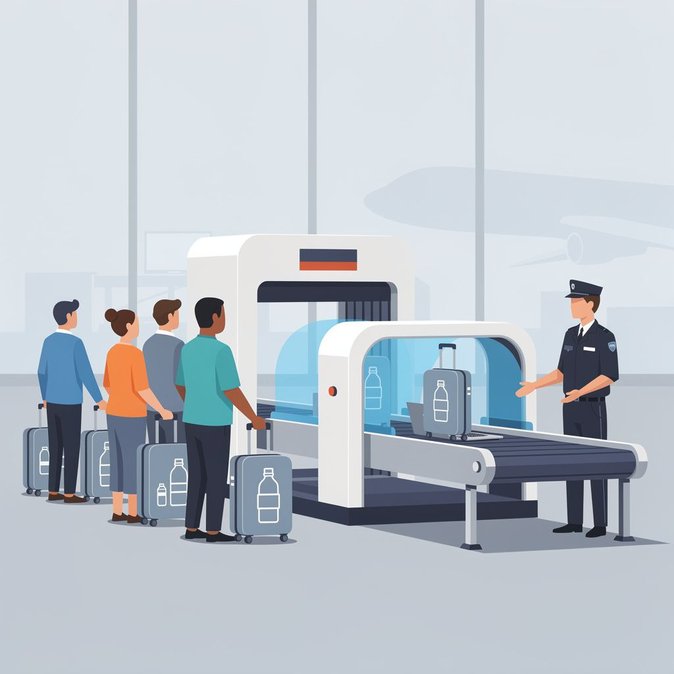
Starting Friday, 3 July 2026, every security lane at Vienna-Schwechat Airport began operating next-generation computed-tomography (CT) scanners, marking the most significant change to passenger screening in Austria since the introduction of the 100-millilitre liquids rule two decades ago. The €25-million upgrade involves 35 scanners capable of producing high-resolution, three-dimensional images of cabin baggage. Because the system can automatically identify solid and liquid explosives, travellers no longer need to remove laptops, tablets or liquids at security; containers of up to two litres may remain in hand luggage. Airport chief operating officer Julian Jäger said the switch was deliberately timed for the first school-holiday weekend, when passenger numbers traditionally surge. Average waiting times at security averaged five minutes during the soft-launch trials in June, and management expects similar performance through the summer peak. Nevertheless, the airport is urging travellers to arrive early while staff and passengers adapt to the new procedures and while road works continue on the A4 motorway approach. The Austrian Civil Aviation Authority approved the scanners after a two-year EU certification process. Vienna’s decision puts Austria among a small group of European countries—including the Netherlands, Spain and the UK—that have moved beyond the 100-ml restriction. As standards still differ across Europe, travellers are warned that on return flights from other airports they may again face the conventional rules; liquids purchased air-side in Vienna should therefore remain sealed in tamper-evident bags. Business-travel managers are being advised to update traveller briefings and expense policies. Allowing electronic devices to stay in bags will accelerate premium-lane throughput, but the higher two-litre allowance could trigger excess-weight charges if staff fill bottles. Duty-free retailers meanwhile see new sales potential for large local wine and spirits bottles now permitted in carry-ons. In the medium term, the scanners will be integrated into the Terminal 3 South extension scheduled to open in Q2 2027, ensuring consistent processes across the hub. Tech supplier Smiths Detection confirmed that Vienna is also piloting software that flags lithium-ion batteries—an added benefit for airlines battling incidents of thermal runaway in cabin baggage.
Source: The Local Austria