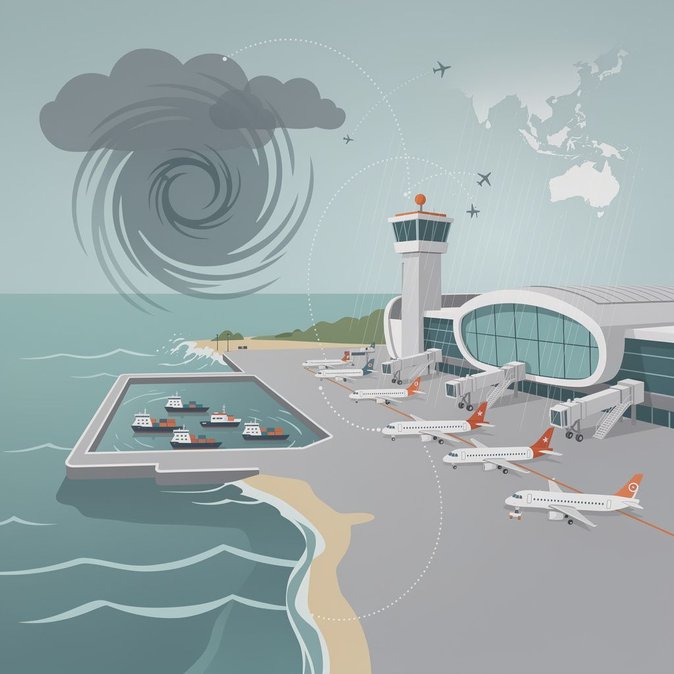
Guangxi’s coastal transport network ground to a halt on 4–5 July as Typhoon “Maysak” barrelled inland from neighbouring Vietnam. The storm, which the China Meteorological Administration upgraded to a strong tropical storm, brought sustained winds of up to 25 m/s and torrential rain bands that triggered dual typhoon-and-rainstorm orange alerts across the region. Local governments activated level-II emergency plans, ordering the immediate suspension of passenger services and the evacuation of tens of thousands of residents and visitors from low-lying islands and coastal resorts. At Nanning Wuxu International Airport, the hub for western China and a key link for ASEAN business travel, the airport’s “three-defence” contingency protocol was initiated. By 18:00 on 4 July, 30 flights—including trunk routes to Beijing, Shanghai and Shenzhen—had been cancelled; operations staff warned that further rolling cancellations and diversions were likely until wind shear subsided. Airlines have waived change-fees for tickets dated 4-7 July, but seat availability out of Nanning and Beihai remains tight, complicating crew rotations, cargo uplift and expatriate repatriations. Sea links were even harder hit. The popular Beihai–Weizhou Island ferry, which normally carries up to 8 000 passengers daily in peak season, ceased all sailings from 4 July and issued a blanket suspension for 6 July as port authorities ordered every one of the area’s 2 888 registered fishing and tourist vessels to safe harbour. Scenic attractions from Silver Beach to Crocodile Hill announced blanket closures, leaving tour operators scrambling to re-route groups inland; insurance brokers report a spike in claims for lost excursions. Hoteliers on Weizhou said more than 10 000 guests were evacuated in coordinated convoys before harbour gates closed. For corporates with assignees in the Beibu Gulf economic zone, the immediate priority is head-count verification and adherence to local evacuation orders. Employers should remind staff that traffic controls can be imposed without notice; the regional emergency-management bureau now requires travel permits for all non-relief vehicles entering coastal counties. Power and telecom outages are possible through mid-week, so firms should review back-up communications and accommodation plans. Business-traveller itineraries into Guangxi or trans-border runs into northern Vietnam are best deferred until the storm system dissipates. Relief officials estimate normal marine and air operations could resume as early as 7 July, but only after port inspections and runway FOD sweeps are complete.