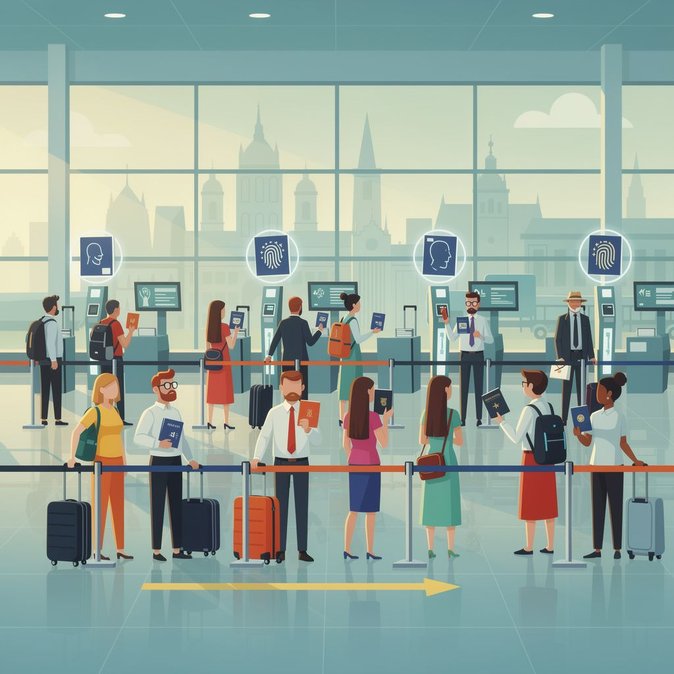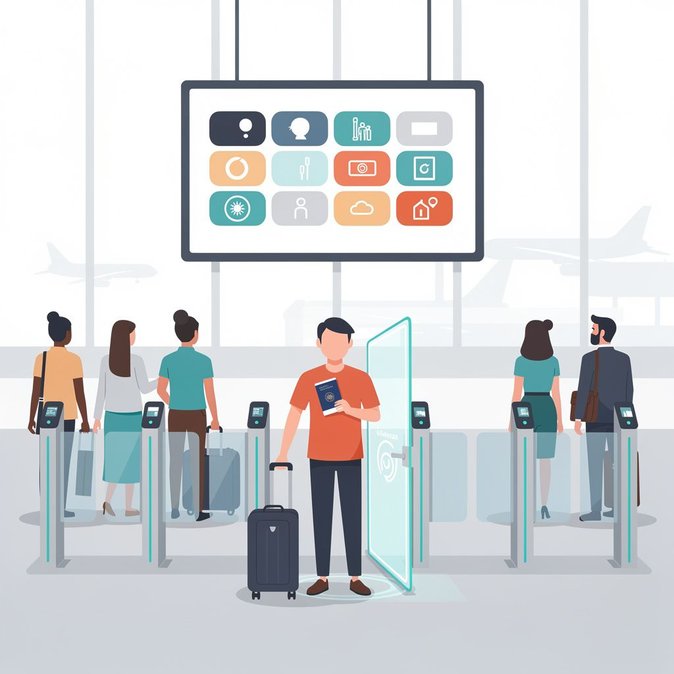
Vaclav Havel Airport Prague has moved quickly to calm fears that Taiwanese passport-holders might lose access to its automated border-control lanes following a software update that removed national flags from eGate screens. Airport spokeswoman Denisa Hejtmánková confirmed on 5 July that the tweak is purely cosmetic: the system will now show two-letter country codes instead of flags, but the list of eligible nationalities is expanding rather than shrinking.
The clarification matters because the Czech capital relies heavily on high-yield visitors from Asia, many of whom transit straight into the country’s booming electronics and automotive supply chains.
Taiwanese corporate travellers were first allowed to use Prague’s EasyGo eGates in May, a move designed to relieve congestion triggered by the EU’s new Entry/Exit System (EES) and to reward Taiwan’s strong compliance record with Czech immigration rules.
Under the EES, most non-EU passengers must complete biometric enrolment the first time they enter the Schengen Area after 10 April 2026. Prague Airport eased the resulting bottlenecks by opening its eGates to a wider range of “trusted” visa-free markets—among them Taiwan, the UK, Japan and South Korea—provided travellers hold biometric passports and are over 15 years old.
For travelers who want extra assurance before departure, VisaHQ can help streamline the entire documentation process. The service’s Czech portal offers real-time guidance on Schengen visa options, EES enrolment steps, and requisite health insurance, letting both corporate mobility teams and individual passengers stay fully compliant while saving time at the airport.
For multinationals routing staff through Prague, the confirmation removes an unexpected headache at the start of the region’s peak summer season. Companies can continue to schedule same-day onward connections and time-sensitive meetings without budgeting extra minutes for manual passport control.
Travel managers should, however, remind employees that first-time EES registration can still add up to two minutes per person and that eGate eligibility does not override normal Czech entry rules on purpose of stay, health coverage or invitation letters.
Looking ahead, Prague Airport says the display overhaul will ultimately cover more than 70 nationalities. It is also testing dedicated “business-traveller” eGates that would prioritise passengers carrying recognised fast-track credentials, a project that could be a game-changer for Czechia’s growing conference-and-MICE sector.
The clarification matters because the Czech capital relies heavily on high-yield visitors from Asia, many of whom transit straight into the country’s booming electronics and automotive supply chains.
Taiwanese corporate travellers were first allowed to use Prague’s EasyGo eGates in May, a move designed to relieve congestion triggered by the EU’s new Entry/Exit System (EES) and to reward Taiwan’s strong compliance record with Czech immigration rules.
Under the EES, most non-EU passengers must complete biometric enrolment the first time they enter the Schengen Area after 10 April 2026. Prague Airport eased the resulting bottlenecks by opening its eGates to a wider range of “trusted” visa-free markets—among them Taiwan, the UK, Japan and South Korea—provided travellers hold biometric passports and are over 15 years old.
For travelers who want extra assurance before departure, VisaHQ can help streamline the entire documentation process. The service’s Czech portal offers real-time guidance on Schengen visa options, EES enrolment steps, and requisite health insurance, letting both corporate mobility teams and individual passengers stay fully compliant while saving time at the airport.
For multinationals routing staff through Prague, the confirmation removes an unexpected headache at the start of the region’s peak summer season. Companies can continue to schedule same-day onward connections and time-sensitive meetings without budgeting extra minutes for manual passport control.
Travel managers should, however, remind employees that first-time EES registration can still add up to two minutes per person and that eGate eligibility does not override normal Czech entry rules on purpose of stay, health coverage or invitation letters.
Looking ahead, Prague Airport says the display overhaul will ultimately cover more than 70 nationalities. It is also testing dedicated “business-traveller” eGates that would prioritise passengers carrying recognised fast-track credentials, a project that could be a game-changer for Czechia’s growing conference-and-MICE sector.