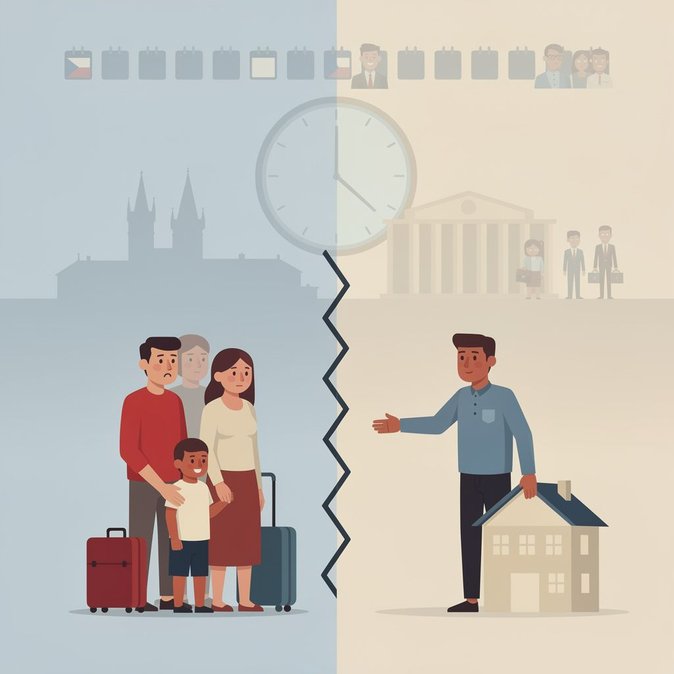
A draft amendment to Czechia’s Act on the Residence of Foreigners, rushed onto the Chamber of Deputies agenda shortly before the summer recess, has sent shock-waves through the country’s large community of binational couples. Under today’s rules, a non-EU national who is married to – or raising a child with – a Czech citizen may lodge an application for family-based long-term residence from inside Czechia, even if another permit (for example an employee card) has expired. The Interior Ministry argues that the exception is abused by people who overstay work or study visas and then “shift purpose” without ever leaving the Schengen Area. The new bill would close that loophole by forcing most applicants to leave the country and wait abroad while their request is processed. Processing times for family reunification visas typically range from 90 to 180 days; officials concede that a backlog stemming from last year’s record 46 000 applications could swell waiting times even further. Lawyers specialising in immigration warn that the change would, in practice, tear families apart for months. A British engineer married to a Czech architect would have to quit his Prague job, uproot the family and register at a Czech embassy abroad; only after approval could he return and re-enter the labour market. The draft provides exemptions for Ukrainians under temporary protection and for Blue-Card holders but offers no relief to large expatriate groups such as U.S., Vietnamese or Indian nationals. Business chambers fear a chilling effect on talent retention. “We already compete for highly qualified foreigners with Germany and Austria. Making family life here harder is the last thing we need,” says Martin Hájek of the Association of Foreign Investors, noting 28 % of senior tech staff in Czech start-ups are in mixed relationships. HR departments are bracing for emergency repatriations, additional relocation costs and lost productivity. The Interior Ministry insists the proposal merely harmonises Czech practice with the EU Family Reunification Directive, but opposition parties plan to file amendments that would allow spouses and minor children to remain in Czechia if they can prove health insurance and sufficient income. The bill’s second reading is scheduled for 10 September; if adopted without changes it could enter into force as early as January 2027, leaving companies and families a very narrow window to adjust.
Source: Expats.cz