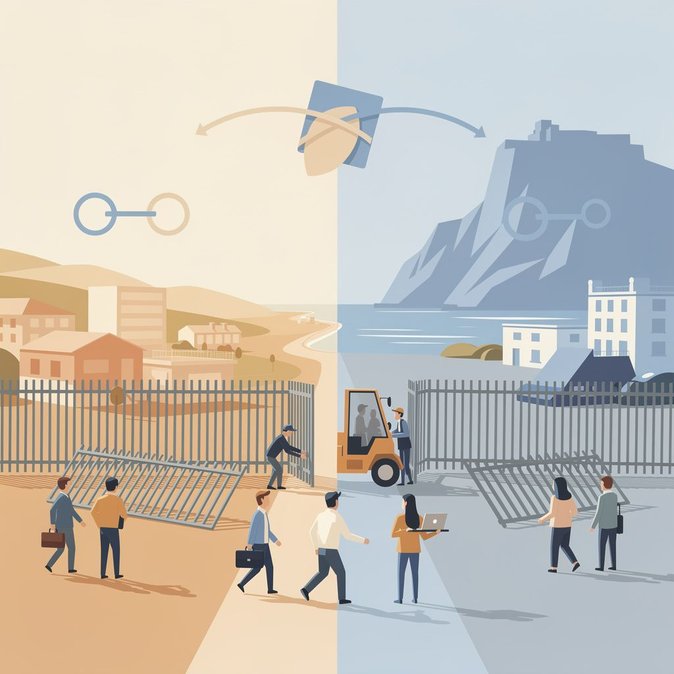
A century-old symbol of division is set to disappear on 15 July when Spain and the United Kingdom begin applying a new EU-UK agreement that will dismantle the physical fence—known locally as “la Verja”—at the Gibraltar land border. Reporting by La Voz de Galicia on 5 July highlights the anticipation among the 15,000 cross-border commuters, 80 % of whom live in Spain’s La Línea de la Concepción and work in the British Overseas Territory. Under the deal, Gibraltar will join the Schengen travel area in practical terms, with Spanish officers conducting passport-free checks at the port and airport rather than at the land frontier. For daily workers this means an end to queues that could stretch four hours in peak season, boosting productivity for Gibraltar’s online-gaming, bunkering and tourism industries. Spanish businesses also expect a windfall: easier commuting could lift retail and property demand on the Campo de Gibraltar side, although locals worry about soaring rents. Tax harmonisation envisaged in the treaty will raise duties on alcohol and tobacco in the Rock, potentially reducing “booze-cruise” shopping but easing long-standing fiscal friction with Spain. The removal of the fence is laden with historical symbolism; it was closed by General Franco in 1969 and only fully reopened in 1985 ahead of Spain’s entry into the European Community. The Cross-Frontier Group of unions and employers says the new regime will “finally normalise” a border that sees more foot traffic than some EU internal frontiers. For global-mobility teams, the practical takeaway is that passport carrying will no longer be required for day trips once the system goes live, but companies should brief staff on planned tax and social-security coordination measures, which may affect payroll withholding and benefit entitlements.
Source: La Voz de Galicia