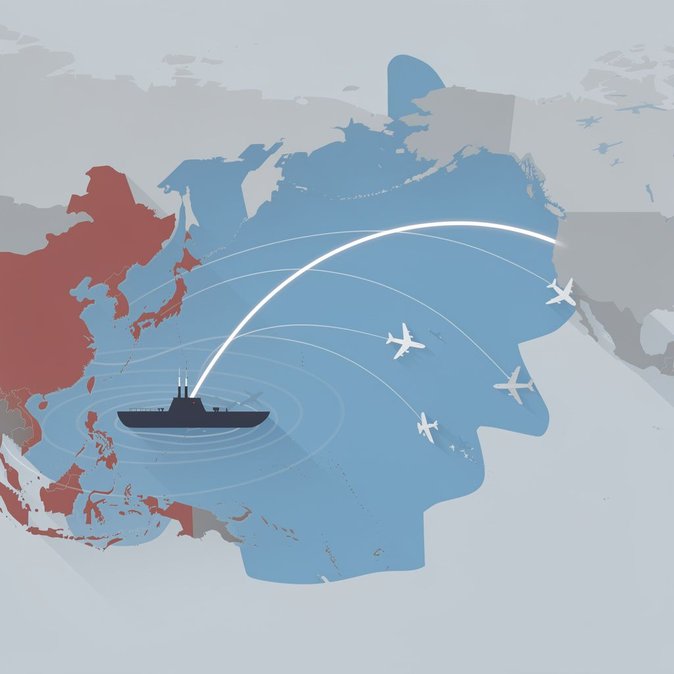
At 12:01 p.m. Beijing time on 6 July, a Chinese nuclear-powered submarine launched a ballistic missile into the Pacific in what state media called a “routine” exercise. Although the training warhead landed in pre-notified waters outside Japan’s Exclusive Economic Zone, governments in Japan, Australia and New Zealand issued sharp diplomatic protests and warned civil-aviation authorities to monitor further drills. Several Asian carriers told travel-risk consultancies that they are re-checking PACOTS (Pacific Organized Track System) routings for flights between East Asia and North America to avoid temporary danger areas. While no diversions were reported immediately after the launch, analysts note that extended military activity could lengthen great-circle transpacific trajectories by up to 20 minutes, increasing fuel burn and possible knock-on delays.
For organisations recalibrating itineraries in response to such fluid security dynamics, VisaHQ’s China desk can fast-track the visa paperwork so that once a safe flight path opens up, staff are not held back by documentation delays. The platform’s real-time status updates and embassy-liaison experts help mobility teams pivot quickly, whether they need single-entry business visas on short notice or multi-entry permits for engineers shuttling between Shanghai and Los Angeles.
Travel insurers have begun sending alerts flagging the potential for airspace closures south-east of Okinawa—similar to the NOTAMs China issued during large-scale drills around Taiwan in 2025. Companies with critical personnel movements in July, especially heavy-equipment engineers travelling between Shanghai and Los Angeles, should maintain contact details in their travel-management systems and be prepared for schedule changes at short notice. The episode underlines the wider geopolitical overlay that now affects mobility planning in the Asia-Pacific region. With Sino-Russian naval drills running concurrently off Qingdao, risk managers may see higher premiums or stricter policy exclusions for “acts of war” along key shipping and air corridors.
For organisations recalibrating itineraries in response to such fluid security dynamics, VisaHQ’s China desk can fast-track the visa paperwork so that once a safe flight path opens up, staff are not held back by documentation delays. The platform’s real-time status updates and embassy-liaison experts help mobility teams pivot quickly, whether they need single-entry business visas on short notice or multi-entry permits for engineers shuttling between Shanghai and Los Angeles.
Travel insurers have begun sending alerts flagging the potential for airspace closures south-east of Okinawa—similar to the NOTAMs China issued during large-scale drills around Taiwan in 2025. Companies with critical personnel movements in July, especially heavy-equipment engineers travelling between Shanghai and Los Angeles, should maintain contact details in their travel-management systems and be prepared for schedule changes at short notice. The episode underlines the wider geopolitical overlay that now affects mobility planning in the Asia-Pacific region. With Sino-Russian naval drills running concurrently off Qingdao, risk managers may see higher premiums or stricter policy exclusions for “acts of war” along key shipping and air corridors.