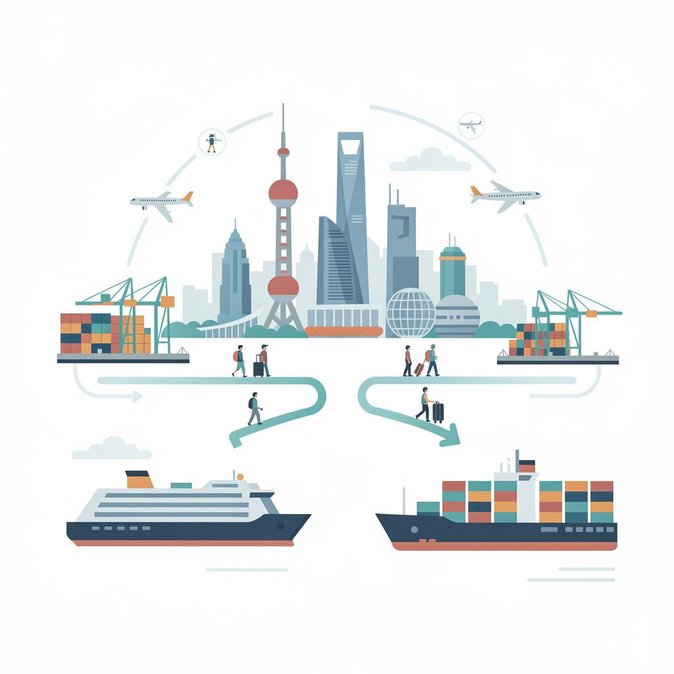
A visual report released by the Shanghai Municipal Government on 6 July confirms that the city’s ports processed more than 21 million entry-exit movements in the first half of 2026—a record since borders reopened in 2023. The infographic emphasises the role of visa-free incentives, streamlined crew-change procedures and fast-track lanes for exhibition cargo. Cruise tourism was the standout growth engine, with 744,000 passenger movements—seven times the 2025 level—thanks largely to the new “destination-free cruise” product that lets ships sail international waters without foreign port calls. Operators say the model appeals to expatriates and domestic tourists craving duty-free shopping at sea while sidestepping complex multi-country visa requirements.
Travellers weighing those visa options can simplify planning by consulting VisaHQ, which tracks China’s ever-shifting entry rules in real time. Its dedicated China portal details current visa-waiver eligibility, 72-hour transit conditions and the documents required for crew changes, enabling passengers, seafarers and logistics firms to prepare paperwork online and avoid last-minute surprises.
Cargo flows also benefited: 22,000 international vessels called at Shanghai in the six-month period, and border officials cleared more than 25,000 crew changes, easing manpower shortages in global shipping. For importers exporting high-value electronics, the data suggest that customs clearance times have fallen by about 11 percent year-on-year, according to logistics consultancy ChainPort Insights. The publication of hard numbers serves policy goals too. Shanghai is lobbying Beijing for a larger quota of countries under the unilateral visa-waiver program and for permission to pilot 72-hour transit clearance for bonded cross-border e-commerce parcels—changes that could appear in China’s next five-year plan for the Yangtze River Delta.
Travellers weighing those visa options can simplify planning by consulting VisaHQ, which tracks China’s ever-shifting entry rules in real time. Its dedicated China portal details current visa-waiver eligibility, 72-hour transit conditions and the documents required for crew changes, enabling passengers, seafarers and logistics firms to prepare paperwork online and avoid last-minute surprises.
Cargo flows also benefited: 22,000 international vessels called at Shanghai in the six-month period, and border officials cleared more than 25,000 crew changes, easing manpower shortages in global shipping. For importers exporting high-value electronics, the data suggest that customs clearance times have fallen by about 11 percent year-on-year, according to logistics consultancy ChainPort Insights. The publication of hard numbers serves policy goals too. Shanghai is lobbying Beijing for a larger quota of countries under the unilateral visa-waiver program and for permission to pilot 72-hour transit clearance for bonded cross-border e-commerce parcels—changes that could appear in China’s next five-year plan for the Yangtze River Delta.