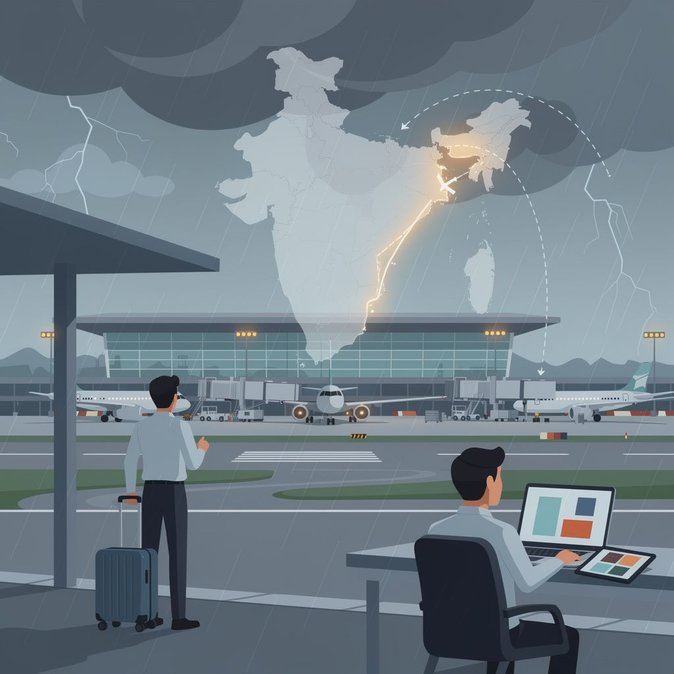
Severe monsoon showers and 40-knot cross-winds wreaked havoc at Chhatrapati Shivaji Maharaj International Airport (CSMIA) on Monday, 6 July, forcing the cancellation of at least 17 flights and delaying another 217 by mid-afternoon. Five inbound services – including IndiGo’s Singapore and Raipur routes and an Oman Air Muscat rotation – were diverted to alternate airports after visibility dropped below 550 metres. The India Meteorological Department issued a red alert for Mumbai, Thane and Raigad districts, warning that heavy rain would continue through 7 July. Runway operations were briefly suspended for an hour on Sunday, highlighting the fragility of peak-season schedules when the airport is already running at 94 percent capacity. For business travellers the disruption created cascading delays on the Golden Triangle route (Mumbai–Delhi–Bengaluru) and prompted airlines to issue travel waivers. IndiGo, Air India, Akasa and SpiceJet have advised passengers to re-check flight status before leaving for the airport and offered free date changes on tickets booked for 6-7 July. Companies with time-critical trips should consider re-routing via Ahmedabad, Pune or Hyderabad, all of which have availability on overnight services. Ground transport was equally affected, with water-logging closing sections of the Eastern Express Highway and disrupting Western Railway’s suburban lines, leaving few reliable fallback options within the metropolis. The episode underscores the need for robust travel-risk management during India’s June-September monsoon. Organisations are advised to enrol travellers in real-time alert feeds and pre-approve hotel stays near alternate airports when forecasts signal red-level rainfall.
Source: The Economic Times
How VisaHQ can help
VisaHQ simplifies the visa application process for individuals and businesses. Check current travel requirements, prepare the required documents and manage your application online through the VisaHQ India portal.More From India
View all
Foreign Ministry Warns Public About Fake ‘Policy Advisers’ Offering Paid Migration Guidance

EU biometric Entry-Exit System sparks five-hour queues at German hubs; Indian transit passengers advised to arrive early