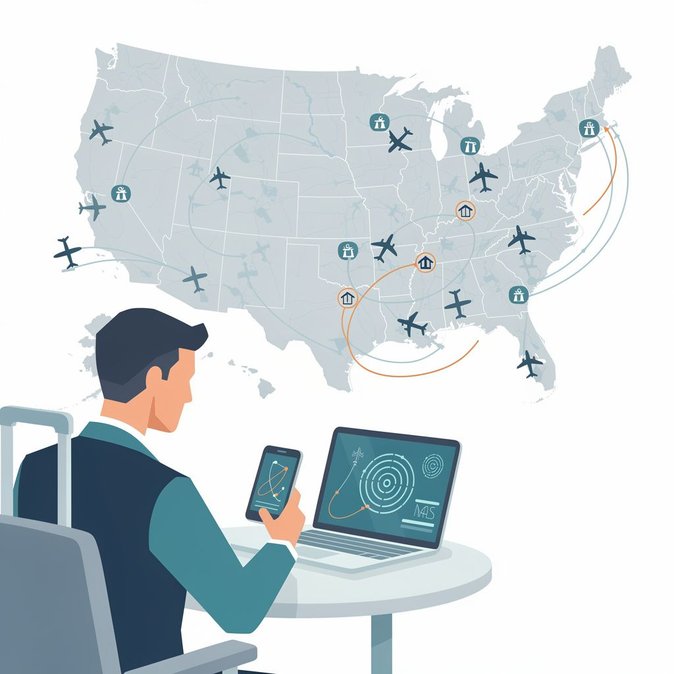
At 06:55 UTC on 6 July, the Federal Aviation Administration’s National Airspace System (NAS) dashboard lit up with 22 active airport events, including departure holds at Boston-Logan, low-ceiling arrival programs at Newark, and flow control into Dallas-Fort Worth. The advisory underscores how a record Independence Day travel surge is bleeding into the work week, complicating mobility for multinational teams trying to regroup after the holiday. Unlike static NOTAMs, NAS status updates are dynamic and can be missed by corporate-travel stakeholders who rely solely on airline push notifications. Yet flow programs ripple across the network: an Atlanta departure hold can delay a connecting passenger’s immigration appointment at Los Angeles, while a Newark ground stop can strand European executives awaiting connecting flights to Silicon Valley. The FAA attributes the constraints to a combination of lingering weather systems in the Midwest, post-holiday staffing shortages in air-traffic centers, and seasonal runway-capacity reductions for maintenance. Analysts note that the agency is operating with a 10 percent controller shortfall, limiting its ability to absorb schedule shocks. Global-mobility managers should integrate NAS data feeds into travel-risk dashboards, alongside DHS port-of-entry wait-time APIs. Doing so allows real-time rerouting before delays threaten visa appointments, onboarding schedules, or per-diem burn rates. Travelers headed to congested hubs should carry contingency letters for CBP secondary inspections if they miss ESTA validity windows due to delays. Going forward, the FAA plans to publish twice-daily peak-season outlooks through Labor Day—a boon to corporate-travel planners who can adjust departure windows to avoid the worst constraints. Companies with fixed-date assignment starts in July and August may consider flying talent in over weekends to create buffer days.
Source: FAA NAS Status