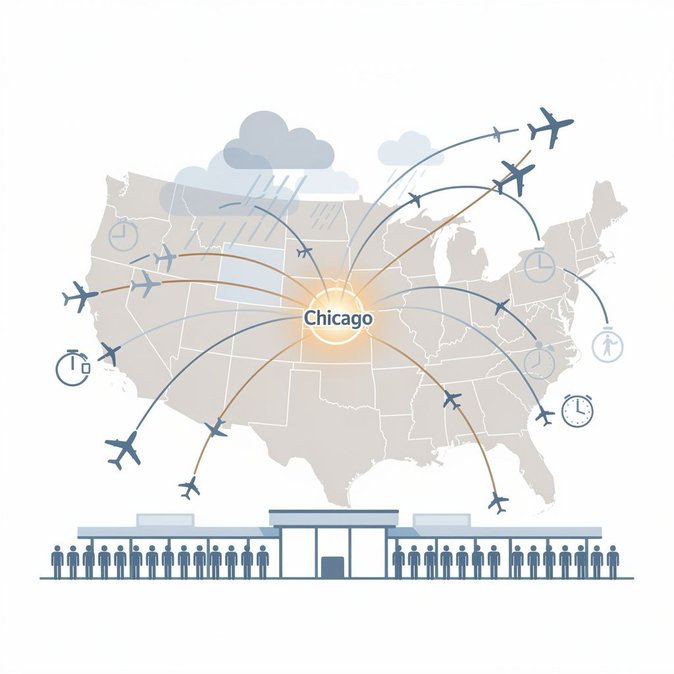
Holiday demand continues to stress the nation’s aviation spine, and nowhere is the pressure more acute than Chicago. On 5 July, travel news outlet Nomad Lawyer reported that O’Hare International (ORD) and Midway (MDW) expect almost two million passengers between 2 and 7 July—numbers that rival pre-pandemic Christmas peaks. Chicago’s twin hubs are linchpins of U.S. business mobility: O’Hare connects corporate travelers to Asia, Europe, and Latin America, while Midway underpins domestic point-to-point networks vital for field-service teams. High load factors mean missed flights leave few open seats for same-day re-booking.
Travelers juggling tight schedules may also need to confirm that their visa documentation matches any sudden itinerary changes. VisaHQ can streamline that process, providing rapid U.S. and onward-destination visa assistance with real-time tracking and expert document review—saving corporate mobility teams precious hours that would otherwise be spent on embassy logistics. Learn more at
The Chicago Department of Aviation has urged passengers to arrive up to four hours before international departures and three hours for domestic, a recommendation that collides with companies’ cost-control efforts. The surge creates knock-on effects far beyond Illinois. Thunderstorms typical of Midwestern summers can force reroutes that cascade into East-Coast slot constraints and West-Coast gate shortages. Supply-chain executives moving key staff through Chicago should therefore treat ORD weather alerts as a national mobility risk indicator. Airlines have responded by up-gauging aircraft and adding customer-service staff in terminals, but TSA checkpoints remain potential choke points. Business-travel consultants recommend that corporate travelers with CLEAR or TSA PreCheck still plan for 30-minute lines and use digital ID options to speed document checks. Mobility teams can mitigate disruption by staggering travel dates, using Amtrak for Midwest hops under 400 miles, and negotiating refundable hotel rates near client sites to absorb last-minute schedule changes. The Chicago surge exemplifies how leisure peaks now overlap with critical corporate calendar milestones such as quarterly earnings roadshows and July expatriate handovers.
Travelers juggling tight schedules may also need to confirm that their visa documentation matches any sudden itinerary changes. VisaHQ can streamline that process, providing rapid U.S. and onward-destination visa assistance with real-time tracking and expert document review—saving corporate mobility teams precious hours that would otherwise be spent on embassy logistics. Learn more at
The Chicago Department of Aviation has urged passengers to arrive up to four hours before international departures and three hours for domestic, a recommendation that collides with companies’ cost-control efforts. The surge creates knock-on effects far beyond Illinois. Thunderstorms typical of Midwestern summers can force reroutes that cascade into East-Coast slot constraints and West-Coast gate shortages. Supply-chain executives moving key staff through Chicago should therefore treat ORD weather alerts as a national mobility risk indicator. Airlines have responded by up-gauging aircraft and adding customer-service staff in terminals, but TSA checkpoints remain potential choke points. Business-travel consultants recommend that corporate travelers with CLEAR or TSA PreCheck still plan for 30-minute lines and use digital ID options to speed document checks. Mobility teams can mitigate disruption by staggering travel dates, using Amtrak for Midwest hops under 400 miles, and negotiating refundable hotel rates near client sites to absorb last-minute schedule changes. The Chicago surge exemplifies how leisure peaks now overlap with critical corporate calendar milestones such as quarterly earnings roadshows and July expatriate handovers.