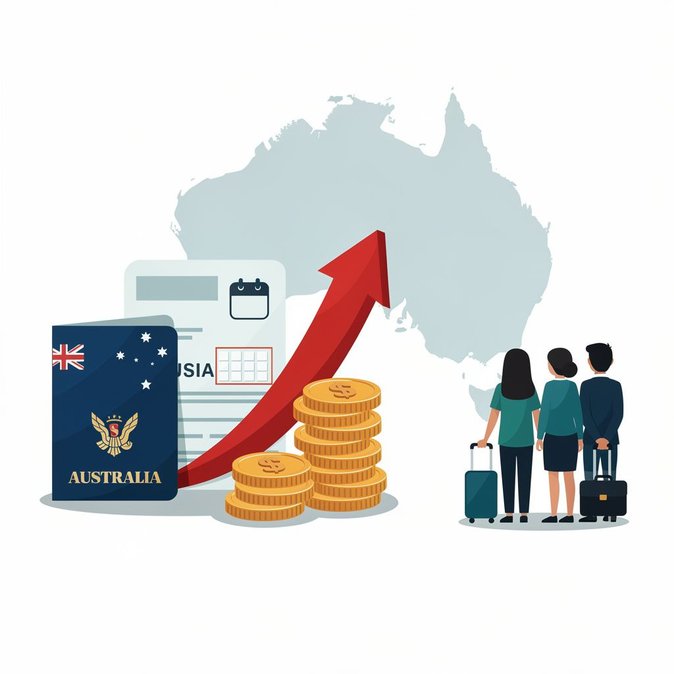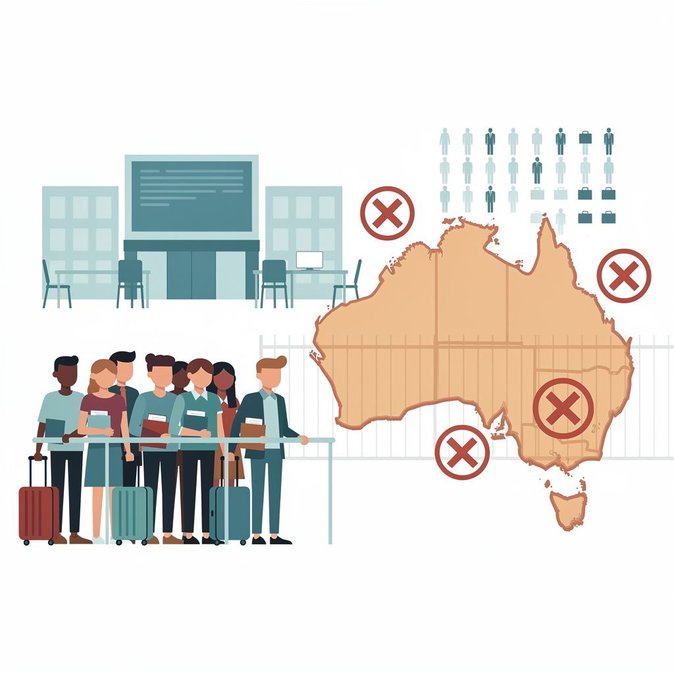
The Albanese Government has quietly instructed Home Affairs case officers to continue the record-high refusal rates that began late last year for offshore Student (subclass 500) visa applicants from South Asia and parts of Africa. According to analysis published on 7 July 2026 by former Immigration deputy secretary Abul Rizvi, refusal rates for some source countries are running above 40 %, helping to drag overall international-student commencements eight per cent below the official National Planning Level for 2026-27. With net-overseas-migration still tracking far above Treasury forecasts, ministers are now openly linking student-visa issuance to short-term population management – a stark shift from the “managed growth” rhetoric of just a year ago. The crackdown sits alongside sharp fee increases: the student-visa charge doubled to AUD 2,000 in March and rose again to AUD 2,500 on 1 July. Together with higher Genuine-Student scrutiny and mandatory English-language checks, the measures are already discouraging demand. Universities outside the Group of Eight, and especially VET colleges, report double-digit drops in new enrolments. For employers, the immediate impact will be a smaller casual-workforce pipeline and a tighter graduate-talent pool. Education exporters face revenue risk if refusals remain elevated through the September peak intake. Providers are urging government to publish transparent targets and consult on any future changes so recruitment decisions can be made with certainty. International-education advisers recommend agents pre-screen applicants carefully for financial capacity, academic progression and post-study intent, and budget extra lead-time for possible refusals and re-lodgements. Businesses that rely on the Post-Study Work stream for early-career hiring should review talent plans in case the graduate-visa pipeline is throttled next.
Source: Independent Australia