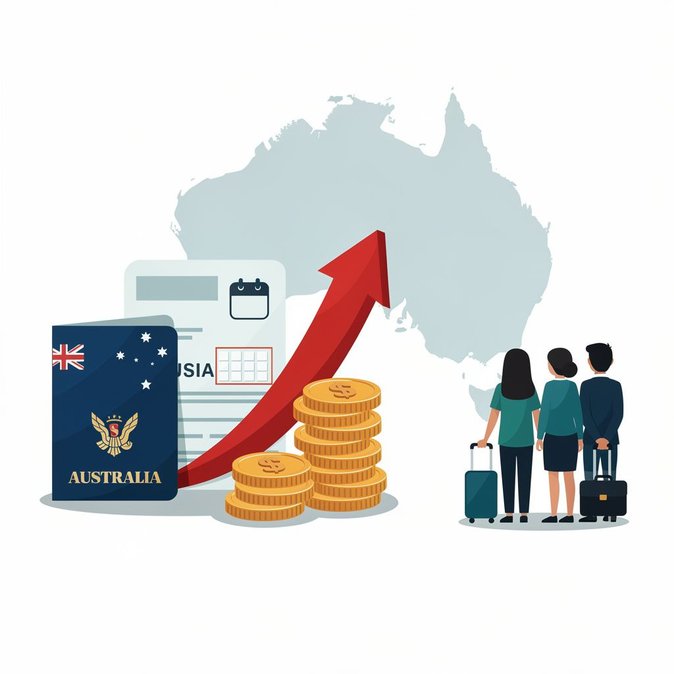
Technology & education outlet Information Age reported on 7 July that the subclass 500 Student visa now costs AUD 2,500— a 25 % jump that places Australia among the world’s most expensive study destinations. Universities Australia and the Group of Eight said the move "dilutes" the government’s commitment to maintain the annual cap of 295,000 international students. Migration agents quoted in the piece described the increase as “a genuine surprise for a sector used to incremental CPI indexation.” The Temporary Graduate (subclass 485) visa— a post-study staple— has risen even faster, doubling since March to AUD 5,750. Combined with record-high rejection rates (32.5 % in February), stakeholders warn the price signal could push talented applicants to Canada, the UK or the US, where comparable study permits cost a fraction. Universities fear the change will undermine diversification efforts, particularly in priority regions like South-East Asia and Africa. Several institutions told Information Age they may have to increase scholarship budgets or absorb part of the cost through “application fee rebates” to remain competitive. From a mobility-planning perspective, corporate sponsors that rely on the 485 pathway to secure graduate engineers and IT talent face higher upfront costs and potentially smaller candidate pools. Education agents advise students to lodge applications well ahead of 1 September semester deadlines to allow for processing delays intensified by fee-change demand spikes. Policy analysts argue the fee hike aligns with the government’s broader migration reset— aiming to reduce net overseas intake and target high-value applicants— but say more transparency is needed so students and institutions can plan finances with certainty.
Source: Information Age (ACS)