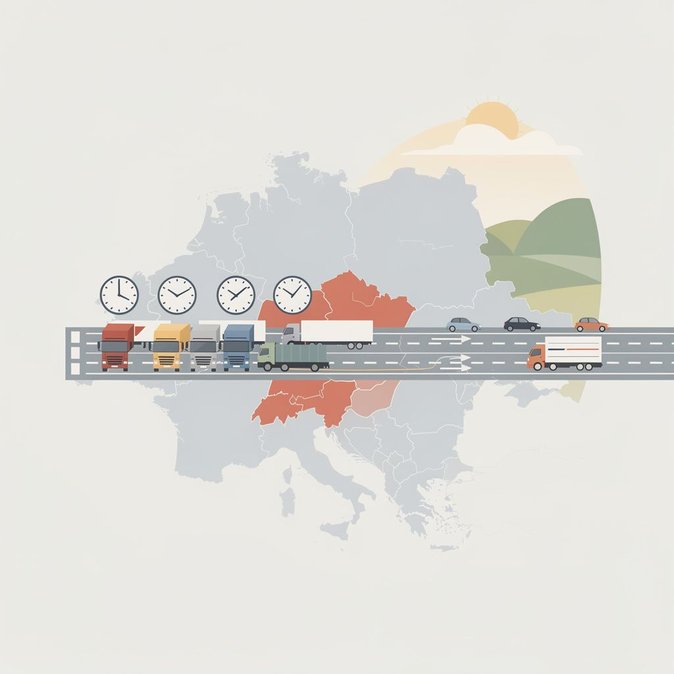
Holiday mobility rules do not stop at passenger travel. On Monday 6 July 2026 – Jan Hus Day in the Czech Republic – trucks over 7.5 tonnes (or over 3.5 t with a trailer) were barred from motorways, expressways and first-class roads between 13:00 and 22:00. The ban, published by the cross-border traffic platform Nakordoni.eu, comes on top of the regular summer weekend closures that run every Friday evening, Saturday morning and Sunday afternoon through 31 August. For logistics managers the timing is critical. Freight travelling east–west across Europe often uses Czech corridors such as the D5 (Germany–Prague–Plzeň) and D1 (Prague–Brno–Slovakia). Carriers that failed to clear the borders before 13:00 on Monday faced enforced lay-overs and potential late-delivery penalties. The Ministry of Transport confirmed that police carried out spot checks at rest areas, focusing on perishable-goods exemptions and ADR (dangerous goods) documentation. The Jan Hus Day stoppage also created ripple effects in neighbouring states. Austria’s routine night-time truck ban (22:00–05:00) restricted vehicles heading for Czech territory early Monday, while German logistics operators reported unusually high demand for secure parking south of Dresden and Regensburg as drivers waited for the Czech window to reopen. Looking ahead, the summer freight calendar gets even tighter: Czech Friday bans (17:00–21:00) and Saturday bans (07:00–13:00) coincide with broader EU holiday traffic peaks on 11 and 12 July. Supply-chain teams serving Czech plants are therefore advised to schedule departures mid-week or use rail/combined transport to avoid road-haulage blackouts. Shippers should also update customer service SLAs to reflect the legal downtime and remind consignors that force-majeure clauses may not apply; the bans are published months in advance. Although the restrictions target heavy goods vehicles, they indirectly benefit corporate travellers. Fewer trucks on the road during holiday rush hours reduce congestion on key routes to Prague Airport and border crossings with Germany and Slovakia, potentially shortening transfer times for business passengers. Mobility managers planning VIP road pickups around the 6 and 11 July weekends can therefore expect smoother journeys – provided they monitor any spill-over queues at rest stops when the bans lift.
Source: Nakordoni.eu