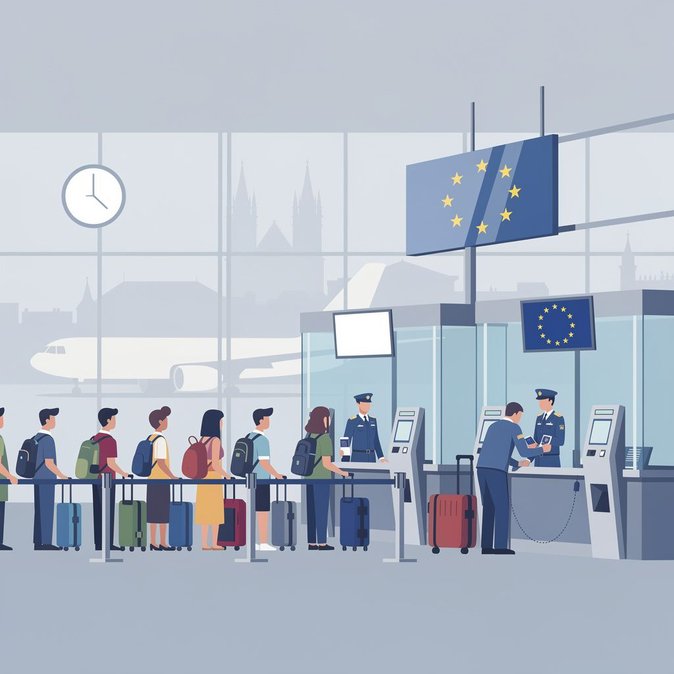
The long-awaited European Travel Information and Authorisation System (ETIAS) has been pushed back yet again. Multiple media outlets reported on 7 July 2026 that EU ministers and the EU-LISA IT agency have privately agreed that the system will **not** go live in late-2026 as previously planned but will be rescheduled for “no earlier than 2027”. The Financial Times broke the story, citing internal briefing papers, and it was quickly confirmed by several European newsrooms. ETIAS is an electronic travel authorisation that will be required for visa-exempt nationals – from the United Kingdom, United States, Canada, Japan and over 50 other countries – before entering the Schengen Area for short stays. Czechia, as a full Schengen member, will apply the system at all its airports and land borders. Travellers would have paid a €7 fee and completed an online security pre-screening similar to the U.S. ESTA. The postponement follows highly publicised problems with the separate Entry/Exit System (EES), whose rollout in mid-June produced hour-long queues at airports in Spain, France and Poland as first-time travellers were asked to submit fingerprints and facial scans. Prague’s Václav Havel Airport reported only minor delays, but officials told local media they were “extremely concerned” about coping with both schemes at once during the peak summer season. According to diplomats quoted by the Financial Times, several member states, including Czechia, France, Germany and Spain, argued that border-guard staffing models and self-service kiosks need to be recalibrated after watching the EES queues in real time. EU-LISA, which manages both databases, admitted that software linking EES and ETIAS risked “instability under load” and asked for an additional six-month testing window. The European Commission is expected to publish a formal decision in the Official Journal later this month, but the Commission’s travel portal has already removed references to a Q4 2026 go-live date. For Czech businesses the delay is a mixed blessing. Airlines, tour operators and mobility managers had ramped up customer-facing campaigns to remind third-country clients to obtain ETIAS approvals before winter trade fairs and the busy Christmas-market season. Those campaigns can now be paused, saving on outreach costs. On the other hand, companies that invested in integrated booking-flow widgets and API links to the ETIAS platform will have to maintain “idle” code for at least another year. Corporate mobility teams should therefore update their travel calendars: • No ETIAS requirement for Prague-bound travellers in 2026. • EES biometric capture **is** already mandatory at Czech external borders – advise first-time business visitors to allow extra processing time. • Expect a revised ETIAS Regulation timetable to be published by Q1 2027, with a six-month grace period before enforcement. Practical tip: The Czech Ministry of the Interior has indicated that it will refresh its English-language ETIAS microsite once Brussels issues a new start date. Mobility managers can subscribe to the ministry’s “Foreigners & Borders” RSS feed to receive an automatic alert when the page goes live.