U.S. air travel lurched into another day of chaos on July 7 as 1,055 flights were canceled and more than 7,200 delayed across every major domestic airline, according to flight-tracking data compiled by The Traveler.
International passengers scrambling to rebook should also verify that their travel documents remain valid for any rerouted entry points. VisaHQ can expedite U.S. visa extensions or help secure transit visas on short notice, streamlining last-minute paperwork when weather forces unexpected layovers; details are available at
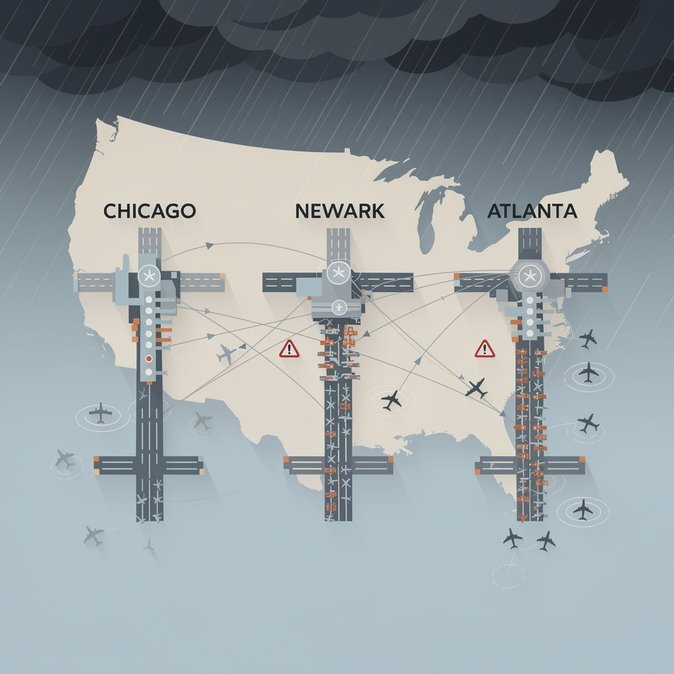
The meltdown capped a fraught Independence-Day travel period that federal forecasters had warned would be the busiest in 15 years. While severe thunderstorms in the Midwest, Northeast and Southeast triggered multiple FAA ground-delay programs, industry analysts stressed that weather was only the spark. Packed summer schedules have left carriers with “zero slack,” meaning displaced crews and aircraft quickly snowball into system-wide gridlock. Boston Logan, for example, lost several hours of fueling capability on Sunday night; by Monday afternoon that single failure had stranded aircraft as far away as Chicago and Atlanta. Chicago O’Hare, Newark Liberty and Atlanta Hartsfield-Jackson—linchpins of three different network carriers—absorbed the worst of Monday’s residual delays, illustrating how disruption at a hub ricochets across regional spokes. Business travelers reported missed connections on high-value routes such as ORD-LGA and ATL-CLT, while regional partners Endeavor and Republic scrubbed dozens of short-haul legs to free aircraft for backbone flights. For corporate mobility managers, the episode underscores two key planning imperatives for summer 2026: build generous connection times into multi-segment itineraries and use real-time data feeds rather than static schedules when booking. Companies with “must-travel” employees—consulting teams, field engineers, medical device installers—may need contingency budgets for walk-up rail tickets or last-minute one-way car rentals when aircraft and crew positioning collapses. Airlines, meanwhile, face a reputational hit just as they begin courting early bookings for the August business-travel rebound. Industry lobbying for further ATC modernization and ground-handling exemptions is expected to intensify on Capitol Hill in the coming weeks.
International passengers scrambling to rebook should also verify that their travel documents remain valid for any rerouted entry points. VisaHQ can expedite U.S. visa extensions or help secure transit visas on short notice, streamlining last-minute paperwork when weather forces unexpected layovers; details are available at
The meltdown capped a fraught Independence-Day travel period that federal forecasters had warned would be the busiest in 15 years. While severe thunderstorms in the Midwest, Northeast and Southeast triggered multiple FAA ground-delay programs, industry analysts stressed that weather was only the spark. Packed summer schedules have left carriers with “zero slack,” meaning displaced crews and aircraft quickly snowball into system-wide gridlock. Boston Logan, for example, lost several hours of fueling capability on Sunday night; by Monday afternoon that single failure had stranded aircraft as far away as Chicago and Atlanta. Chicago O’Hare, Newark Liberty and Atlanta Hartsfield-Jackson—linchpins of three different network carriers—absorbed the worst of Monday’s residual delays, illustrating how disruption at a hub ricochets across regional spokes. Business travelers reported missed connections on high-value routes such as ORD-LGA and ATL-CLT, while regional partners Endeavor and Republic scrubbed dozens of short-haul legs to free aircraft for backbone flights. For corporate mobility managers, the episode underscores two key planning imperatives for summer 2026: build generous connection times into multi-segment itineraries and use real-time data feeds rather than static schedules when booking. Companies with “must-travel” employees—consulting teams, field engineers, medical device installers—may need contingency budgets for walk-up rail tickets or last-minute one-way car rentals when aircraft and crew positioning collapses. Airlines, meanwhile, face a reputational hit just as they begin courting early bookings for the August business-travel rebound. Industry lobbying for further ATC modernization and ground-handling exemptions is expected to intensify on Capitol Hill in the coming weeks.