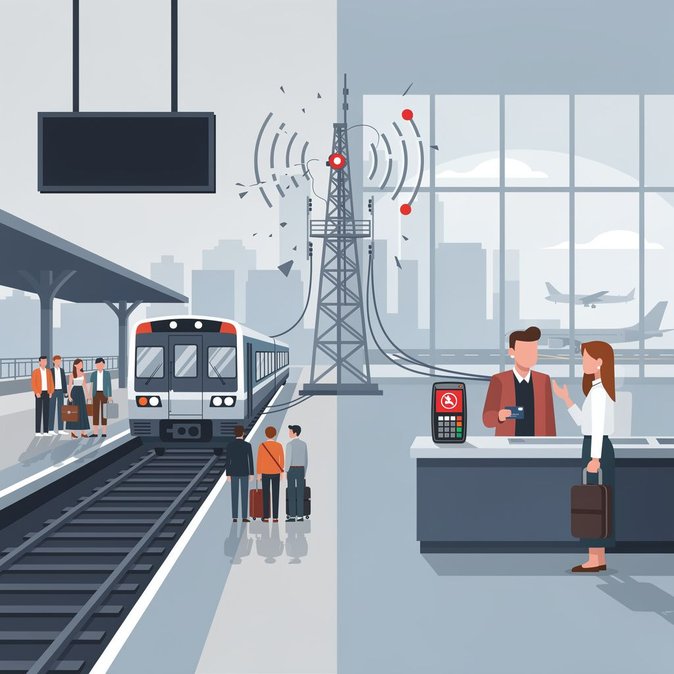
Millions woke on 8 July to find Australia’s largest mobile network offline. The ABC reports Telstra’s early-morning failure crippled voice, data and EFTPOS services for up to eight hours, suspending all V/Line trains in Victoria and several NSW regional lines. In Sydney Airport, ATMs stopped dispensing cash and card terminals relying on Telstra 4G fell silent, forcing passengers to scramble for Wi-Fi and alternative payment options. Federal ministers labelled the disruption “deeply concerning”, noting that holiday-makers and business travellers bore the brunt during peak school-holiday traffic. The Australian Rail Track Corporation halted freight movements on its 9,500-km network, underscoring the vulnerability of national logistics chains to single-point telco failures. Telstra has restored 90 % of traffic and attributed the crash to time-synchronisation “nodes” inside core data centres – not cyber-attack – but the Australian Communications and Media Authority will investigate. The incident follows last year’s Optus blackout and renews calls for mandatory reliability standards akin to those imposed on energy utilities. For mobility managers, the outage is a reminder that contingency plans must cover telecommunications. Experts suggest issuing staff dual-SIM handsets or eSIMs on rival networks, equipping travel teams with offline boarding passes, and factoring extra ground-transport time when rail signalling or ticketing depends on mobile data. Industry bodies want airports and rail operators to audit critical systems that rely on a single carrier and to establish roaming or satellite backups so that future outages do not strand travellers or compromise emergency calls.
Source: ABC News