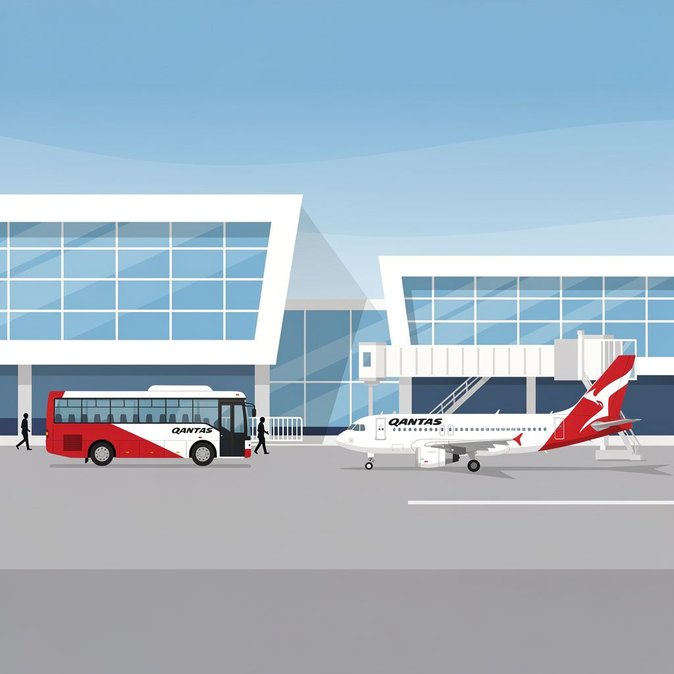
Qantas has reminded passengers that Monday 15 June is the final day on which all transfers between Sydney Airport’s international (T1) and domestic (T3) terminals will operate by external shuttle bus. The arrangement began on 9 June to allow construction crews to overhaul the airside automated people-mover. During the week-long works, travellers had to exit the secure area, reclaim luggage in some cases and board a landside coach—adding around 20 minutes to connection times.
For passengers juggling international connections at Sydney, ensuring visa and entry paperwork is just as critical as making the transfer. VisaHQ’s online portal (https://www.visahq.com/australia/) allows travellers and corporate travel managers to verify up-to-date visa requirements and complete applications quickly, helping to prevent documentation hiccups that could turn a tight layover into a missed flight.
Dedicated Qantas staff and signage have been in place, but corporate travel managers reported missed flights for tight 55-minute domestic-to-international connections, prompting some firms to extend minimum connection times in online booking tools. The good news for business travellers is that from first flights on 16 June the upgraded airside corridor and new mobility-assistance lanes will reopen, restoring sub-10-minute transfers and reducing exposure to customs queues. Qantas says its teams will stay on-site through Wednesday to help customers adjust back to the usual process. Although temporary, the disruption underlines the importance of real-time airport alerts in managed-travel policies. Travellers who hold dual tickets on different carriers—common on corporate itineraries—should still allow extra buffer until operations stabilise. The $50-million upgrade is part of a broader Sydney Gateway redevelopment aimed at handling a forecast 7 % increase in international arrivals for the 2026-27 fiscal year, driven largely by the Asia-Pacific corporate market.
For passengers juggling international connections at Sydney, ensuring visa and entry paperwork is just as critical as making the transfer. VisaHQ’s online portal (https://www.visahq.com/australia/) allows travellers and corporate travel managers to verify up-to-date visa requirements and complete applications quickly, helping to prevent documentation hiccups that could turn a tight layover into a missed flight.
Dedicated Qantas staff and signage have been in place, but corporate travel managers reported missed flights for tight 55-minute domestic-to-international connections, prompting some firms to extend minimum connection times in online booking tools. The good news for business travellers is that from first flights on 16 June the upgraded airside corridor and new mobility-assistance lanes will reopen, restoring sub-10-minute transfers and reducing exposure to customs queues. Qantas says its teams will stay on-site through Wednesday to help customers adjust back to the usual process. Although temporary, the disruption underlines the importance of real-time airport alerts in managed-travel policies. Travellers who hold dual tickets on different carriers—common on corporate itineraries—should still allow extra buffer until operations stabilise. The $50-million upgrade is part of a broader Sydney Gateway redevelopment aimed at handling a forecast 7 % increase in international arrivals for the 2026-27 fiscal year, driven largely by the Asia-Pacific corporate market.