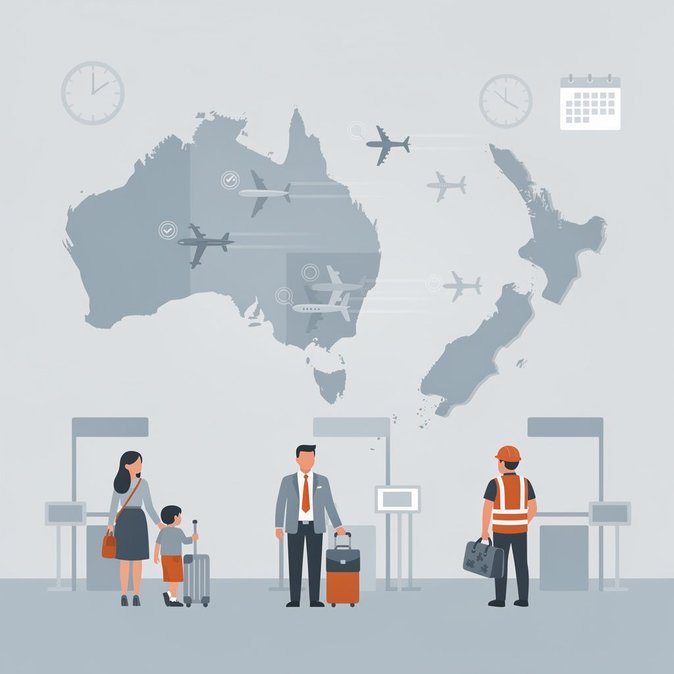
Air travellers faced a bruising start to the week as coordinated operational disruptions rippled across eight Australian and two New Zealand airports on 5 July. Industry tracker data collated by Travel & Tour World shows 363 delayed departures and 21 outright cancellations affecting Sydney, Melbourne-Tullamarine, Brisbane, Perth, Canberra, Darwin, Gold Coast, Auckland and Christchurch.
If cascading delays have you scrambling to reroute through other hubs or extend a stopover, VisaHQ can take one worry off the list by expediting any additional visas or travel authorisations you might suddenly need. Its easy online portal guides you through country-specific entry rules, processes applications, and tracks status updates—letting you focus on rebooking flights instead of deciphering paperwork.
The knock-on effects are being blamed on a perfect storm of mid-winter weather diversions, crew-rostering shortages linked to COVID-19 absentee spikes, and a backlog of heavy aircraft maintenance. Qantas and Virgin Australia bore the brunt domestically, while Air New Zealand trimmed several trans-Tasman rotations. Although most delays were limited to 30–60 minutes, the cancellations forced hundreds of passengers onto later flights, straining already-tight school-holiday capacity. Corporate travel managers say same-day itineraries for mining and energy personnel heading to remote sites were hardest hit because many rely on one-flight-per-day connections. Airlines have re-timed a handful of evening services and activated larger aircraft where possible, but network planners warn slot constraints at Sydney and Melbourne limit their ability to ‘back-fill’ capacity quickly. Travellers booked this week are advised to build in longer connection windows and monitor carrier apps for rolling gate changes. Under Australia’s Airline Customer Advocate scheme, passengers whose flights are cancelled within 72 hours of departure are entitled to rebooking on the next available service or a refund, but compensation rules remain looser than those in the EU—an issue that has re-entered political debate after the latest bout of disruption.
If cascading delays have you scrambling to reroute through other hubs or extend a stopover, VisaHQ can take one worry off the list by expediting any additional visas or travel authorisations you might suddenly need. Its easy online portal guides you through country-specific entry rules, processes applications, and tracks status updates—letting you focus on rebooking flights instead of deciphering paperwork.
The knock-on effects are being blamed on a perfect storm of mid-winter weather diversions, crew-rostering shortages linked to COVID-19 absentee spikes, and a backlog of heavy aircraft maintenance. Qantas and Virgin Australia bore the brunt domestically, while Air New Zealand trimmed several trans-Tasman rotations. Although most delays were limited to 30–60 minutes, the cancellations forced hundreds of passengers onto later flights, straining already-tight school-holiday capacity. Corporate travel managers say same-day itineraries for mining and energy personnel heading to remote sites were hardest hit because many rely on one-flight-per-day connections. Airlines have re-timed a handful of evening services and activated larger aircraft where possible, but network planners warn slot constraints at Sydney and Melbourne limit their ability to ‘back-fill’ capacity quickly. Travellers booked this week are advised to build in longer connection windows and monitor carrier apps for rolling gate changes. Under Australia’s Airline Customer Advocate scheme, passengers whose flights are cancelled within 72 hours of departure are entitled to rebooking on the next available service or a refund, but compensation rules remain looser than those in the EU—an issue that has re-entered political debate after the latest bout of disruption.