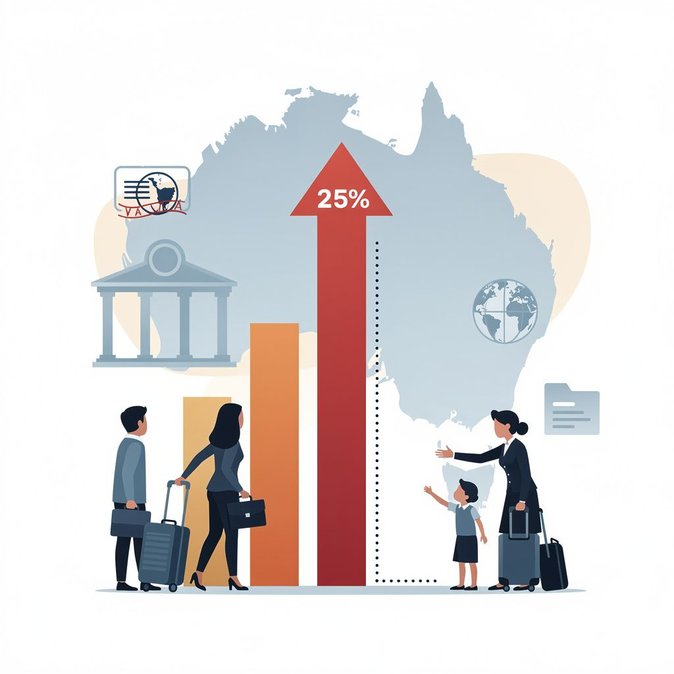
Australia’s inbound tourism sector is sounding the alarm after the government’s 1 July 2026 visa-application-charge (VAC) increases lifted the cost of a standard Visitor visa (subclass 600) from AUD 200 to AUD 250 and the Working Holiday Maker (subclass 417/462) first-visa fee from AUD 670 to AUD 840. In an interview with AccomNews, the Australian Tourism Export Council (ATEC) said the 25–30 per cent jump—on top of successive rises in 2024 and 2025—risks driving price-sensitive travellers, backpackers and working holiday makers to competing destinations such as Canada and New Zealand. ATEC managing director Peter Shelley noted that visa costs now make up “a material slice of a traveller’s upfront spend”, especially for couples and families who must pay per applicant. The association has written to Trade and Tourism Minister Don Farrell urging Treasury to ring-fence part of the extra revenue for destination marketing and streamlined processing to offset the deterrent effect. Airlines and major hotel chains echoed the call, warning that softer international demand would hurt regional economies still rebuilding from the pandemic-era border closures. Beyond tourism, labour-short regional industries rely heavily on working holiday makers (WHMs) for seasonal roles. The National Farmers’ Federation estimates backpackers provide up to 80 per cent of harvest labour in some horticulture sectors. ATEC fears the higher WHM fee will reduce the pool of willing participants just as growers confront record wage bills and logistics costs. Backpacker hostel operators in Cairns and Broome already report slower winter bookings compared with 2025. Home Affairs argues the increases simply index fees to inflation and the rising cost of service delivery, pointing out that VACs have been frozen for several categories for much of the past decade. Officials also stress that Australia offers one of the world’s most automated online visa platforms, with median Visitor-visa processing times of six days. However, tour wholesalers say rival countries have cut or waived fees to lure back long-haul travellers. Corporate travel managers should factor the new charges into forecast budgets and advise travelling staff to build the additional cost into cash-flow plans. Employers using WHMs or gap-year staff may need to adjust recruitment incentives. ATEC has flagged further industry consultations before the October Federal Budget, where stakeholders will push for tiered pricing or discounts for repeat visitors.
Source: AccomNews