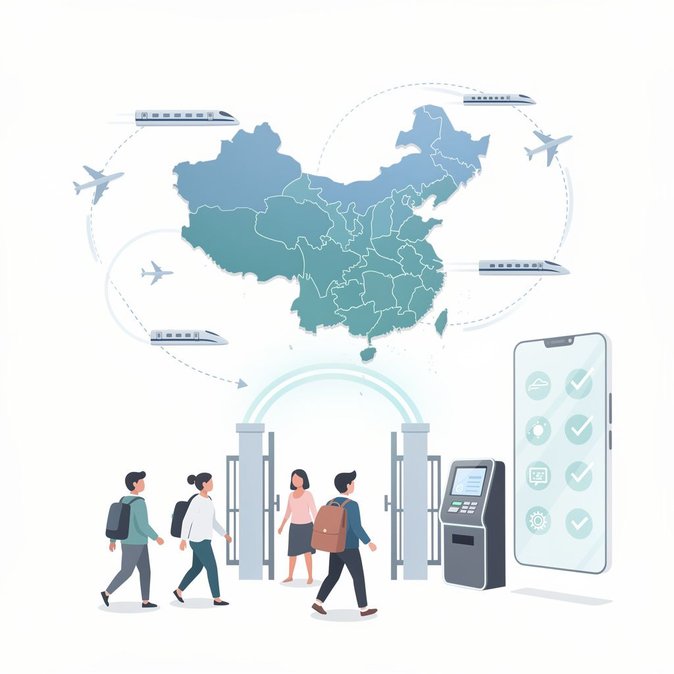
China’s post-pandemic travel rebound reached a new milestone this week. At a 10 July press conference, the National Immigration Administration (NIA) announced that it processed 369 million inbound and outbound movements in the first half of 2026 – a 10.8 % year-on-year increase and the highest half-year figure ever recorded. Mainland residents accounted for 176 million crossings, while 147 million trips were made by Hong Kong, Macao and Taiwan travellers. Foreign nationals made 45.9 million crossings, up 20.6 %. Several policy shifts underpinned the surge. The NIA noted that 17.8 million of the 22.9 million foreign arrivals entered visa-free, a 30.6 % jump on last year.
VisaHQ’s global visa and passport service can help both tourists and corporate mobility teams keep pace with these changes. Its China-specific portal provides real-time guidance on eligibility for the expanding visa-free schemes, streamlined applications for all categories of Chinese visas, and concierge support for new requirements such as online accommodation registration—making compliance far less daunting as travel volumes soar.
China has unilaterally waived visas for 49 countries and expanded regional waiver schemes around events such as the China International Consumer Products Expo. Border officers have also piloted online accommodation registration and rolled out facial- and iris-recognition car channels at land borders to cut queue times. The wave of people flows is already feeding the wider economy. The NIA issued 10.4 million ordinary passports and almost five million Mainland Travel Permits for Hong Kong, Macao and Taiwan, supporting record-high outbound leisure demand during the summer “shuyun” peak. Cruise operators in Shanghai and yacht companies in Guangdong have been authorised to trial new cabotage-style itineraries, converting traffic into tourist receipts. For corporate mobility managers the numbers signal two things. First, China’s ports are now operating above 2019 volumes, so early flight and hotel bookings are essential around peak Chinese holidays. Second, the share of visa-free travellers is rising fast; HR teams should reassess whether short-term assignees still need business (M) visas or can enter under the 30-day waiver. Companies sending staff to plants in Guangdong or R&D hubs in Beijing should also explore the NIA’s new online arrival-card and hotel-registration tools to avoid administrative fines. Looking ahead, officials said they will “accurately expand the list of unilateral visa-free countries” and digitise more border-control formalities. Mobility stakeholders should therefore expect further facilitation – but also tighter enforcement against illegal work, with 11,900 foreigners already deported for visa overstays this year, according to the NIA.

VisaHQ’s global visa and passport service can help both tourists and corporate mobility teams keep pace with these changes. Its China-specific portal provides real-time guidance on eligibility for the expanding visa-free schemes, streamlined applications for all categories of Chinese visas, and concierge support for new requirements such as online accommodation registration—making compliance far less daunting as travel volumes soar.
China has unilaterally waived visas for 49 countries and expanded regional waiver schemes around events such as the China International Consumer Products Expo. Border officers have also piloted online accommodation registration and rolled out facial- and iris-recognition car channels at land borders to cut queue times. The wave of people flows is already feeding the wider economy. The NIA issued 10.4 million ordinary passports and almost five million Mainland Travel Permits for Hong Kong, Macao and Taiwan, supporting record-high outbound leisure demand during the summer “shuyun” peak. Cruise operators in Shanghai and yacht companies in Guangdong have been authorised to trial new cabotage-style itineraries, converting traffic into tourist receipts. For corporate mobility managers the numbers signal two things. First, China’s ports are now operating above 2019 volumes, so early flight and hotel bookings are essential around peak Chinese holidays. Second, the share of visa-free travellers is rising fast; HR teams should reassess whether short-term assignees still need business (M) visas or can enter under the 30-day waiver. Companies sending staff to plants in Guangdong or R&D hubs in Beijing should also explore the NIA’s new online arrival-card and hotel-registration tools to avoid administrative fines. Looking ahead, officials said they will “accurately expand the list of unilateral visa-free countries” and digitise more border-control formalities. Mobility stakeholders should therefore expect further facilitation – but also tighter enforcement against illegal work, with 11,900 foreigners already deported for visa overstays this year, according to the NIA.