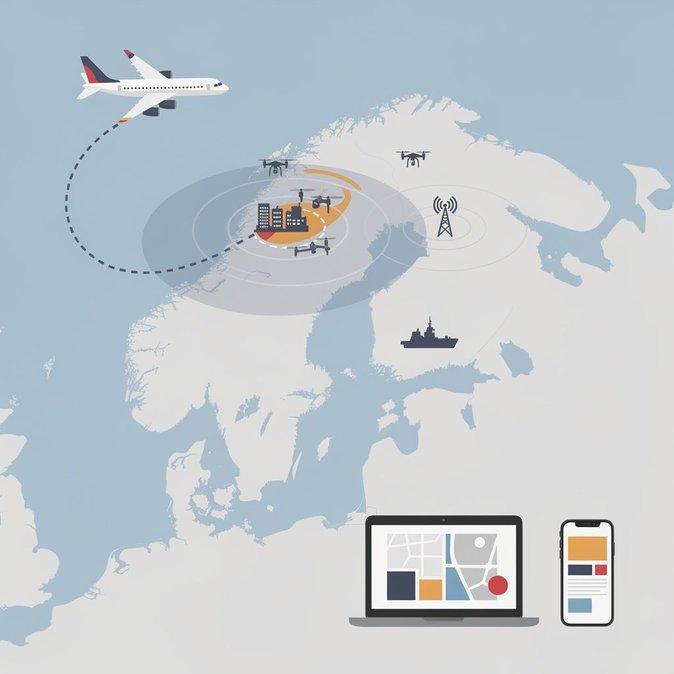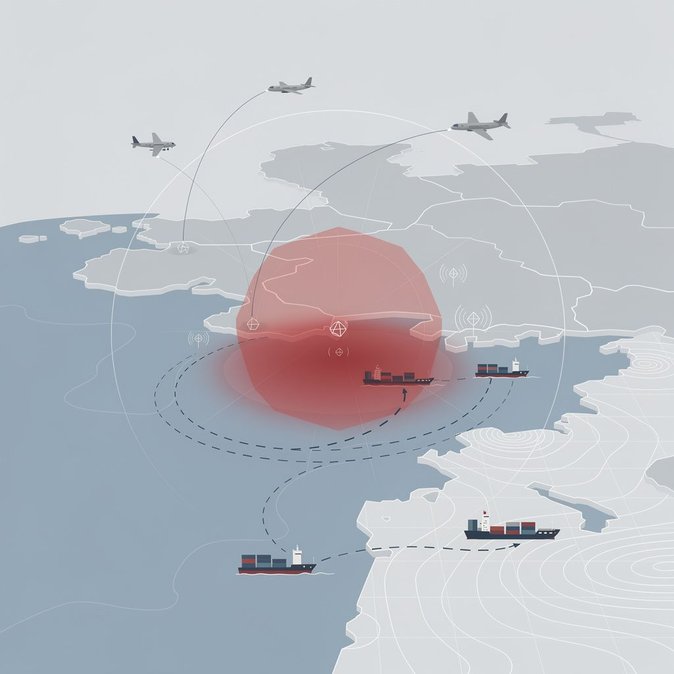
Travellers, airlines and shipping operators experienced an early-morning surprise on Saturday, 10 July 2026, when the Finnish Defence Forces (FDF) declared a temporary restricted area over the south-eastern Gulf of Finland. Between 04:00 and 05:25 local time, civilian aircraft were barred from a block of airspace off Kotka while corresponding limits were placed on marine traffic below. The NOTAM and coastal warning were issued with less than 30 minutes’ notice after radar units detected what the FDF described as “heightened unmanned-aerial-system risk” connected to the wider drone activity spilling over from the Russia-Ukraine conflict. Although the closure lasted only 85 minutes, it illustrates how the security environment along Finland’s 1 300-kilometre eastern frontier continues to shape mobility one and a half years after the country joined NATO. Summer weekends are peak season for both general aviation and leisure boating, and several private pilots told Lentoposti that they had to reroute via Porvoo or delay departures until the airspace re-opened. Finnlines, operating roll-on/roll-off freight services between Kotka and Travemünde, also confirmed minor schedule adjustments. The FDF has warned since May that additional “pop-up” restrictions may be activated with minimal lead time if suspected reconnaissance drones approach Finnish territory. The current protocol is to create a sterile buffer zone so that fighter jets or electronic-warfare units can be deployed without endangering civilian traffic. These measures dovetail with a broader government policy that keeps all land border crossing points to Russia closed and authorises rapid-reaction curbs on air and sea space when required. For corporate travel managers and logistics planners the incident is a reminder to embed real-time NOTAM monitoring and maritime safety broadcasts into risk-management workflows. Finnish authorities recommend that flight plans filed for south-eastern Finland include contingency fuel for detours and that shipping masters review alternate routing points west of the Gulf’s congestion zone. While the weekend’s disruption was short, analysts note that even brief closures can cascade through tightly-timed air-cargo and ferry schedules that serve Finland’s export-driven economy. Most passenger carriers reported negligible knock-on delays this time, but the FDF reiterated that the public should expect similar short-notice restrictions throughout the summer as drone warfare around the Baltic intensifies. Travellers heading to or from Helsinki, Lappeenranta or the coastal leisure ports are advised to check NOTAMs and Finnish Transport and Communications Agency (Traficom) bulletins before departure.
Source: Lentoposti