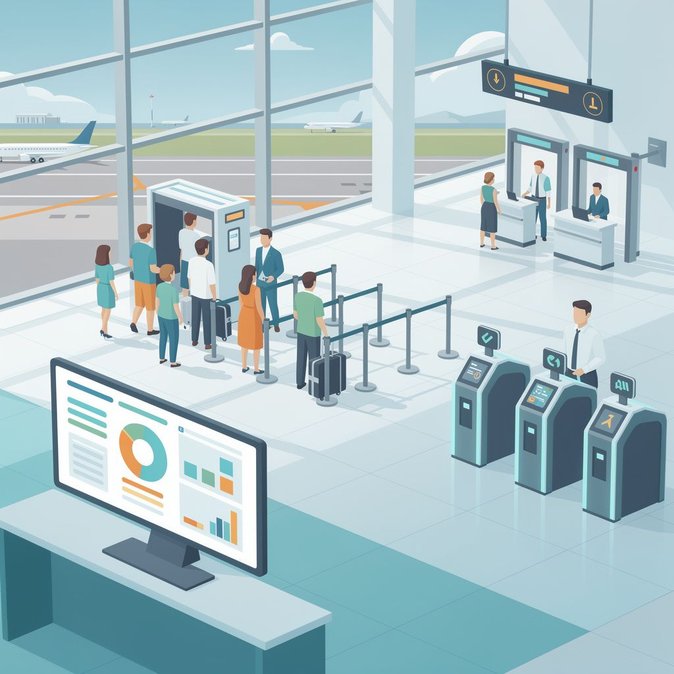
A new update published overnight on 11 July 2026 by analytics site FlightQueue shows Helsinki Airport (HEL) coping well with the mid-summer rush, recording live security waits of 10 minutes and estimated immigration queues of just five minutes. The platform pulls sensor data from Finavia and crowd-sourced traveller reports, packaging it into an intuitive dashboard that refreshes every few minutes. The figures are closely watched by corporate travel managers because Helsinki is a growing Nordic hub for connections between Europe and Asia. Since the European Union’s Entry/Exit System (EES) began trial operations at HEL in April, some feared the mandatory fingerprint and facial-image capture for first-time non-EU arrivals would slow processing. So far, that has not happened: FlightQueue’s historical data show average immigration waits holding below seven minutes during the first two months of the kiosk rollout. For business travellers the granular insight is valuable. The dashboard identifies peak congestion windows—06:00–09:00 and 16:00–19:00—and recommends arriving 150 minutes before long-haul departures. It also highlights that EU/EEA citizens typically clear passport control 40–60 percent faster than third-country nationals, information relocation planners can use when scheduling tight transfers for assignees and visiting executives. Travel-technology specialists note that crowdsourced queue-time platforms are becoming an essential part of duty-of-care programmes, much like real-time flight-status alerts. “Knowing that security is currently running ten minutes instead of forty can save hundreds of staff hours over the course of a large project deployment,” says Johanna Lehtinen, mobility lead at a Helsinki-based engineering firm. Finavia has not formally endorsed FlightQueue, but the airport operator is running its own pilot API for security-lane occupancy that third-party developers can access. If the live-data trend continues through the late-July peak, Helsinki could bolster its reputation as one of Europe’s most efficient transfer points—an important selling point now that many travellers are rerouting to avoid Russian overflight bans on Asian services.
Source: FlightQueue