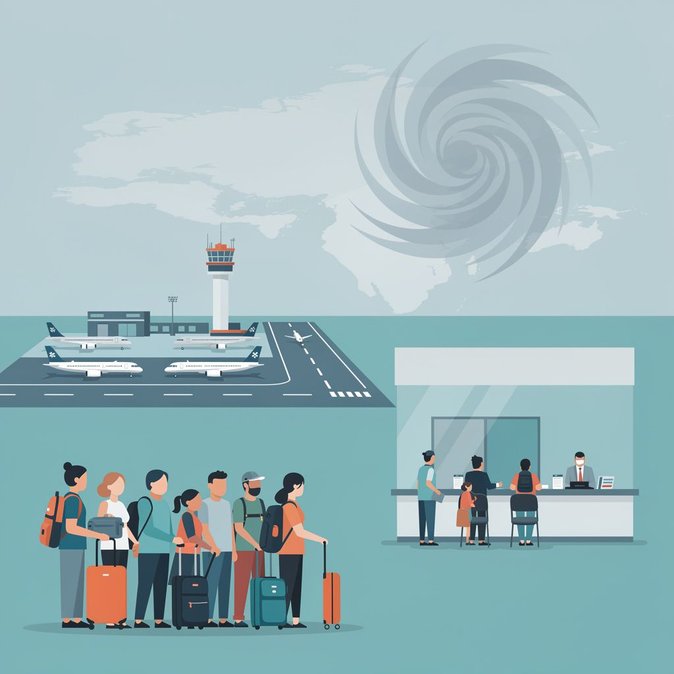
Local authorities in Zhejiang, Shanghai and Fujian evacuated a combined 2.2 million residents and temporary visitors before Typhoon Bavi struck the coast late on 11 July, state media reported. Evacuation orders included thousands of foreign factory supervisors and seafarers housed in dormitories near Ningbo’s Beilun port. Border-inspection units at Wenzhou and Fuzhou airports set up mobile counters in shelters so that travellers whose passports were sealed inside flooded hotels could still obtain exit documents. Shanghai’s two international airports—Pudong and Hongqiao—cancelled more than 650 flights on 11-12 July, and the Shanghai Exit-Entry Bureau announced that it would waive overstay penalties for foreigners unable to depart on time, provided they report within 72 hours after services resume. Meanwhile, coastal immigration checkpoints suspended fingerprint collection for crew changes to minimise queuing in high-wind conditions. Factory evacuation plans were tested as relocation buses took workers to inland safe zones where temporary entry-exit “pop-up” desks issued travel facilitation letters in lieu of physical visas. Several logistics firms, including SF Express International, said the streamlined paperwork shaved hours off processing times compared with previous typhoons. The mass evacuation highlights the growing intersection of disaster management and global mobility compliance in China. Companies with expatriate staff should ensure that emergency-contact details registered with the Public Security Bureau are up-to-date, as digital notices of waived penalties or document-replacement procedures are now sent primarily via SMS and WeChat mini-programs.
Source: The Straits Times