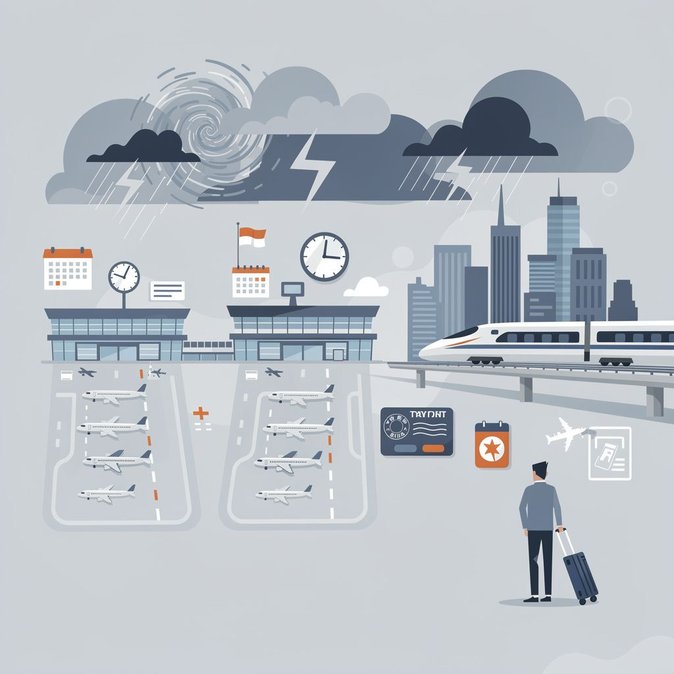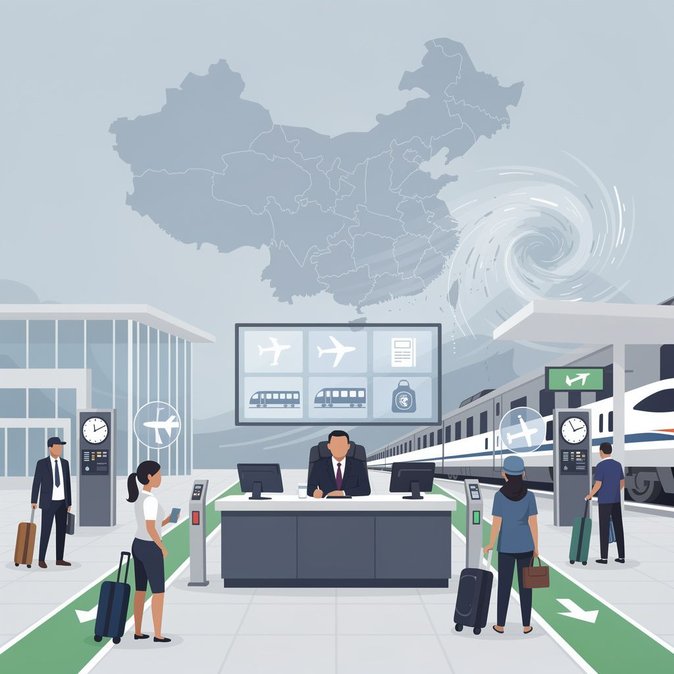
On 11 July, Chinese Vice-Premier Zhang Guoqing chaired an emergency coordination meeting in Nanning that linked provincial governments, the Civil Aviation Administration of China (CAAC) and the National Immigration Administration via video conference to synchronise the country’s typhoon-response playbook. Under the plan, immigration counters at 38 international airports were instructed to stay open beyond scheduled hours to handle rerouted and diverted flights, while railway police were told to prepare temporary entry facilities at major land crossings with Hong Kong and Macao should air connections be suspended.
For organisations coordinating last-minute travel changes, experienced visa specialists can be invaluable. VisaHQ, for example, offers real-time Chinese visa application support and expedited document services, enabling corporate mobility teams and individual travellers to adjust itineraries quickly when typhoons force rerouting or unexpected land crossings.
Vice-Premier Zhang emphasised the need for a “people-centred and foreign-friendly” approach, ordering English-language public-address bulletins at affected stations and ensuring hotels honour government-negotiated cap-rate contracts for stranded foreigners. The Ministry of Commerce was tasked with compiling a list of multinationals with urgent engineering or maintenance personnel arriving this week so that green-lane border clearance could be activated once weather conditions allow. He also urged airlines to make full use of the mutual-recognition arrangement for electronic crew visas signed earlier this year with ASEAN states, enabling quick aircraft repositioning and crew changes in secondary airports such as Hefei and Nanchang. Multinationals lauded the directive, noting that the 2023 Typhoon Doksuri response was hampered by inconsistent local-level rules. For HR and mobility managers, Zhang’s orders signal that China’s central government expects provincial bureaus to exercise flexibility on short-term work permits and residence-permit renewals when weather-related delays prevent exit and re-entry within normal validity windows. Companies should be prepared to document force-majeure circumstances and keep close contact with their host-city Exit-Entry Administration offices.
For organisations coordinating last-minute travel changes, experienced visa specialists can be invaluable. VisaHQ, for example, offers real-time Chinese visa application support and expedited document services, enabling corporate mobility teams and individual travellers to adjust itineraries quickly when typhoons force rerouting or unexpected land crossings.
Vice-Premier Zhang emphasised the need for a “people-centred and foreign-friendly” approach, ordering English-language public-address bulletins at affected stations and ensuring hotels honour government-negotiated cap-rate contracts for stranded foreigners. The Ministry of Commerce was tasked with compiling a list of multinationals with urgent engineering or maintenance personnel arriving this week so that green-lane border clearance could be activated once weather conditions allow. He also urged airlines to make full use of the mutual-recognition arrangement for electronic crew visas signed earlier this year with ASEAN states, enabling quick aircraft repositioning and crew changes in secondary airports such as Hefei and Nanchang. Multinationals lauded the directive, noting that the 2023 Typhoon Doksuri response was hampered by inconsistent local-level rules. For HR and mobility managers, Zhang’s orders signal that China’s central government expects provincial bureaus to exercise flexibility on short-term work permits and residence-permit renewals when weather-related delays prevent exit and re-entry within normal validity windows. Companies should be prepared to document force-majeure circumstances and keep close contact with their host-city Exit-Entry Administration offices.